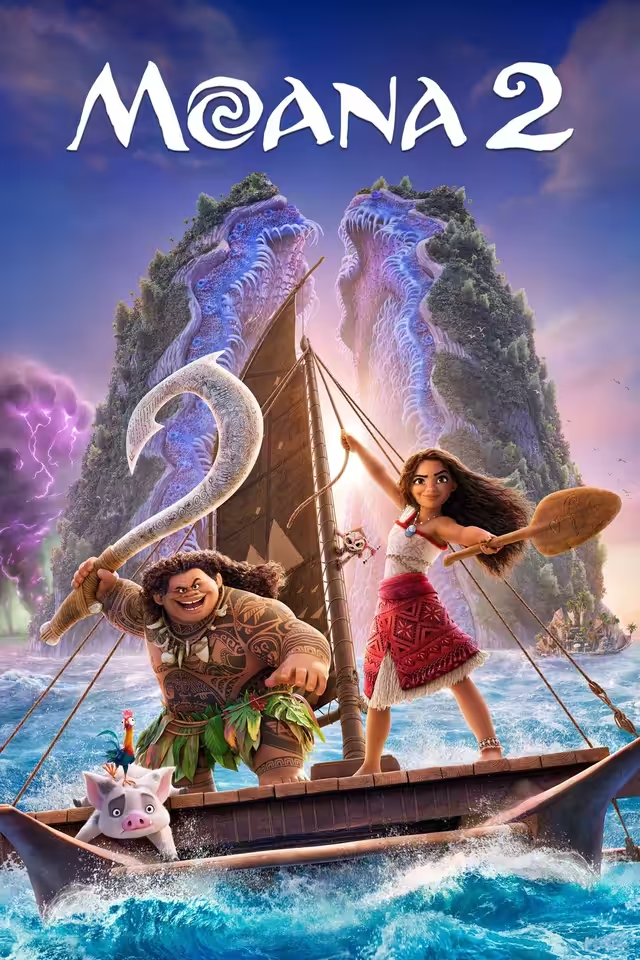
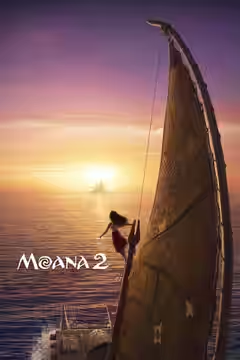
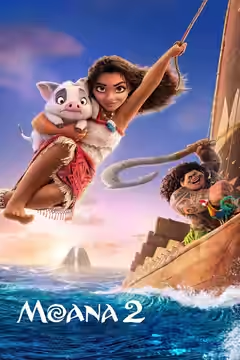
This return to Moana’s ocean is as handsome as the first film and a good deal emptier. The water is a wonder, Cravalho is still the reason to watch, and the new songs go in one ear and out the other.
Moana is back on the water, and this time she has taken a boatload of people with her. Jason Hand, David G. Derrick Jr. and Dana Ledoux Miller share the directing, Jared Bush and Miller the script, and the film began life as a television series before it was cut down and sent to cinemas. You can tell. Moana 2 is bright, kindly, well drawn and nearly weightless, a sequel that keeps announcing danger and never quite produces any. It is fine for an evening with children. It will not stay with anyone afterwards.
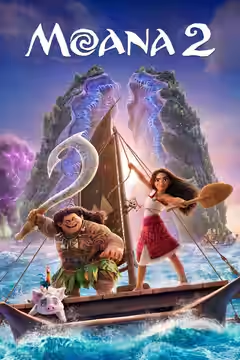
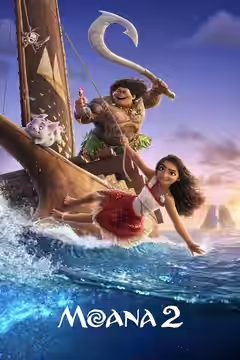
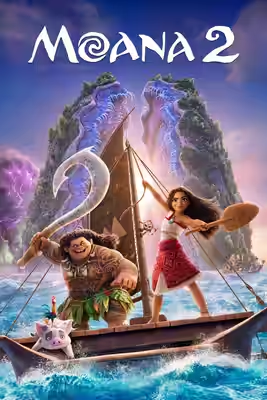
The ocean is still the star. Ian Gooding’s production design gives the sea a dozen moods, from flat turquoise shallows to a night storm where the swell comes up black and the lightning shows the whole canoe for a frame at a time, and the water behaves like water: it slops, it pools on the deck, it goes green when the light is behind it. Matangi’s lair, a dark hollow hung with bats and lit purple from below, is the one place the film looks like it belongs to somebody in particular. A sequence inside a giant clam is handsome too, and over quickly. Auliʻi Cravalho carries the rest. Her Moana is older and a little more tired, and she sings the new material with more conviction than it deserves.
The best scene is in the first twenty minutes and involves nobody magical. Moana’s small sister Simea (Khaleesi Lambert-Tsuda) does not want her to go, and the parting between them on the beach, with Temuera Morrison and Nicole Scherzinger standing back as the parents, got to us more than we expected. It is short, plainly staged and the film’s only moment of real loss. Nothing in the following eighty minutes reaches that pitch again, and we spent a fair part of them waiting for it to.
Dwayne Johnson’s Maui is kept offstage for a long stretch, held by Matangi, and Awhimai Fraser makes her the liveliest newcomer: sly, bored, half on Moana’s side, and given the one song in the film with a pulse in it. When Maui finally arrives, Johnson and Cravalho pick up exactly where they left off, needling each other across the deck, and the film is at its easiest whenever they share a scene. Alan Tudyk’s Heihei is again the funniest thing aboard and again says nothing.
The trouble is the crew. Loto (Rose Matafeo), Moni (Hualālai Chung) and Kele (David Fane) are each issued one trait, an inventor, a fan, a grump, and the film then has to find something for three extra bodies to do in every scene. Jeremy Milton and Michael Louis Hill cut the voyage into short episodes, an island, a monster, a squabble, a song, and the joins show. Twice we felt one episode end and another begin, with a beat of dead air between them where a title card might once have gone. Matafeo gets a laugh or two. Fane and Chung mostly get to be on the boat.
Then the songs. Opetaia Foaʻi and Mark Mancina are credited with the music, and the score is the strongest part of it, drums and chant under the sailing scenes doing the work the songs should be doing. The songs themselves are tuneful, well sung, and gone. We tried, on the way out, to hum any of them and found the old ones from the first film had moved back in instead. For a musical built on a voyage, that is a real problem.
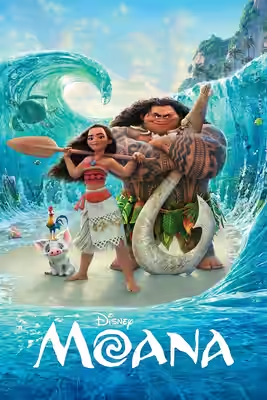
Against the first film, which gave its ocean a real monster, a real grandmother and a real ending, this one has a storm god who is talked about far more than he is seen and a quest whose rules are explained twice and still feel loose. Most critics have landed somewhere in the middle on it, and so have we. Take children under ten and they will be perfectly happy; the sea alone is worth their hour and forty minutes. Adults may find themselves looking at the water and thinking about the first film, which is a strange thing for a sequel to want. It runs 100 minutes and carries a PG.