Film review

Monty Python's The Meaning of Life

1983 · Directed by Terry Jones · 1h 47m · MPA R

In a sentenceMonty Python gives sperm the sort of musical number usually reserved for falling in love

Comedy

Monty Python’s The Meaning of Life presents a series of comedy sketches about human existence, taking in birth, religion, war and bodily appetites. Insurance clerks rebel and their building becomes a ship; elsewhere, the musical number Every Sperm Is Sacred addresses religion and reproduction. Terry Jones directs and appears alongside Graham Chapman, John Cleese, Eric Idle, Michael Palin and Terry Gilliam. The performers take various roles rather than following a single central character through the film. Carol Cleveland also joins the ensemble as the sketches move between different stages of life.

Fi1m review

Monty Python’s survey of human existence is uneven and frequently filthy, but its strongest sketches earn the wait. We recommend it for the musical impudence and the office rebellion, with patience required for some of the war material.

Terry Jones directs Monty Python’s The Meaning of Life as though the title were a reasonable item for a comedy troupe to put on the agenda. It is a good, erratic comedy whose finest passages justify sitting through some rather aimless ones. Birth, religion and war are all up for discussion, and the treatment frequently goes out of its way to be offensive. The sketches move between stages of life without following a single central character.

The insurance clerks’ mutiny establishes how well this comedy can work when an absurd idea is allowed to develop. Their building becomes a ship, and the clerks’ revolt becomes a pirate adventure. We laughed aloud at that transformation, because an office rebellion is treated seriously enough to deserve its own ship. The episode feels detached from the surrounding sketches, but it establishes a scale and confidence that the rest of the film sometimes struggles to match.

Every Sperm Is Sacred makes equally good use of doing something ridiculous with complete conviction. The scale of the musical number is part of the joke, making its title sound suitable for the most respectable occasion. The performers give it enough discipline that the rudeness becomes funnier for being presented so properly, without any embarrassed rush towards the next gag. Its elaborate presentation sustains a joke that could easily have been exhausted in a few seconds.

Cinematographers Peter Hannan and Roger Pratt give the extravagant passages a solidity that helps the comedy: the ship needs to look as though it belongs in an adventure. The photography lets us enjoy the spectacle without constantly insisting that we admire how peculiar it is. Harry Lange’s production design is similarly unembarrassed by the grand treatment of silly material, particularly around the musical spectacle. Occasionally, though, the elaborate presentation draws attention to how little is happening in a sketch.

The less successful choices are largely about duration. Julian Doyle’s editing gives the individual sketches room to develop, but too often preserves the pauses after the idea has stopped producing fresh laughs. John Du Prez’s score helps maintain the exaggerated dignity, treating the material with a musical formality that makes the bad behaviour funnier. That cannot rescue the passages that simply repeat themselves, and some of the war material is particularly short of worthwhile jokes.

Across the ensemble, Cleese, Chapman, Idle, Palin, Gilliam and Jones understand the value of treating absurdity as routine. The delivery stays controlled even when the material has abandoned good manners, which gives us something to enjoy beyond the offence itself. Some of the gross-out comedy does mistake the audience’s endurance for an endlessly renewable resource. The occasional satisfaction at having disgusted us feels lazy, especially beside the care taken over the musical number and the clerks’ rebellion.

The useful test for a sketch film is how often it earns back the attention lost during a weak passage. This one does so often enough to be worth an evening for anyone sympathetic to its thoroughly undignified view of human behaviour. The abrupt changes of subject help, allowing a fresh joke to get started without having to repair the previous one. Do not make it the compromise choice for a squeamish household.

Critical consensus AI synthesised

70
Positive
4
Mixed
3
Negative
0

Most critics find Monty Python’s The Meaning of Life funny enough to reward its unevenness, with praise centred on its irreverence, imaginative sketches and willingness to be tasteless. The reviews repeatedly single out ‘Every Sperm Is Sacred’ and the insurance clerks’ mutiny among the memorable sequences. Eye for Film also praises the dialogue, performances and Gilliam animations, arguing that the sketch format suits the team despite the lack of a conventional narrative.

The spread runs from qualified appreciation to firmer enthusiasm, rather than outright rejection. Reservations concern weak individual sketches, a piecemeal structure and spectacle that sometimes gets in the way of the comedy. The New York Times favours the smaller, more intimate scenes over the elaborate production. Particular sequences divide opinion too: Radio Times admires the financial institution’s pirate episode but finds the restaurant gluttony nasty, while Eye for Film considers the opening short out of place.

The Hollywood Reporter
25 March 1983 · Robert Osborne
75*

The review finds the film tasteless yet imaginative and mischievous, with breakneck pacing and standout sequences like the gross-out restaurant scene and 'Every Sperm Is Sacred' number that capture Python's irreverent humor. It credits the communal Python effort and predicts strong appeal to young audiences.

Read the full review →
Variety
1 January 1983 · Variety Staff
75*

Gross, silly, caustic and tasteless, it is above all funny. Most sections deliver comedic punch without lingering too long, though some war passages fall flat.

Read the full review →
RogerEbert.com
1 April 1983 · Roger Ebert
70*

The Pythons ultimately win with their boundary-pushing comedy. The insurance clerks' mutiny sequence that turns the building into a surreal ship is singled out as wonderful.

Read the full review →
Empire
1 March 2007 · Ian Nathan
65*

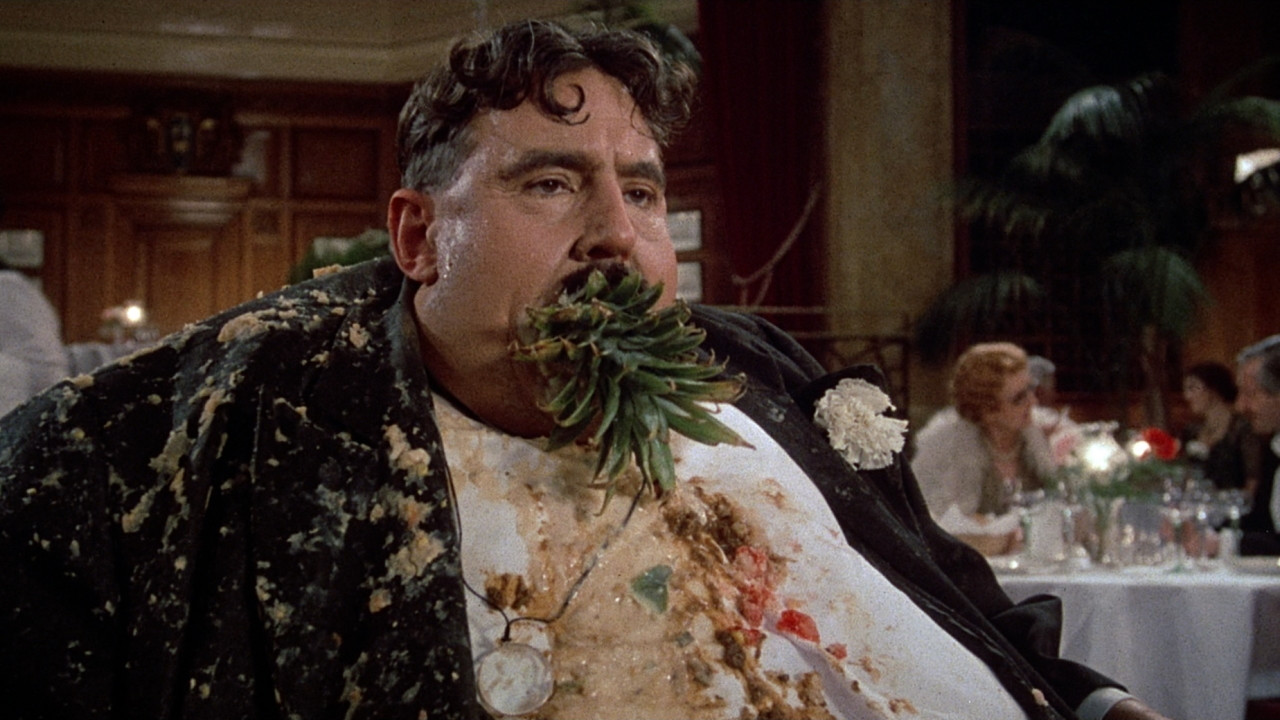
The film is viewed as a lesser work than Life of Brian or Holy Grail, too piecemeal and unfocused overall. It still delivers some of the team's most iconic and inspired moments, including memorable sketches like the exploding Mr Creosote and the 'Every Sperm Is Sacred' number.

Read the full review →
The New York Times
31 March 1983 · Vincent Canby
65*

It is a monumental revue that is sometimes hilarious and colossally rude but often overwhelmed by its production values. The film works best in its more intimate, less spectacular sequences.

Read the full review →
Radio Times
★★★ · Tom Hutchinson
60

The critic describes the film as a pick 'n' mix of comedy sketches exploring human existence from conception to death. It is called British humour at its most tasteless and occasionally brilliant, with praise for the pirate sequence on a financial institution and criticism of the glutton scene as wholly nasty; overall an acquired taste.

Read the full review →

Cast

Stills

Awards

Cannes Film Festival, 1983

Won
Cannes Film Festival Grand Prix

If you liked this, try…

Duck Soup poster

Duck Soup

1933 · Official dignity gets dismantled by performers who understand how seriously nonsense needs playing.

The Discreet Charm of the Bourgeoisie poster

The Discreet Charm of the Bourgeoisie

1972 · Polite society keeps trying to dine while absurdity makes other arrangements.

Tampopo poster

Tampopo

1985 · Food, appetite and human foolishness provide ample reasons for comic digressions.

The Bed Sitting Room poster

The Bed Sitting Room

1969 · British institutions carry on behaving appallingly after circumstances have made them redundant.

Songs from the Second Floor poster

Songs from the Second Floor

2000 · Disconnected scenes build a bleakly funny picture of people trapped by ordinary habits.