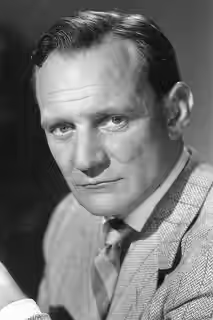
Trevor Howard’s Bligh is a small, exact, frightening man and the ship around him is a real one; Marlon Brando’s Fletcher Christian is an idea that never becomes a person. At 185 minutes, it is a fine hour of seafaring inside a long afternoon.
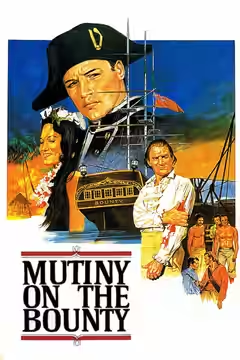
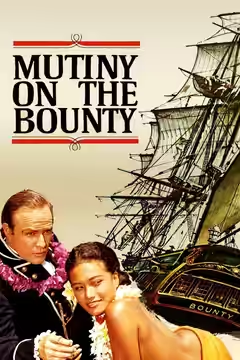
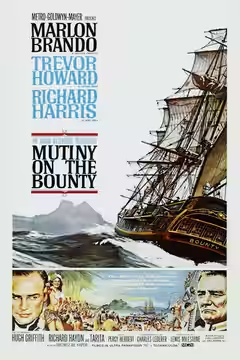
Lewis Milestone directs Charles Lederer’s screenplay from the Charles Nordhoff and James Norman Hall novel, and the result runs 185 minutes, which is long enough to sail to Tahiti and in places feels like it. The story has not changed: Bligh (Trevor Howard) drives HMS Bounty and her men too hard on the way out, the men find paradise, and the way back is where it breaks. What is new is the notion of Fletcher Christian (Marlon Brando) as a bored gentleman who has to be dragged into caring. It is a fair notion. The film has one great performance, one strange one and one fine ship, and it needed a firmer hand on the cutting bench than it got.
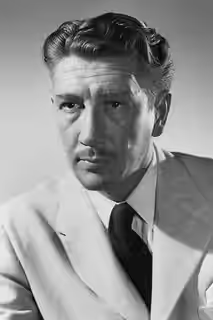
Howard is the great performance. His Bligh is small, exact and resentful, a man who knows the crew and the officers look down on him and has decided to earn it. He does not bellow. When two cheeses go missing and John Mills (Richard Harris) says out loud where they went, Bligh has him flogged for insolence, and Howard watches the lash the way a clerk watches a column of figures. We were frightened of him, more than we expected to be in a film with this much sunshine, because he never once seems to be enjoying it.
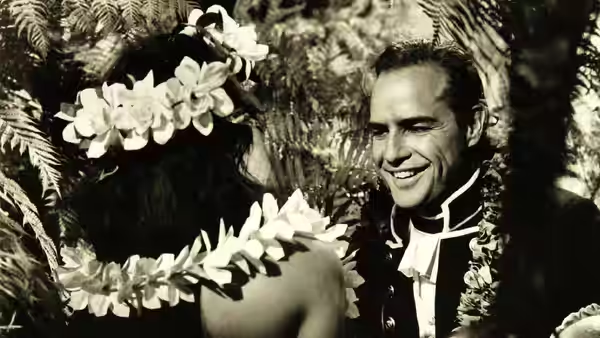
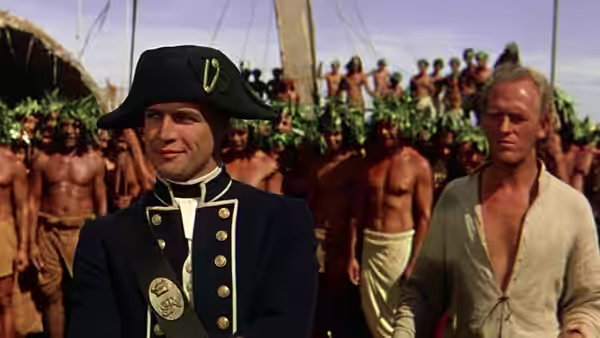
Brando is the strange one. He plays Christian with a clipped, nasal, upper-class English drawl, a handkerchief and a habit of sniffing at everything as if it were slightly off. Moss Mabry dresses him in ruffles and silk, and for the first hour it works as comedy: a fop on a working ship, wrinkling his nose at the salt pork while the yards are being reefed. The trouble is that Brando holds the note for two hours. Christian is supposed to be a man who changes, and when the change comes it registers as a change of clothes. The scenes in which he is meant to be angry have the same temperature as the scenes in which he is meant to be bored.
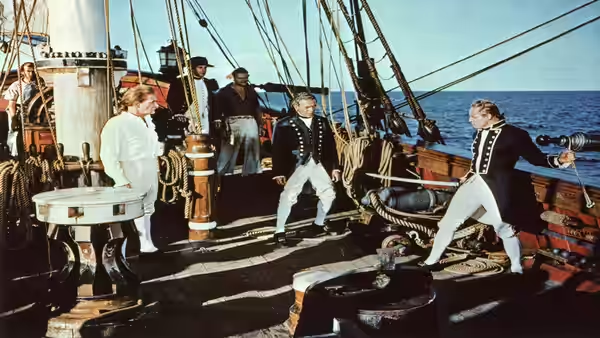
The ship is the reason to watch. Robert L. Surtees shoots her wide, with the whole vessel in frame from bowsprit to mizzen, and the men on the yards look the size they are. The attempt on Cape Horn is the best stretch: green water coming over the bow, men lashed to the wheel, the deck tilting until we lost our sense of which way was down. Bronislau Kaper scores it with heavy brass and lets the wind and canvas do the rest. We sat forward through all of it. The arrival at Tahiti, with what looks like the whole island coming out in canoes, is nearly as good, and Kaper’s drums and chorus give it a size the rest of the film keeps reaching for.
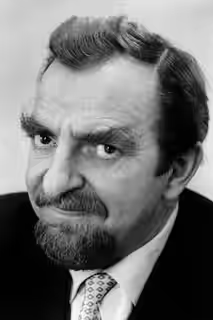
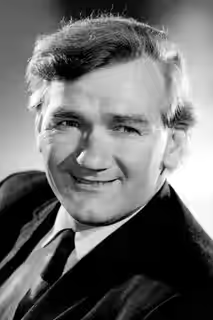
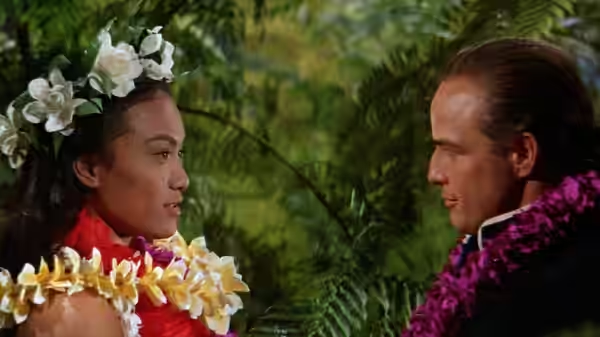
The rest is the problem, and the problem is length. Lederer gives every scene a speech, and John McSweeney Jr. lets every speech finish. The Tahiti section is an hour of soft light and flowers in which nothing much happens except that Christian meets Maimiti (Tarita), who is lovely and given almost nothing to say. Harris starts raw and promising and then largely disappears into the crew. Hugh Griffith’s Smith is the comic drunk and does it well, but the film goes back to him one time too many. What comes after the mutiny we will not describe, except to say that the last forty minutes are talk, and by then we were restless and then irritable about being restless.
Milestone made All Quiet on the Western Front in 1930, a film about men and the officers who spend them that wastes nothing. This one wastes a good deal. Against the 1935 version, it has the better Bligh, the better ship and the weaker Christian, and it is an hour longer. Most critics have been harder on it than we are, and the objection is nearly always Brando; we think Howard and Surtees buy the film more goodwill than the consensus allows, though not a great deal more.
See it for the Horn and for Howard, and see it on the largest screen you can find, because Surtees composed it for one. At home the sea shrinks and the speeches grow, which is the wrong way round for this film.