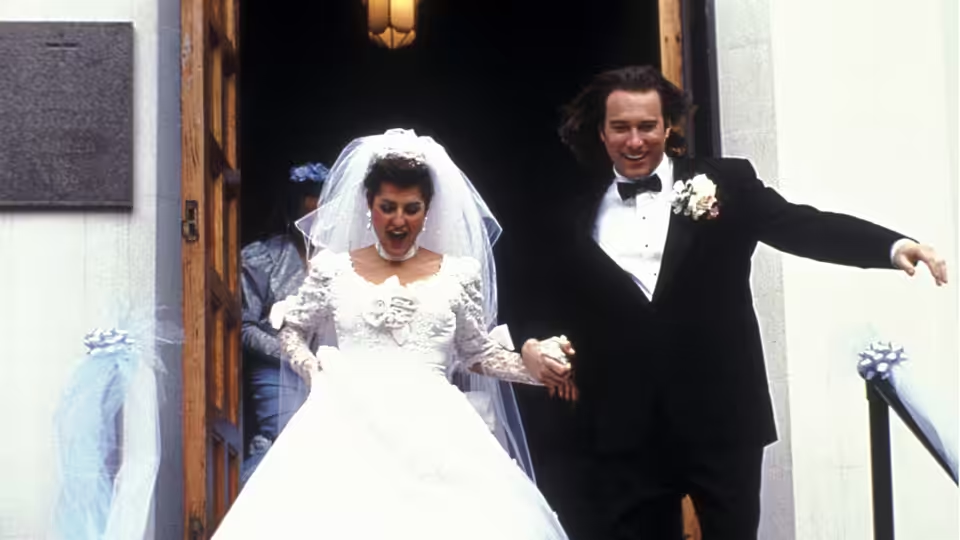
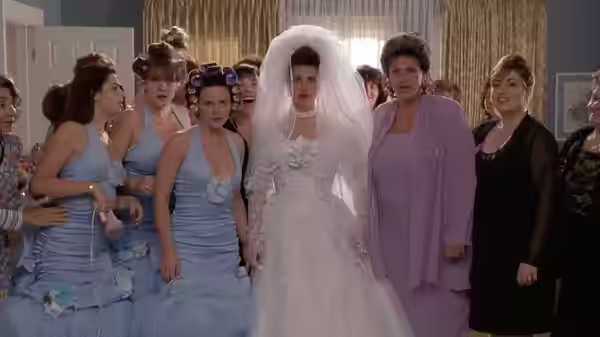
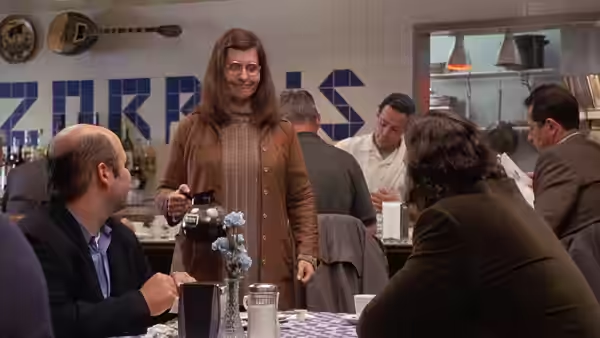
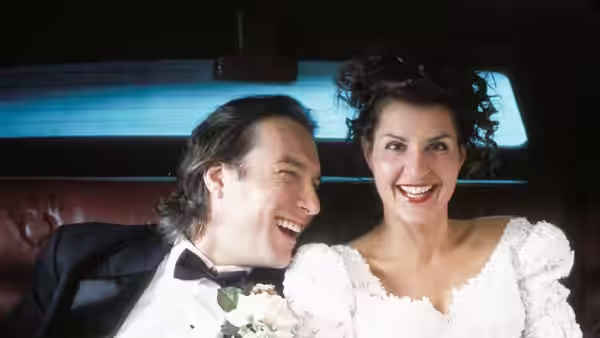
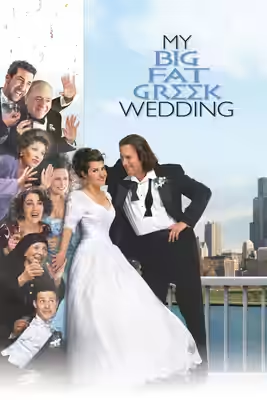
Nia Vardalos and John Corbett make an appealing couple, but the relatives supply most of the laughs. This is warm, undemanding company, held back by a romance that asks little of either actor.
Joel Zwick’s My Big Fat Greek Wedding is a likeable romantic comedy whose family gets most of the good material. It sets out to make interference feel affectionate, and mostly succeeds because the performers understand how tiring affection can be. We recommend it for the company, with the warning that the courtship is slight and the story seldom risks an awkward feeling it cannot quickly soothe. At 95 minutes, it also knows roughly how long these people remain welcome.
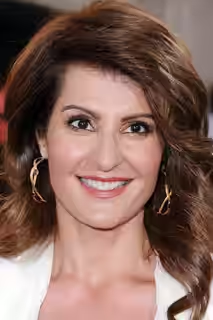
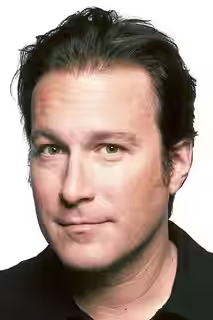
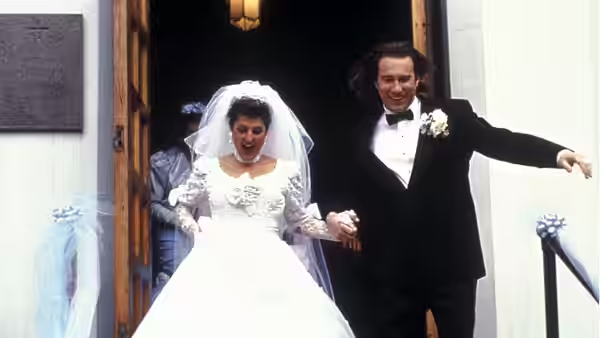
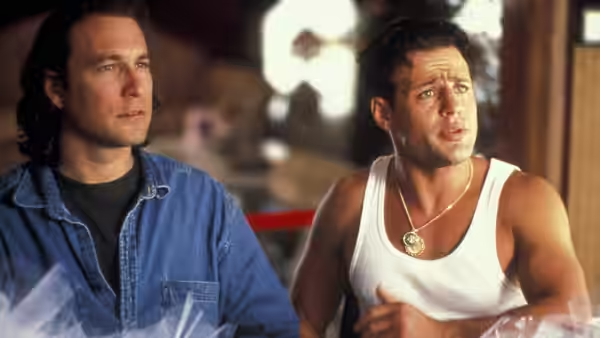
Nia Vardalos, who also writes the screenplay, is the main reason to care about the couple. We laughed at her physical awkwardness because she lets us see the effort involved in trying to look at ease. Her embarrassment has enough stubbornness in it to keep the character from becoming merely pitiable. John Corbett is an agreeable partner, and their chemistry does useful work whenever the script leaves the attraction underwritten. Both are easy to spend time with, though he gets fewer opportunities to be interesting.
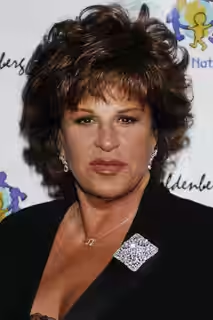
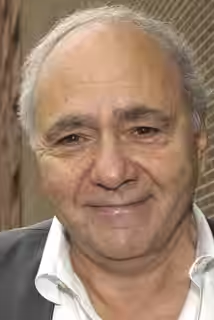
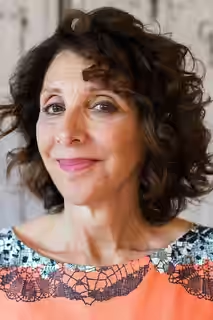
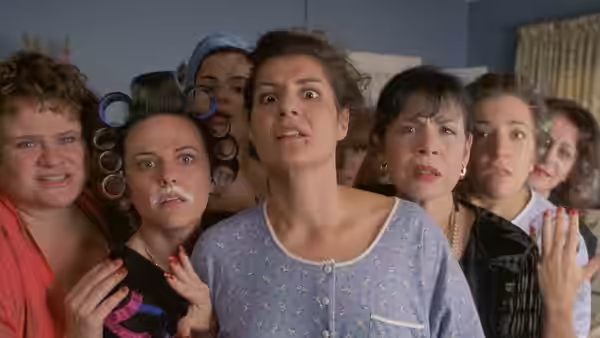
Michael Constantine’s comic authority helps: his assurance gives the other performers something firm to push against. Lainie Kazan brings warmth without losing force, while Andrea Martin is welcome whenever the comedy needs a less polite edge. These are broad performances, but Joel Zwick gives the ensemble enough room to establish different comic rhythms. The family is easier to enjoy when we can distinguish the individuals from the general commotion.
Jeffrey Jur’s photography is clear and undistracting, which suits a film so dependent on faces. It offers little beyond that, and we occasionally wished Joel Zwick would let an image carry a joke rather than leave so much to the performers. Gregory P. Keen’s production design works best as a setting for the ensemble, giving the family a sense of belonging together. The surroundings remain secondary to whoever happens to be speaking.
Mia Goldman’s editing is alert to the comic exchanges, allowing a reaction to register without making every joke feel underlined. The pace remains comfortable even when the story has little new to offer. The music by Chris Wilson and Alexander Janko supports the warmth, though the encouragement sometimes feels unnecessary. The performers can make us soften without quite so much assistance from the score.
The larger weakness lies in Nia Vardalos’s script, which raises the strain of belonging to a close-knit family and then rarely examines it for long. Familiar types become convenient whenever a more difficult conversation threatens to slow the comedy. That keeps the film hospitable, but it also limits what the romance can tell us about either person. We can believe that these people like each other without finding much surprise in the way their relationship is written.
Against the expectations of a family romantic comedy, its modesty is often an advantage. It does not need to make every relative monstrous to give the couple our sympathy, and its fondness feels earned by the cast even when the writing takes shortcuts. There is enough pleasure in the performances to forgive some predictability, though anyone hoping for a searching account of family loyalty will have little to work with. Choose it for an undemanding evening when a lively family sounds appealing.