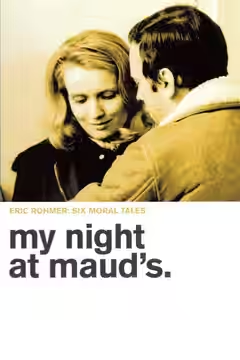
Éric Rohmer’s talkative romance is witty, intimate and carried by Françoise Fabian’s inviting performance. The conversations sometimes outstay their welcome, but watching intelligent people struggle with desire makes the patience worthwhile.
The pleasure of My Night at Maud’s is watching people take their own thoughts seriously enough to become funny. Éric Rohmer, who writes and directs, allows the discussion of sexual attraction to occupy time that another romance would spend getting its characters together. It is an absorbing, warm film, and we recommend it with one reservation: some of these conversations could finish sooner. Françoise Fabian supplies much of the warmth, making Maud someone whose company can survive a considerable amount of philosophy.
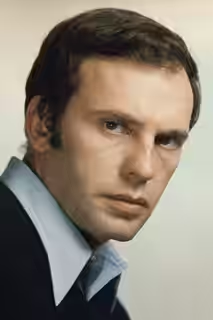
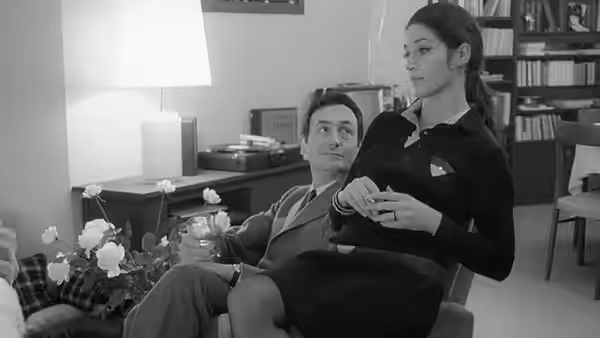
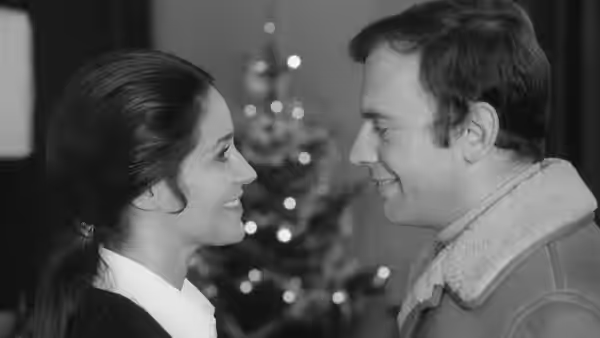
Jean-Louis Trintignant plays Jean-Louis with a reserve that makes the attention he gives Maud interesting in itself. He has to let us follow a man thinking without making every pause look significant, and his performance is patient enough to manage that. The talk gives him opportunities to sound certain; the attraction gives us reason to question that certainty. We can listen closely to what he says and still suspect that he has more thinking to do.
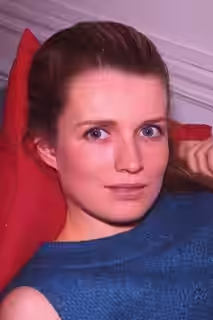
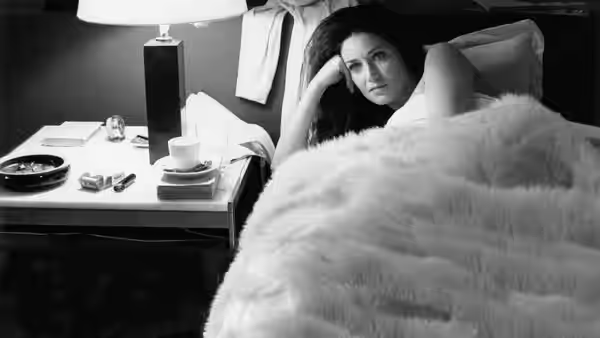
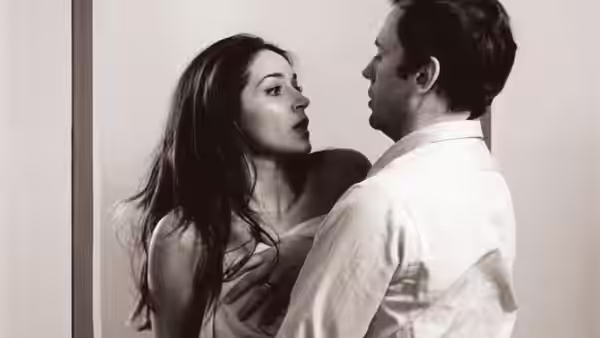
Françoise Fabian is more immediately engaging, and the film benefits from the difference. Her Maud makes the discussion of sex feel connected to an actual person, whose desires cannot be settled by finding a persuasive sentence. We laughed at the solemnity of the intellectual talk around her. Her ease in these exchanges makes all that verbal effort amusing while keeping the attraction credible, and gives us a reason to care about where the conversation might lead.
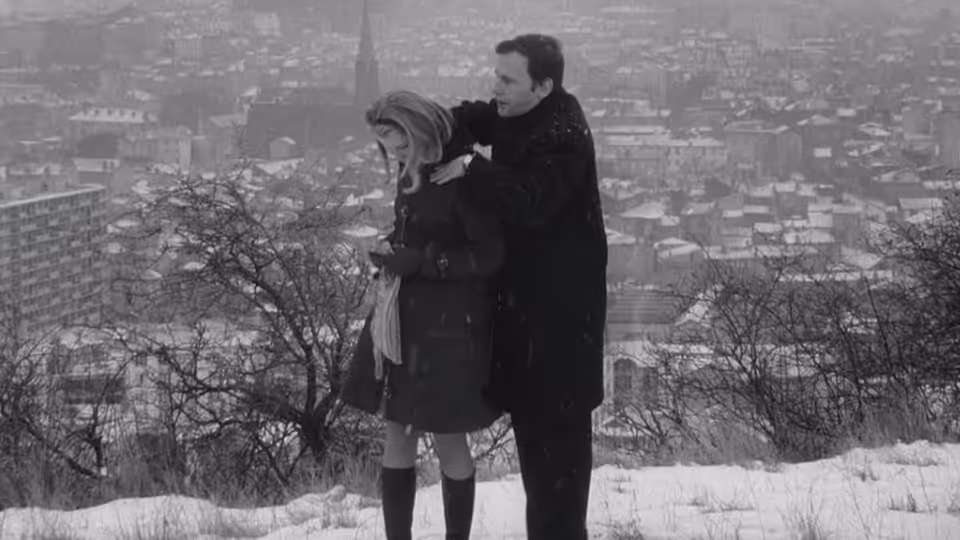
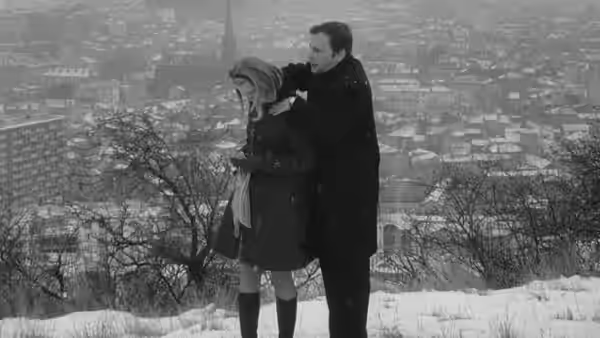
Néstor Almendros gives the snowy setting a welcome physical presence. Those views offer a chance to look without having to follow another line of reasoning, and their beauty makes the pauses worth taking. Nicole Rachline’s production design is discreet enough to keep our attention on the actors, which is a useful quality in a film that spends so much time in conversation. The surroundings never seem to be demanding an interpretation of their own.
Cécile Decugis’s editing accommodates the long takes and gives each exchange time to develop its own rhythm. Listening matters here, and cutting the dialogue more briskly would lose some of the pleasure of watching people consider what they have heard. Even so, 110 minutes is generous for material that sometimes revisits a point after its dramatic interest has faded. There are stretches when we understand the difficulty and are simply waiting for the speakers to catch up.
The film also asks something unusual of a romance: that we remain interested in the explanations people give for their attraction. It leaves enough room for us to question those explanations without dismissing the people offering them. The comedy depends on taking their concerns seriously, and the performances are sufficiently persuasive to make that possible. A less patient treatment would probably be funnier, but it would give us fewer reasons to care about Maud and Jean-Louis.
Choose it for an evening when conversation sounds like sufficient entertainment, and leave room for disagreement afterwards. Half-watching it while doing something else would make its slower stretches harder work, since so much depends on following an exchange from beginning to end. We would gladly spend the evening with Maud again, though we might occasionally ask to change the subject.