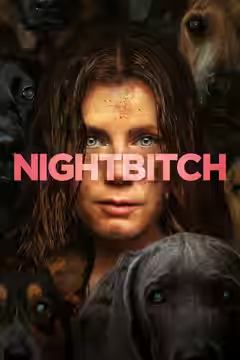
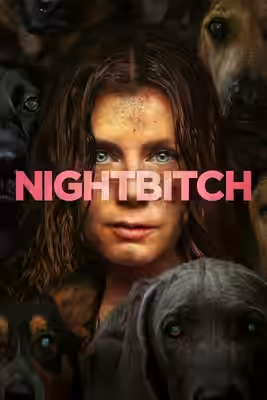
Nightbitch poster

Nightbitch

2024 · Directed by Marielle Heller
1h 38mComedyHorror15
56
Fi1m score
59
Critics · 26
Audience · not yet

Where to watch in the UK

Checked 10 September at 22:29. Prices and availability change; the service’s page is the last word.

Plays from YouTube when you press play; nothing loads from them until then.

Synopsis

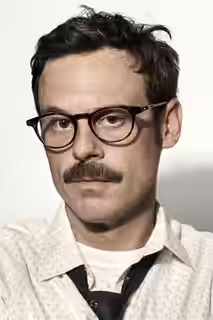
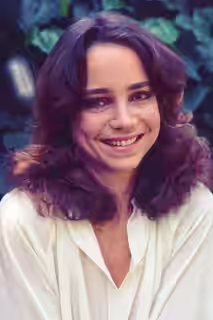
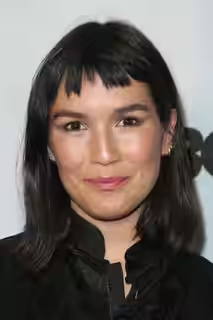
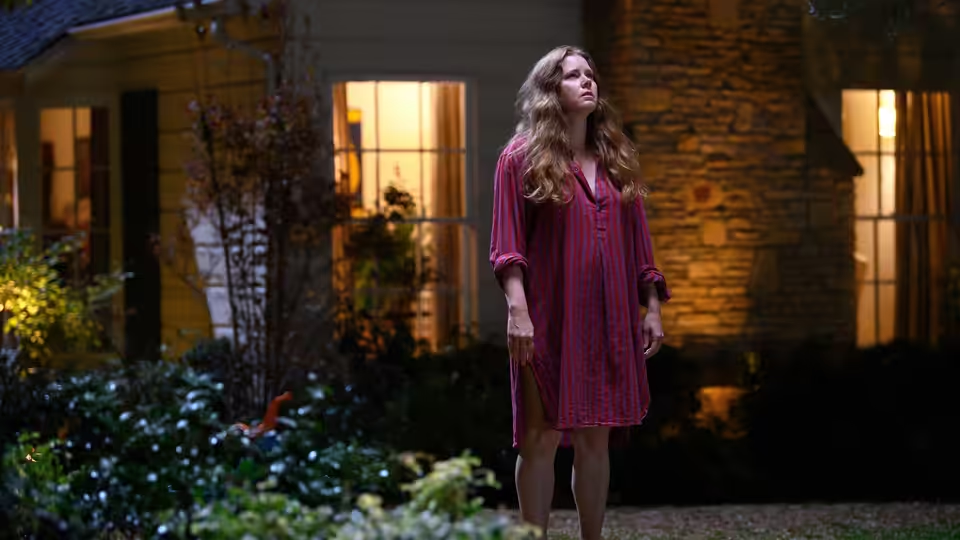
Mother (Amy Adams) gave up her work as an artist to stay at home with her small son (Arleigh and Emmett Snowden). Husband (Scoot McNairy) leaves for work on Monday and returns on Friday, and the days between are all the same. Then she notices a patch of fur at the base of her spine. Her teeth seem sharper. The dogs of the neighbourhood have started gathering on the lawn after dark. At the library singalong she meets other mothers (Zoë Chao, Mary Holland, Archana Rajan) and a librarian, Norma (Jessica Harper), who hands her a book about women who turn into animals. Marielle Heller directs from Rachel Yoder’s novel.

Fi1m review

In a sentenceAmy Adams tears into raw meat with her teeth and the film still wants to talk about her feelings

Marielle Heller’s adaptation of Rachel Yoder’s novel has Amy Adams as a mother who may be turning into a dog. Adams is fearless and frequently funny; the film around her keeps announcing a transformation it then declines to go through with.

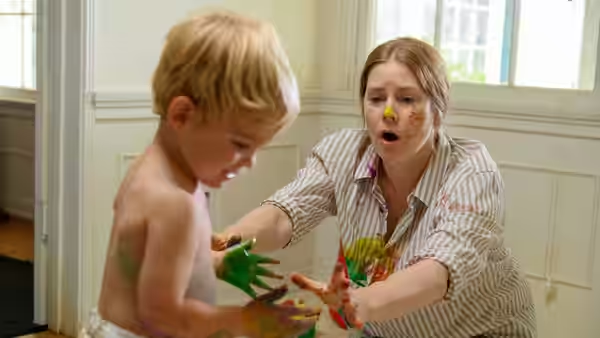
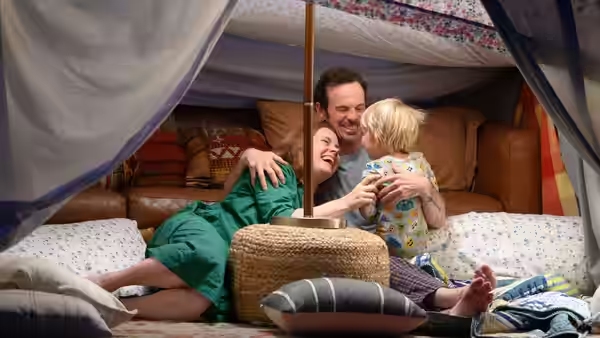
Marielle Heller has adapted Rachel Yoder’s novel about a woman who used to make art and now makes dinner. Amy Adams plays her, and the credits call her only Mother. She lives in a suburb with her small son (Arleigh and Emmett Snowden share the part) while Husband (Scoot McNairy) travels for work all week and comes home at the weekend to be tired. Then she finds a patch of fur at the base of her spine, her teeth feel sharper, and the neighbourhood dogs start gathering on the lawn at night. Nightbitch is a comedy and a horror film about a woman becoming an animal, and it is much better at the woman than the animal. Adams is superb. The film is not, quite.

The first half hour is the sharpest thing Heller has written. Anne McCabe cuts between what Mother says and what she means: a bright “I love it” to an old colleague in the supermarket, then the same moment again with a two-minute account of what the last two years have done to her, then “I love it” once more. The days are shown as one day, eggs, playground, library, bath, the same book, the same song, cut short and tight so the routine wears a groove. We laughed a great deal in this stretch. By the fourth bath we had stopped, and we think that was intended.

Adams does the heavy work with her face and her posture. She lets her shoulders round, her hair go unwashed and her voice flatten into the tone of a woman who has not finished a sentence since the birth. When the dog comes through she plays it as relief: a sniff at a stranger, a snarl at a man who takes the last parking space, plain pleasure the first time she runs on all fours across wet grass. There is no vanity in it, and when she digs in the garden by moonlight with her bare hands we believed every second.

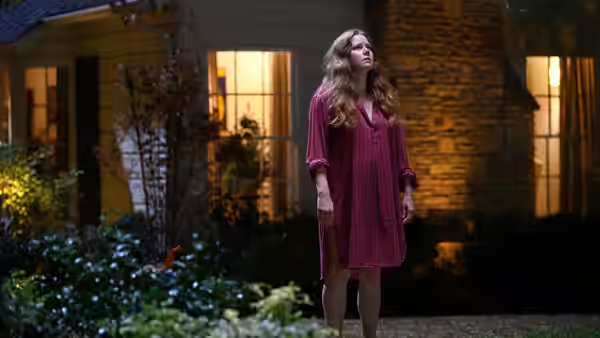
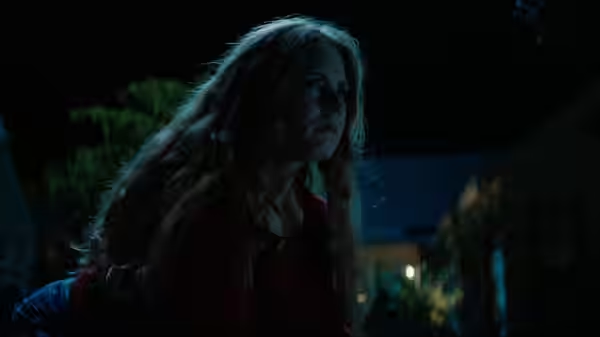
The horror does not come. There is fur, a tail, something unpleasant found in the garden one morning, but Heller cuts away from the body at the moment a horror film would move in. Brandon Trost shoots the house in flat, warm daylight, oatmeal walls and a kitchen strewn with plastic, and the nights in a soft streetlamp orange, so the dog is never once frightening. Karen Murphy dresses the spare room as the studio Mother no longer uses, canvases stacked against the wall, and that room says more about what she has lost than any of the voiceover. There is a great deal of voiceover. Adams reads us paragraphs about the animal self and the ancient and the sacred, each repeating what the scene has already shown, at greater length and in worse prose.

Jessica Harper’s Norma, a librarian who presses a book of mythical women into Mother’s hands, is warm and faintly sinister and is given almost nothing to do. Zoë Chao, Mary Holland and Archana Rajan play the mothers from the library group, first mocked, then embraced, in a change of heart the film wants more than it earns. McNairy plays Husband as a man who means well, which is truer than a villain would be and lets the film off. Nate Heller writes the score and plays the man leading the singalong at the library. His music is light and plucked and never suggests anything is wrong, which we took to be a decision.

Heller’s Can You Ever Forgive Me? (2018) and A Beautiful Day in the Neighborhood (2019) were about difficult people handled with patience, and patience is her gift. It is the wrong gift here. Yoder’s premise asks for teeth, and around the hour mark the film steps back from the transformation and into a marriage drama, with arguments about the dishes that could have been had without any fur at all. The second half takes a turn we will not describe. We will say that it settles in about ten minutes what the first hour had made feel impossible to settle, and that we were angrier about it than the film could have meant us to be.

See it for Adams, who is doing something braver than the film around her. At 98 minutes it does not overstay, and it plays better at home, where the voiceover feels less like a lecture. Motherhood is a bitch, runs the tagline. The film agrees, then apologises.
Critical consensus AI synthesised

59
Positive
9
Mixed
12
Negative
5

The reviews split almost down the middle, and the spread is wide. Nearly everyone agrees on Amy Adams: critics call her performance committed, unvain and wild, and several say she is the reason to watch even when the film around her disappoints. Marielle Heller’s direction draws praise for warmth and for making the premise of a mother turning into a dog feel believable, with Deadline going furthest in calling it a wise, sweet tribute to mothers. The reservations cluster on nerve. Most critics say the film pulls its punches, keeping the body horror of the novel at arm’s length and settling into a conventional domestic drama; Polygon and Slant both want it messier and stranger. Others find the metaphor on the nose and the narration too plain in spelling out its points. The Independent dissents hardest, calling it far too tame with pat conclusions, while The Guardian finds it unwilling to choose between comedy and horror.

Empire
4 December 2024
80*

The critic praises it as a funny, freaky and appropriately messy film that is part comedy, part body-horror and part feminist treatise. They single out Amy Adams' remarkable, deeply unselfconscious performance.

Read the full review →
Little White Lies
4 December 2024 · 4/4/3 · Jourdain Searles
80

The review commends Amy Adams' committed and energetic performance as the mother grappling with lost identity. It singles out the film's insightful portrayal of the emotional and domestic burdens of motherhood as a rare and worthwhile exploration.

Read the full review →
Los Angeles Times
6 December 2024 · Robert Abele
80*

Abele calls the film a sincerely surreal domestic fable that offers liberation through its canine metaphor for exhausted motherhood. He singles out Amy Adams' ferocious, howling performance and Heller's empathetic direction that avoids easy traps.

Read the full review →
Radio Times
★★★★ · James Mottram
80

The review calls it a clever, blackly comic twist on the werewolf tale that smartly examines midlife motherhood and sacrifice. It singles out Amy Adams' raw, unvain performance and the film's satisfying genre-bending approach.

Read the full review →
The Telegraph
5 December 2024
80*

Heller makes the outlandish premise of a mother turning into a dog feel natural and believable. Adams gives a terrific, primeval performance that unleashes something wild within the domestic setting.

Read the full review →
The New York Times
5 December 2024 · Manohla Dargis
75*

Dargis describes the film's sly conceit of a beleaguered mother transforming into a dog as a galvanizing rebirth exploring power, female identity, and maternity. She praises Amy Adams' clever, comic performance while noting the story's claustrophobic intimacy and some dubious ideas about domesticity.

Read the full review →

Cast

Stills

If you liked this, try…

The Babadook poster

The Babadook

2014 · Another mother at the end of her rope, in a film that does not flinch.

Tully poster

Tully

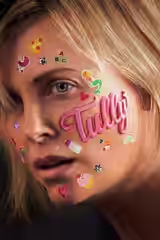
2018 · The exhaustion without the fur; Charlize Theron, a night nanny and a sharper script.

Raw poster

Raw

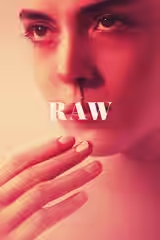
2016 · A young woman’s appetite turns feral, and Julia Ducournau follows it all the way down.

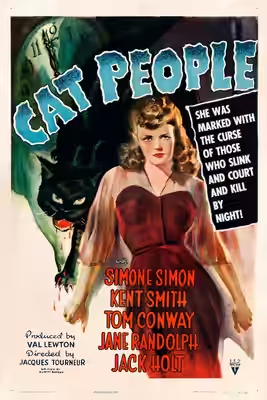
Cat People poster

Cat People

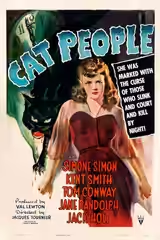
1942 · The original woman-becomes-animal picture, done entirely in shadow and suggestion.

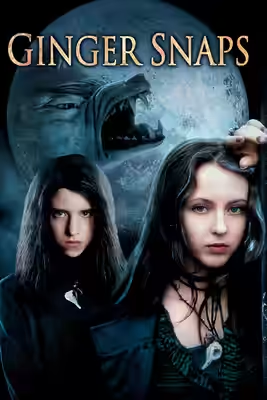
Ginger Snaps poster

Ginger Snaps

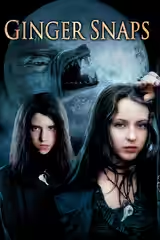
2000 · Puberty as lycanthropy, from Canada, with the black humour this one keeps swallowing.