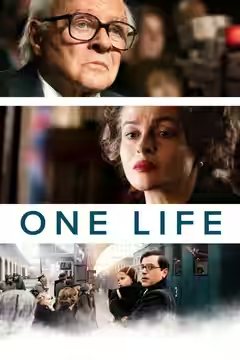
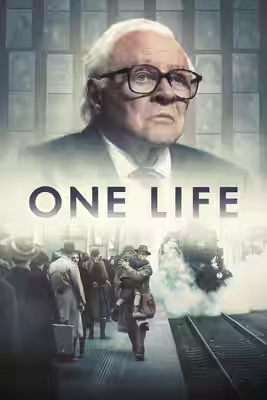
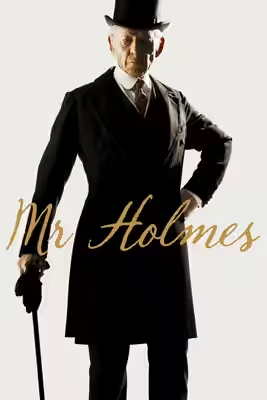
James Hawes tells Nicholas Winton’s story plainly and without fuss, which suits the man and flattens the film. Anthony Hopkins is quietly excellent, the Prague scenes look like television, and the last ten minutes get you anyway.
In 1938 a young London stockbroker called Nicholas Winton goes to Prague for a week, sees the refugee camps filling with families who have fled the German advance, and decides to get the children out. In 1987 the same man, now old and played by Anthony Hopkins, is told by his wife to clear out his study, and finds in it a scrapbook he has not opened in half a century. James Hawes, directing his first film for cinemas from a script by Lucinda Coxon and Nick Drake, runs the two stories side by side for 109 minutes. It is a decent, careful, conventional piece of work, and the last quarter of an hour is more than that.
Hopkins is the reason to watch. He plays Winton as a man embarrassed by his own past, forever tidying it into boxes and changing the subject when it comes up, and he does most of it with his hands: sorting papers, folding a towel, closing the scrapbook a moment too quickly. His scenes with Lena Olin, as Grete, are the film’s warmest, a marriage that stopped needing to explain itself decades ago. Jonathan Pryce has a couple of scenes as Martin Blake, an old friend who knew him then, and the two of them are easy company.
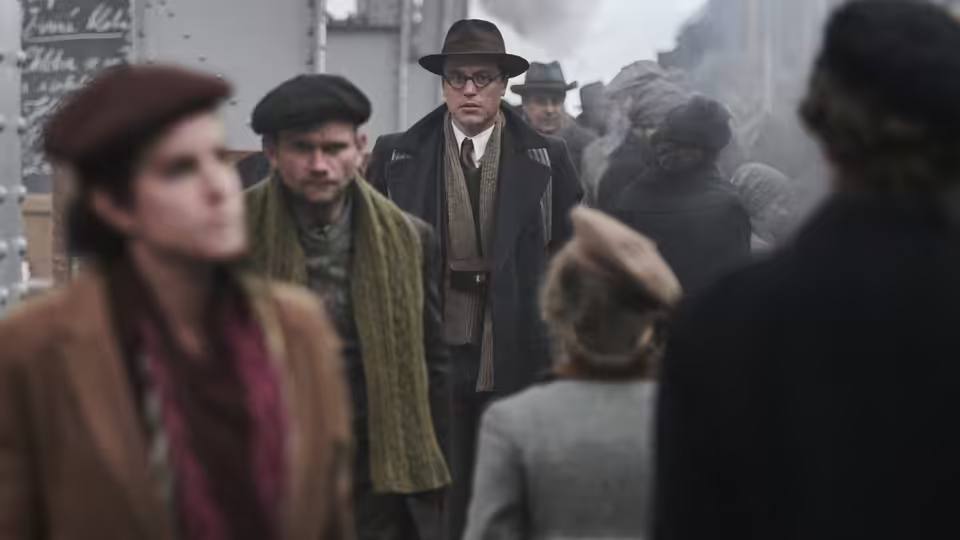
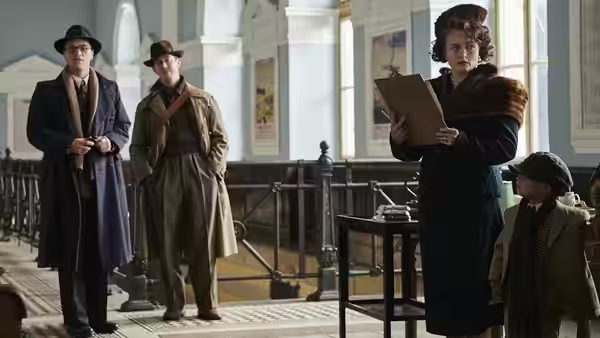
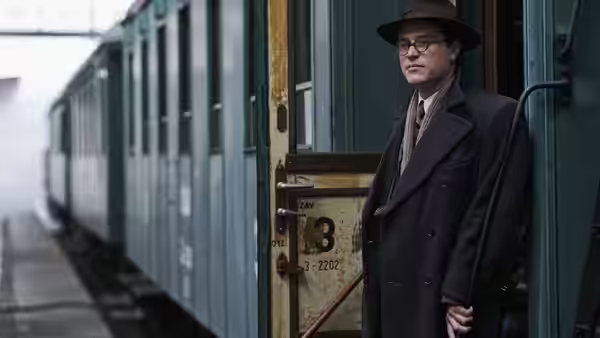
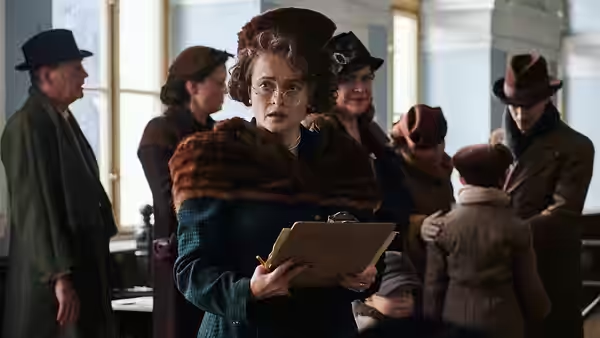
The 1938 strand is where the film spends most of its time and where it is most ordinary. Johnny Flynn plays the young Winton with round spectacles, good manners and a stockbroker’s head for forms, and he is well cast: you believe this man would save children by filling in paperwork correctly. Romola Garai’s Doreen Warriner runs the relief committee like a headmistress in a crisis, Alex Sharp’s Trevor Chadwick is the one who volunteers to stay in Prague, and Helena Bonham Carter, as Winton’s mother Babi, marches through the Home Office demanding visas from men who would rather she went away. Christina Moore fills the camps with tents, mud and smoking stoves, and Joanna Eatwell puts the Britons in good wool coats among people who have sold theirs.
The trouble is that none of it frightens us. Coxon and Drake write scenes that make one point each and then stop, so the Germans are always about to arrive and never seem any closer. Zac Nicholson shoots Prague in brown and grey under snow and the 1980s in the flat overcast light of Sunday-night television, and neither look has a single image we could describe to you from memory. Lucia Zucchetti cuts between the eras on the scrapbook, old Winton touching a photograph, cut to the child, and you can see the join coming every time. Volker Bertelmann’s piano score keeps its head down for an hour and a half. We sat through the whole of the Prague story without once being afraid for anybody, and in a film about getting Jewish children out of a city the German army is about to enter, that is a strange thing to have to report.
Then the film arrives at the place it has been heading all along, and we will not describe it, or how Hawes stages it. We will say that we cried, and not politely, and that we were a little cross about it afterwards, because we could see every lever being pulled and it made no difference. Hopkins does almost nothing. The camera stays on him. It is the one place in the film where restraint is a choice rather than a habit.
British films about wartime decency have a long shelf, and this one sits in the respectable middle of it. It is more honest than most about its hero being a clerk, and it knows that the interesting question is not why he did it but why he never mentioned it. It asks that question in nearly every 1980s scene and does not quite answer it.
Watch it at home, where the television look stops being a fault, with someone older than you and a handkerchief between you. It runs 109 minutes and carries a 12A, and the certificate is right: there is nothing here a twelve-year-old could not watch.