Nicolas Winding Refn gives this revenge thriller precise images and an unsettling score, but too few reasons to care about its people. Kristin Scott Thomas supplies welcome comic spite; the slow, punishing stretches remain hard to justify.
Nicolas Winding Refn’s Only God Forgives has enough fine work in its images and music to make its thin drama frustrating. This is a revenge thriller slowed almost to a standstill, with guilt weighing on people who seldom explain themselves. There is nothing wrong with asking us to watch faces, listen and wait for a movement. The difficulty is that, across 89 minutes, the film gives us too few changes in those faces to keep the waiting tense.
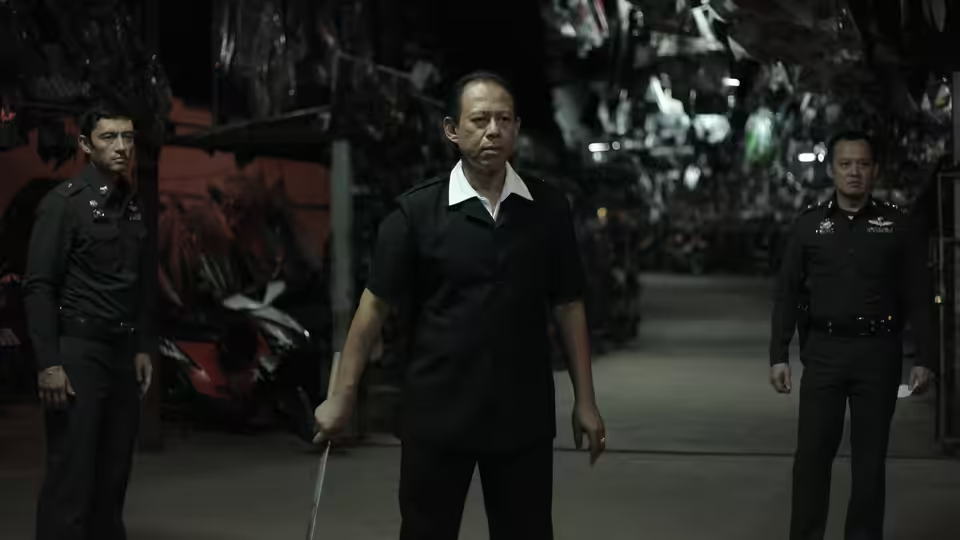
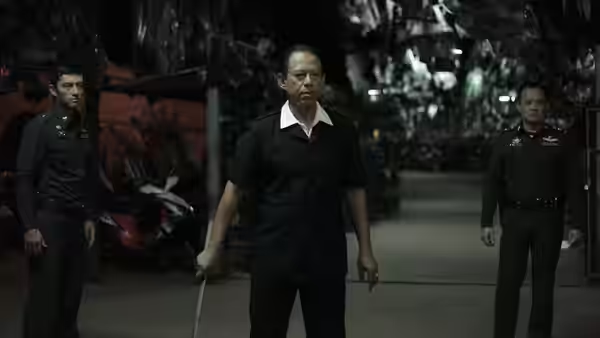
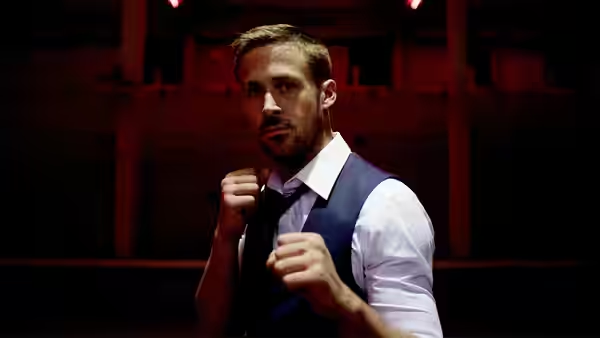
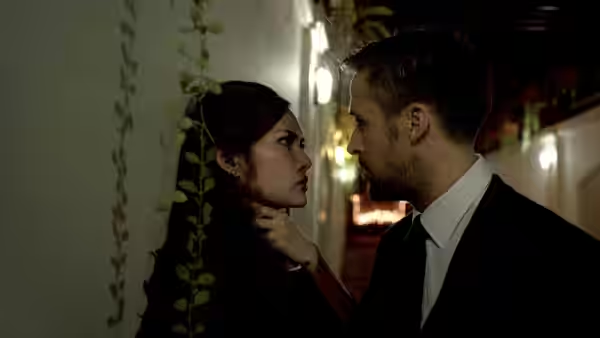
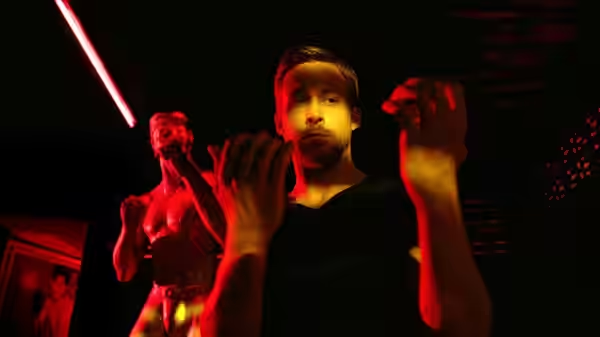
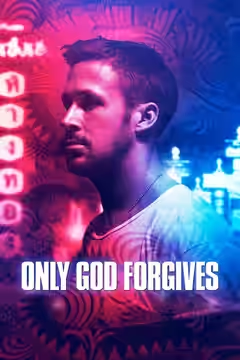
Larry Smith’s cinematography provides the clearest reason to persevere: saturated colour and exact framing make Bangkok feel threatening before anyone acts. The neon is oppressive, and the carefully arranged compositions give the eye plenty to examine during the pauses. Beth Mickle’s production design sustains that artificial city, where ordinary life barely seems to exist beyond the frame. The trouble begins when another carefully composed image is expected to carry a scene without much help from the characters.
Cliff Martinez’s electronic score does useful work here, making the quiet stretches uneasy without demanding a burst of action to justify them. Its eerie sounds suggest danger even when the drama has stopped supplying reasons to anticipate it. Matthew Newman’s editing preserves the slow pace, but the extended pauses too often feel interchangeable. The music keeps suggesting that something terrible is near, even when our interest in what that might be has faded.
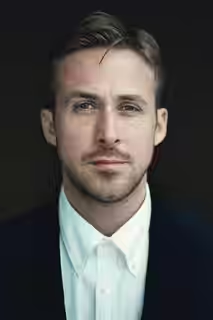
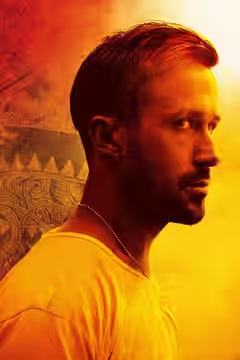
Ryan Gosling plays Julian with such restraint that it becomes difficult to distinguish one state of mind from another. We were bored by his prolonged stillness, because the film gives us so little change in expression or behaviour to follow. It is a committed performance, and the lack of easy charm fits this hostile setting. After a while, though, another pause with Julian tells us little we have not already gathered.
Kristin Scott Thomas has more to work with as Crystal, whose bluntness cuts through the solemnity. Her comic nastiness is welcome because it gives a scene an immediate, recognisable tension: someone is being unpleasant, and we want to see what happens when she finishes. That is a modest pleasure, but an important one in a film so reluctant to let people speak plainly. Even this performance cannot turn a thinly written character into a fully convincing person.
The violence is difficult to dismiss, and the controlled presentation can make it ugly in a way that feels deliberate. The problem is repetition: brutality keeps demanding a response without giving us much more to understand about the people responsible. A revenge thriller needs a clear sense that a decision will cost somebody something, even when everybody involved is hateful. Here, the lengthy preparation for each eruption becomes as wearing as the violence itself.
There is enough control of colour, sound and pace here to explain why the film has admirers. We cannot recommend it on those strengths alone, because too much of the evening is spent waiting for the people to become interesting. If sparse dialogue and prolonged brutality already sound tiring, this is a safe one to leave unwatched.