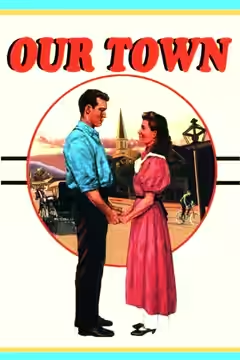
Sam Wood’s film of Thornton Wilder’s play keeps the narrator, the two kitchens and Aaron Copland’s plain, hymn-like score, and for an hour it is quietly affecting. Then it loses its nerve in a way we will not describe. Worth an evening, with that reservation.
Thornton Wilder wrote Our Town for a stage with nothing on it: two ladders, some chairs, a stage manager who tells the audience where the houses are and asks them to imagine the rest. Sam Wood’s film gives the town back its houses, its fences and its main street, and the question it has to answer is whether Grover’s Corners survives being seen. For an hour it does, and rather beautifully. The last half hour is where the film and the play part company, and we will come to that, but the verdict first: this is a careful, well-acted and often moving picture that would be better if it trusted its author to the end.
Frank Craven, who played the narrator on Broadway and shares the writing credit here with Wilder and Harry Chandlee, is the film’s best idea. His Mr Morgan keeps the drugstore, and he also walks the empty street before dawn telling us the population, the churches and the price of a house, looking straight into the lens like a man who has been asked to show a visitor round and has done it too often to hurry. It should not work on film. It does, because Craven never plays it as a device. He simply knows things, including things that have not happened yet, and lets them drop.
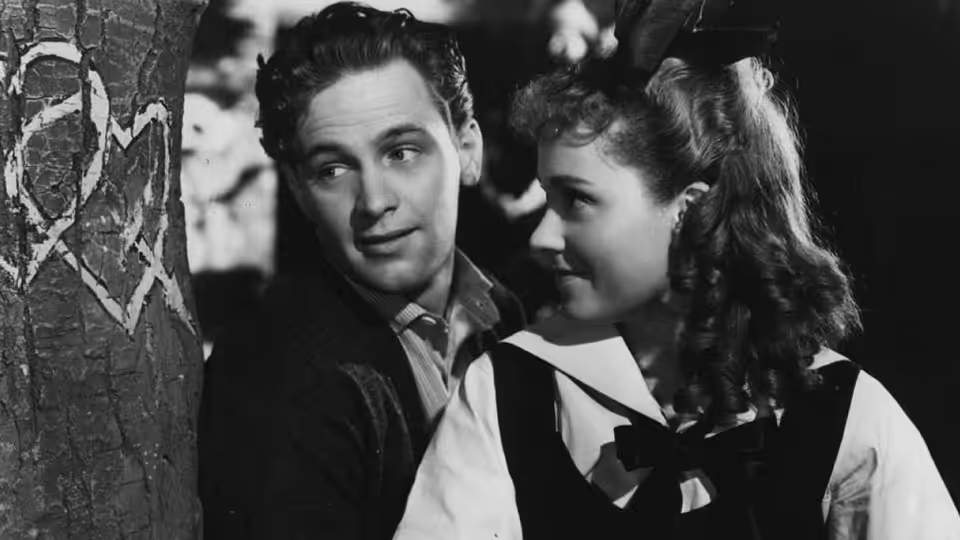
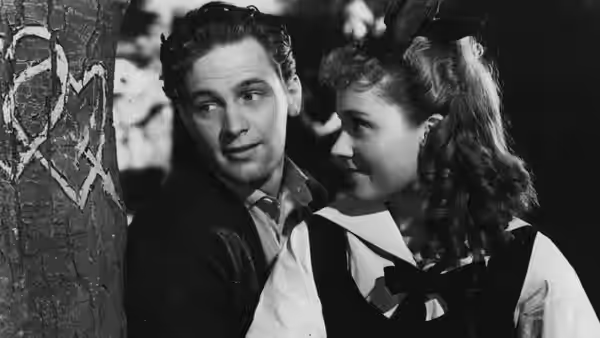
The town is two kitchens. In one, Mrs Gibbs (Fay Bainter) makes breakfast for Doc Gibbs (Thomas Mitchell), home from delivering twins; in the other Mrs Webb (Beulah Bondi) does the same for Mr Webb (Guy Kibbee), who edits the paper. Bainter has the scene we would keep above all the others, in which she tells her neighbour over the string beans that she has been left some money and would like, once in her life, to see Paris, and Bondi listens as if this were a slightly indecent thing to want. Upstairs, Georges Gibbs (William Holden) shouts across the gap between the houses for help with his algebra and Emily (Martha Scott) gives it, with conditions. Holden is gangly and eager and not yet the actor he became. Scott is playing a schoolgirl and is plainly not one, and the film does not mind.
The scene that got past our guard is in the drugstore. Georges has walked Emily home from school and, trying to apologise for something, buys her a strawberry ice cream soda he cannot afford, and over the glasses he tells her he is not going away to agricultural college after all. Nothing is declared. Wood keeps the camera on the two of them at the counter, Craven pottering behind them, and lets it happen in the pauses. It moved us more than we expected, and we think it was the pottering: a man polishing a glass while two children decide their lives.
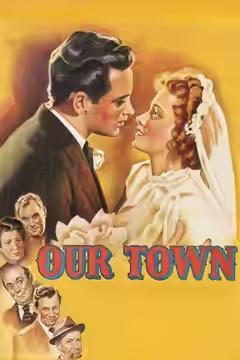
Bert Glennon photographs the daylight scenes plainly, morning sun through clean windows, and William Cameron Menzies’s town is convincing without being pretty, all clapboard and slightly too-wide streets. Aaron Copland’s score is the other thing the film gets exactly right. It is built from hymn tunes and long held notes on strings, and it comes in under the narration like weather rather than a cue. Edward P. Lambert dresses everyone in the same three shades of grey and brown, so that Emily’s white wedding dress is the first strong thing you have seen. Sherman Todd cuts slowly, sometimes too slowly; the wedding, in which Georges panics before the service and his mother talks him down, goes on a beat past its point.
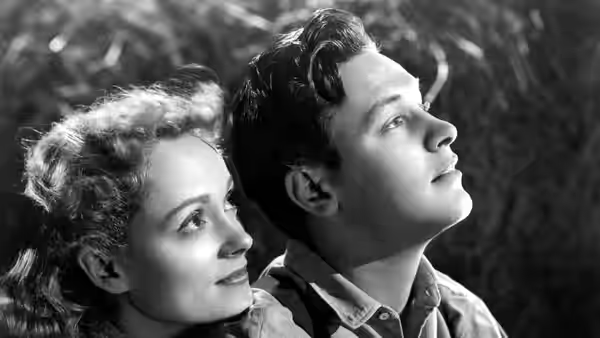
The film’s trouble is that it likes the town more than Wilder did. The play has a drunk in it, the choirmaster Simon Stimson, and Philip Wood plays him well, but the film gives him a scene and then puts him away. Doro Merande’s Mrs Soames chatters agreeably where on the page she is a small comic monster. And in the last half hour, when Glennon’s light goes soft and pale and faces are lit from nowhere in particular, the film arrives at the place the play was built to reach and then, at the very last, changes course. We will not say how. We will say that anyone who knows the play will notice, and that Wilder’s ending was the braver one.
Ninety minutes, then, of milk rounds, homework and choir practice, done with more care than this sort of material usually gets, and one large flinch at the end. Watch it for Craven, Bainter and Copland, and if you know the play, be ready for the last five minutes to make you cross.