Paul King’s Paddington is funny, kind and made with care, with Ben Whishaw giving the bear a touching voice. The villain business is less distinctive, but there is plenty here for adults as well as children.
Paddington gets a difficult thing right: it takes a polite bear seriously without making a solemn occasion of his goodness. Paul King, who directs and writes the screenplay, understands that the wish to be useful can cause as much trouble as outright mischief. We recommend it warmly, with a reservation about the more conventional danger surrounding Nicole Kidman’s Millicent. For most of its 95 minutes, though, the comedy comes from allowing an odd visitor into a household and seeing what happens.
Ben Whishaw gives Paddington a voice that makes courtesy sound like something he has thought about, rather than something he has been trained to perform. There is innocence in it, but no vacant cheerfulness. We were moved by the bear’s eagerness to be welcome, because Whishaw makes every polite approach sound as though rejection would hurt. The digital animation gives that voice an expressive face without constantly demanding that we admire the work. Paddington can hold our attention without a joke being supplied for him.
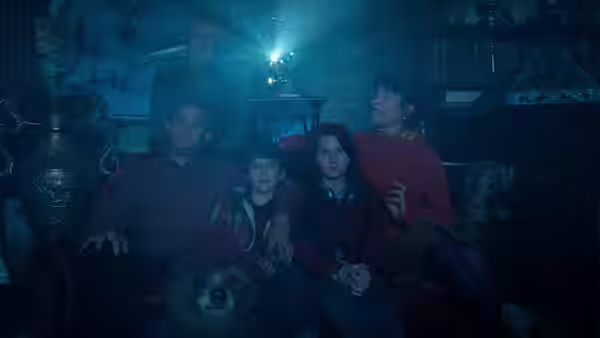
Sally Hawkins makes Mary Brown’s kindness feel immediate and unforced, without playing every exchange as an invitation to admire her. Hugh Bonneville makes Henry Brown’s fussiness funny without suggesting we should despise the man. King gets good work from both, although his writing is less generous to Judy Brown and Jonathan Brown. Madeleine Harris and Samuel Joslin fit the household, but the children are less fully imagined than the adults.
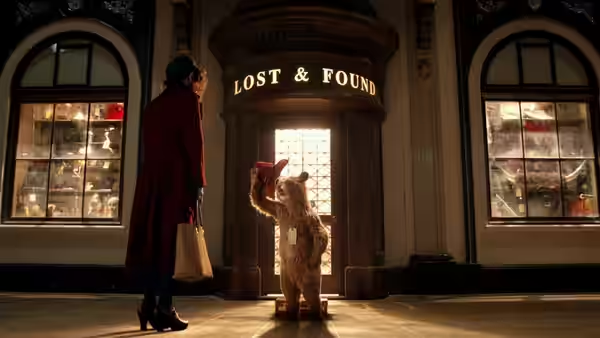
Erik Wilson’s cinematography and Gary Williamson’s production design are particularly well matched in the Browns’ home, which King opens up to us like a dollhouse. The framing lets us take in the rooms and the family together, giving the picture plenty to enjoy without making it difficult to follow. London gets the same permission to look a little invented, and the film is better for it. The slightly unreal city makes it easier to accept its new arrival.
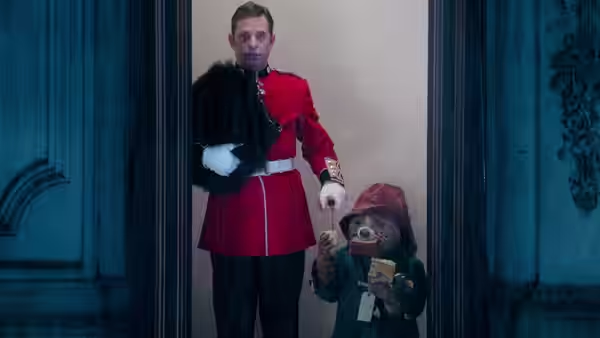
Mark Everson’s editing keeps the slapstick readable, giving us time to see a mishap develop instead of relying on frantic cuts to supply excitement. The messier jokes are less interesting, although King usually has another visual idea ready before the crudity becomes wearing. Nick Urata’s score helps the bustle feel friendly, even when everything is going wrong. It suits a film whose accidents should make children laugh rather than worry about the damage.
The villain business is where the film becomes less interesting. Kidman enjoys Millicent’s nastiness, but the more emphatic threat brings a familiar family-adventure shape to a comedy that gets on perfectly well with small misunderstandings. A few action passages feel imposed, and the insistence on peril takes attention away from the bear’s efforts to fit in. We would happily have spent more time on the household and less on giving it something obvious to fear.
King trusts the audience to care about a character who is trying to behave decently. The welcome offered to an outsider matters here, and the performances make it feel like something people have to choose. As family comedy, it gives adults something better to do than wait for a reference the children will miss. Watch it together; nobody needs to borrow a child to justify the choice.