Pabst’s silent film about a dancer and the men who ruin themselves over her is carried by Louise Brooks, who acts as if the rest of 1929 had not been invited. It sags in the middle and it moralises, and we would still send you to it.
Georg Wilhelm Pabst directed Pandora’s Box and wrote it with Ladislaus Vajda, with the editor Joseph Fleisler also credited as a writer. The material is a fable: Lulu, a dancer with no visible past and no plans, passes through the lives of a publisher, his son, a countess, a strongman and a scavenging old man, and each of them comes out worse. At 141 minutes it is long for a silent film and it feels long in one stretch, which we will come to. It is also one of the few films of its period we would put in front of someone who thinks they do not like silent films, because the woman at the centre of it does not seem to know she is in one.
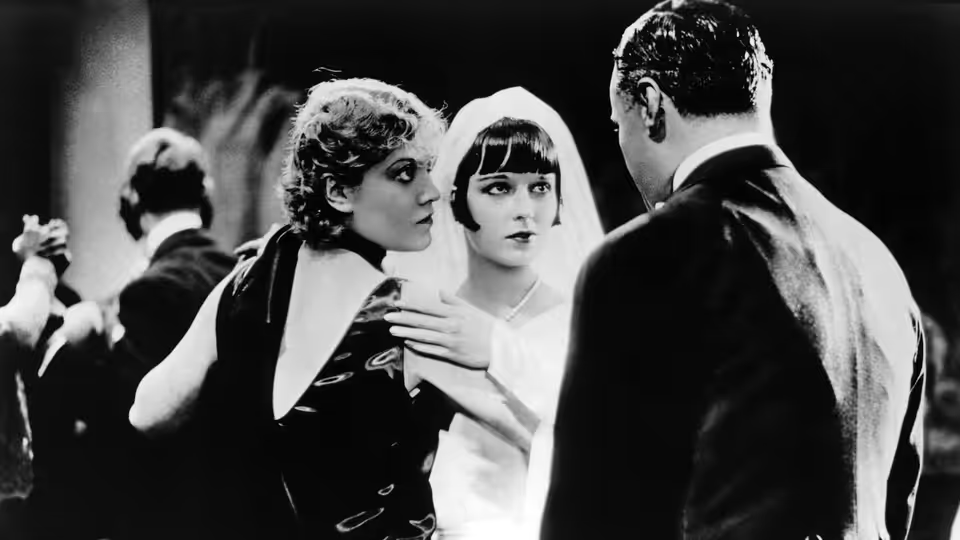
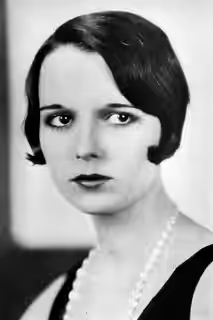
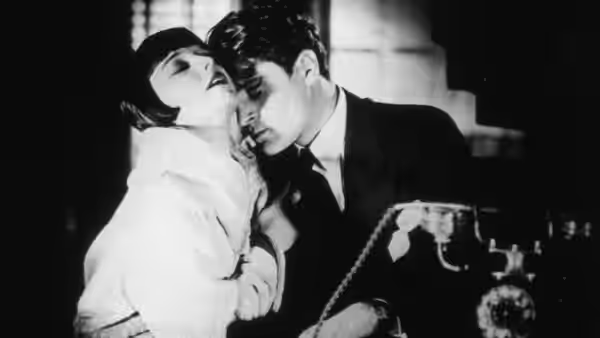
That is Louise Brooks. Everyone else in the cast acts in the manner of the day, with the hand to the brow and the slow turn to camera, and Brooks simply stands there with her black helmet of hair and looks at people. In the dressing-room scene, where Lulu has refused to perform and Dr Schön (Fritz Kortner) comes to shout her onto the stage, her face goes from fury to delight to something like pity in the space of a few cuts, and none of it is signalled. We felt caught, as though we had been watching a real person through a door. When the door does open, and it does, we understood the whole film in her expression before the intertitle arrived to explain it.
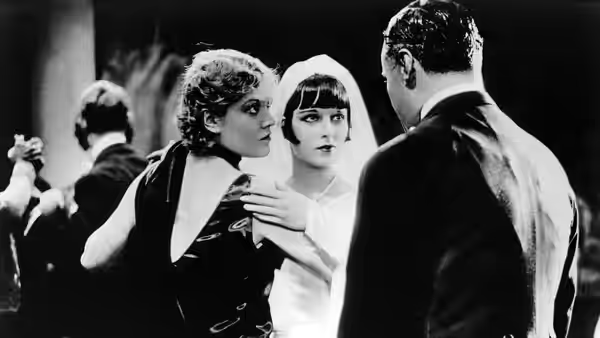
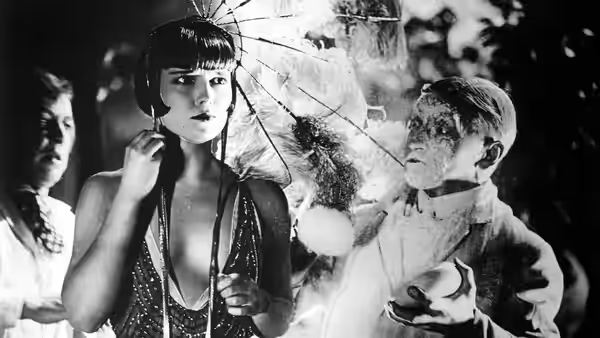
Günther Krampf shoots her in close-up more than anyone else in the picture, and lights her from the side so the hair is a hard black shape and the face is almost white. The backstage sequence is the best-made thing in the film: Fleisler cuts among stagehands, dancers in feathers, a drum, Sig Arno’s stage manager waving both arms, and Lulu sulking in a corner, and the rhythm gets faster as the curtain gets closer. Bohumil Heš puts Lulu in pale satin and the Countess Geschwitz (Alice Roberts) in a tailored dark jacket and tie, so that when they stand together you can read the whole relationship from the clothes.
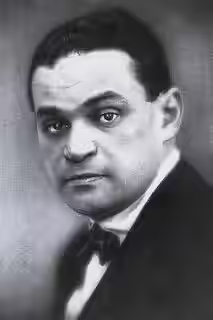
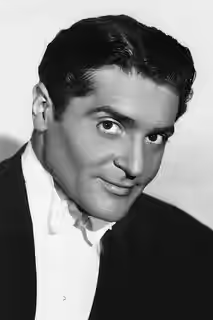
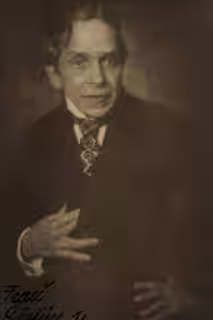
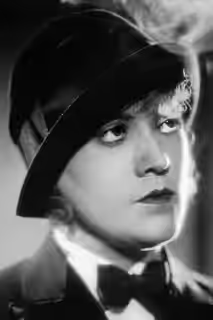
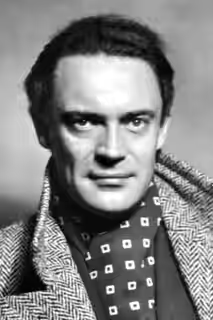
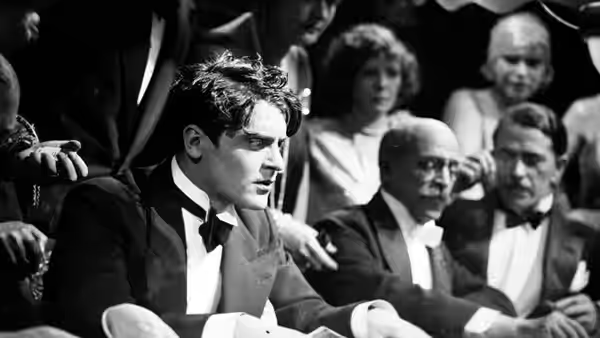
The men are drawn in a thicker line. Kortner plays Schön with his jaw locked and his hands working, and it is effective without being subtle. Carl Goetz’s Schigolch is the film’s sly comic turn, a man who can find a drink in any room and asks nothing of Lulu except that she keep him. Krafft-Raschig’s Rodrigo is all chest. Francis Lederer’s Alwa is the weakest of them, a boy who loves Lulu the way a boy loves a poster, and the film knows it. Alice Roberts gets less than she deserves; Geschwitz is the only character who wants nothing from Lulu but Lulu, and Pabst keeps her on the edge of the frame.
The second half travels, and it slows. There is a trial, with Karl Etlinger’s defence attorney pleading against a prosecutor who compares Lulu to Pandora, and then a stretch on a gambling ship where the Marquis Casti-Piani (Michael von Newlinsky) trades in her as if she were cargo. We were bored on the ship, and then irritated, because the film had stopped watching Lulu and started explaining her. The script wants her to be a force of nature that men bring ruin upon themselves by touching, and the intertitles keep saying so. Brooks keeps quietly disagreeing. She plays a woman who likes people and does not think ahead, and that is a good deal more frightening than a myth.
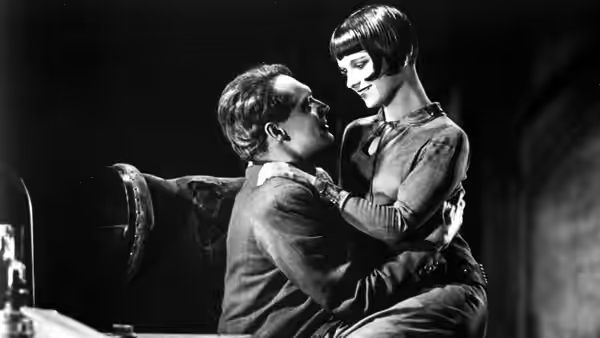
The last reels are set in London fog, and Gustav Diessl appears as a stranger who befriends Lulu. We will say nothing about what happens except that Krampf lights it with a single candle and that it is tender for far longer than we were braced for, and the tenderness is what horrified us.
It is a silent film, so it is only as good as whoever is playing under it. Give it a decent accompaniment and one sitting. The first ten minutes, Lulu in her flat teasing the meter reader, will tell you whether Brooks has you. In our experience she does.