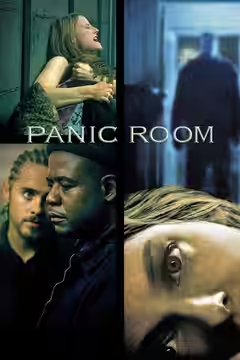
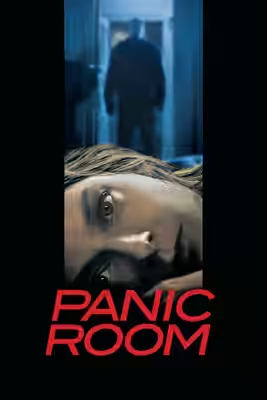
David Fincher’s siege thriller puts Jodie Foster and her daughter inside a steel room and three burglars outside it, then spends 111 minutes tightening the screw. It is lean, handsome and expertly built, and it asks nothing of you but your pulse.
David Fincher had made Se7en (1995) and Fight Club (1999). Then he made this: one house, one night, five people, and a script by David Koepp that fits together like a lock. A woman and her child are shut inside a vault; three men who want what is in the vault are shut outside it. Everything that follows comes from that arrangement, and the film never pretends otherwise. It is a thriller with one idea, and it is a good one.
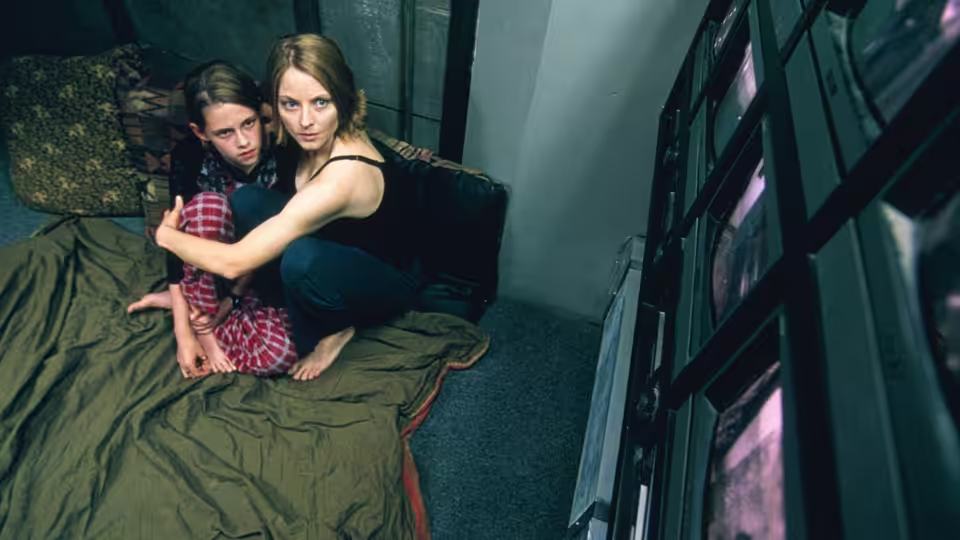
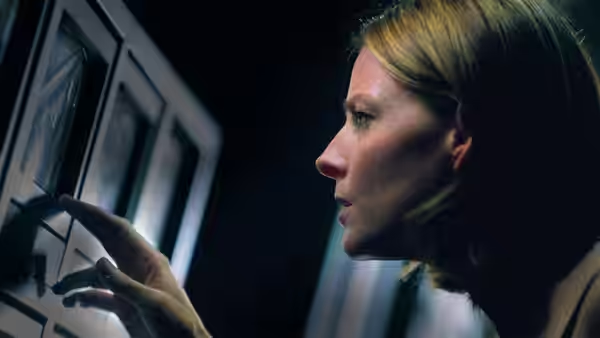
Arthur Max has built the brownstone as a vertical maze: four floors, a staircase that keeps the burglars in sight of one another and out of sight of the women. The panic room is concrete, steel and a bank of grey monitors, lit like a fridge. Darius Khondji and Conrad W. Hall shoot the rest of the house by whatever the streetlights push through the windows, so the walls are blue and the floors are black. In one unbroken movement the camera drops from the landing to the kitchen, passes through the handle of a coffee pot and out through the keyhole to find the men on the step. It is showing off, and the showing off has a point: we will always know where everyone in this house is, even when they do not.
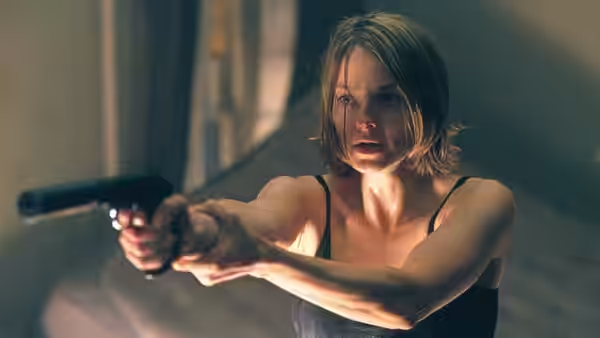
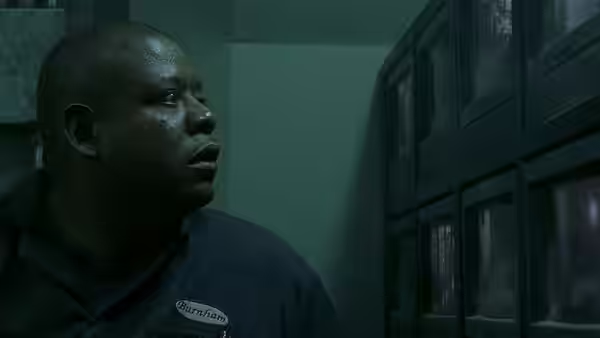
Jodie Foster plays Meg as a woman who has spent a bad year being told what to do and has run out of patience. She does not scream much. She thinks, and Fincher gives her time to look at the monitors and work out what each man is for. Kristen Stewart plays Sarah flat and unimpressed, a child who has decided her mother is the one who needs looking after. Forest Whitaker gives Burnham a decency he keeps trying to put down and cannot. He built these rooms for a living, he knows exactly how the women feel in there, and Whitaker lets that sit on his face while the other two shout.
The shouting is the problem. Jared Leto plays Junior, grandson of the man who owned the house, in cornrows and a temper, and pitches every line at the back of the stalls. He is meant to be the fool of the three, and he is, but he is a fool from a louder film. Dwight Yoakam’s Raoul, in a wool mask, says little and means it, and the picture tightens whenever he crosses the frame. The script’s weakest patch is the last quarter of an hour, when a plan that has run on wit starts running on sledgehammers.
We can tell you the moment it had us. The steel door slides shut for the first time, the monitors come up, and three men appear on them who were not there a second before; we sat forward and stayed there for an hour. Later there is a sequence involving a gas pipe that we watched with our hands flat on the arms of the chair, because Koepp had set up every part of it in plain sight and we could see what was coming and could do nothing about it. That is what the film is for, and it does it often.
James Haygood and Angus Wall cut the siege as a conversation between the two floors. A man below moves; the women see him move on a grey screen; they act; we cut back down to watch the consequence land. Because the monitors show us what Meg sees, we are always a half-second ahead of the men. Howard Shore’s score keeps low brass under all of it and seldom rises above a murmur, which is right for a film in which the loudest thing should be a boot on a stair.
Against Fincher’s own record this is the small one. Zodiac (2007) would be the film where his patience and his obsession met; Panic Room has the patience and leaves the obsession at the door. We would not call it his best, and we would not want to be without it. It runs 111 minutes and carries a 15. Watch it late, with the lights off, in a house with a front door.