Film review

Fight Club

1999 · Directed by David Fincher · 2h 19m · MPA R

In a sentenceBrad Pitt makes bad advice sound so attractive that we briefly forget Edward Norton has to live with it

DramaThriller

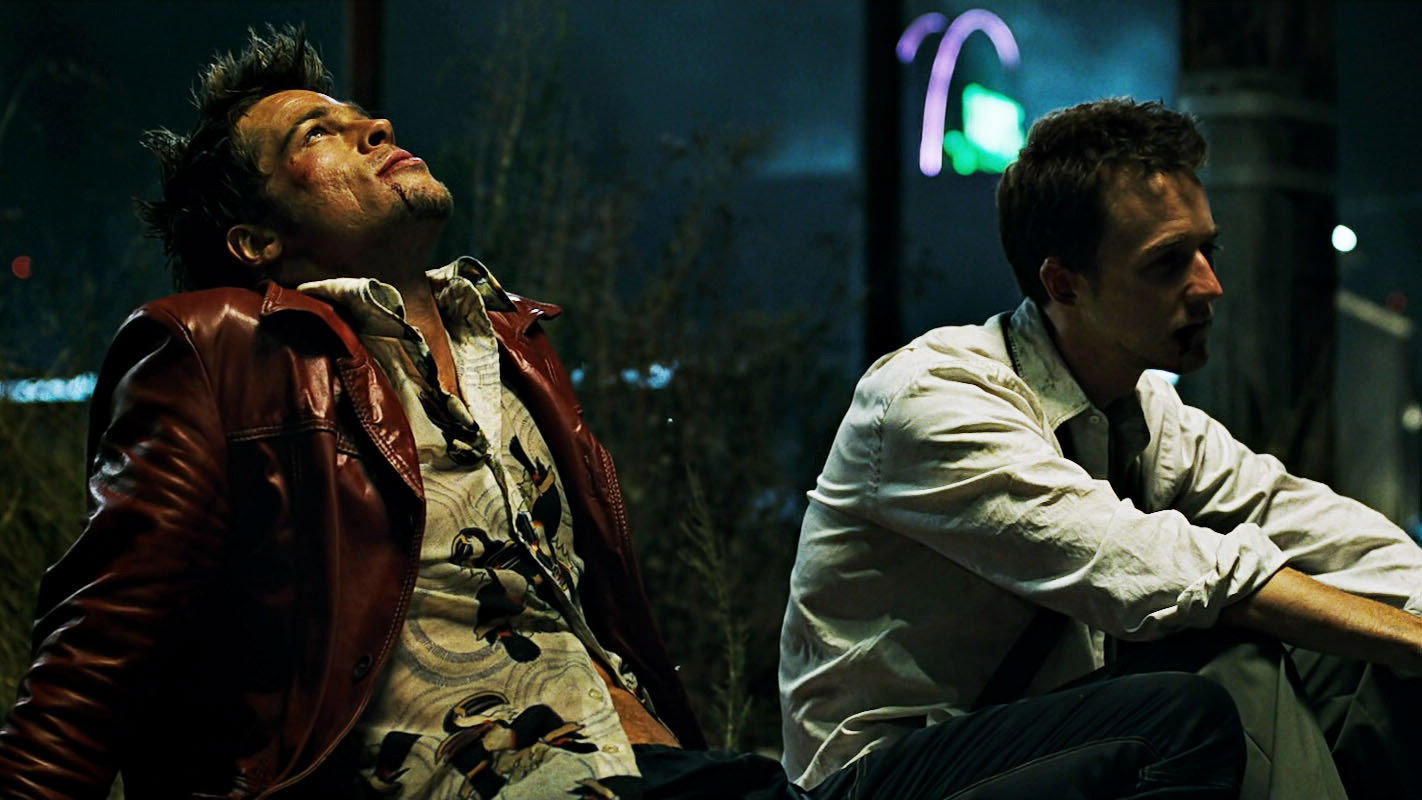
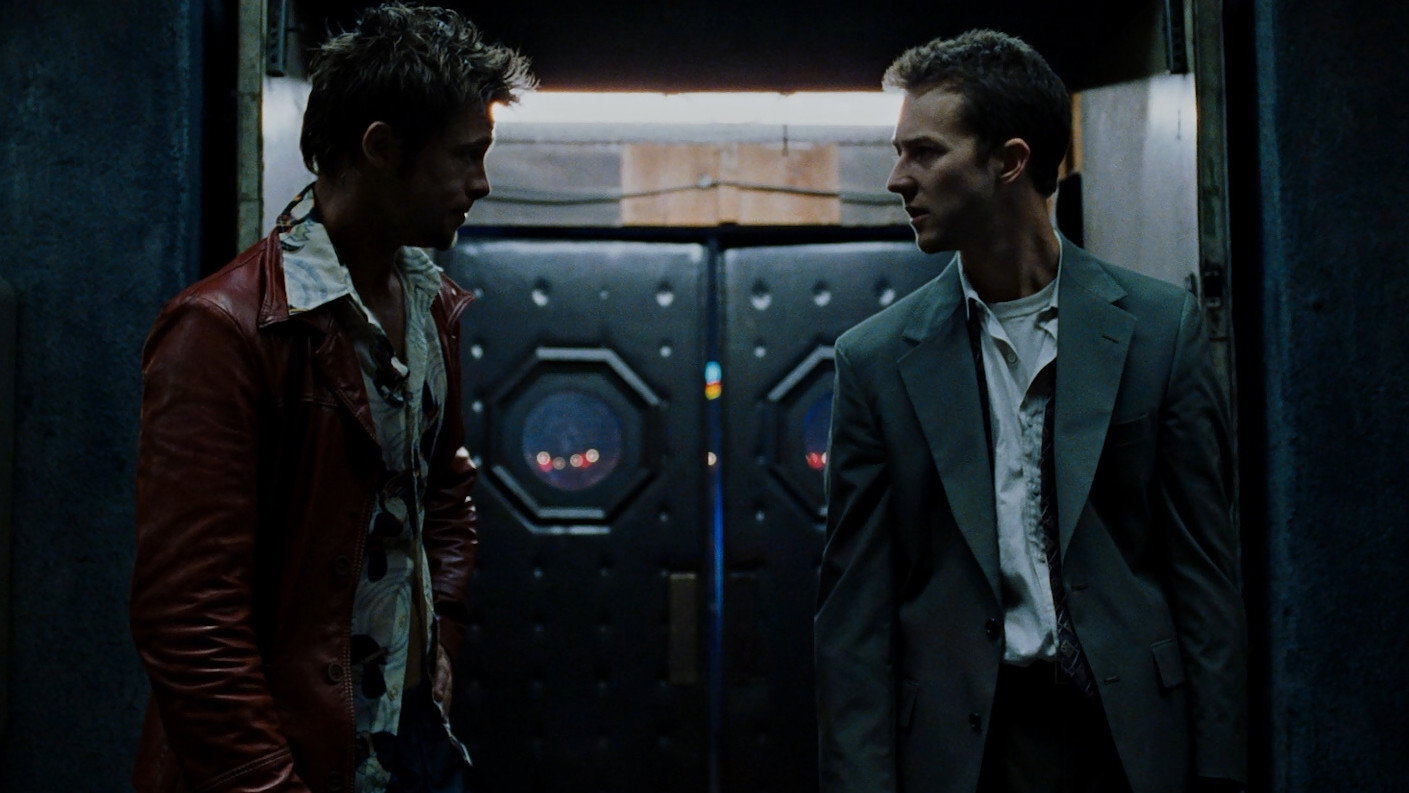
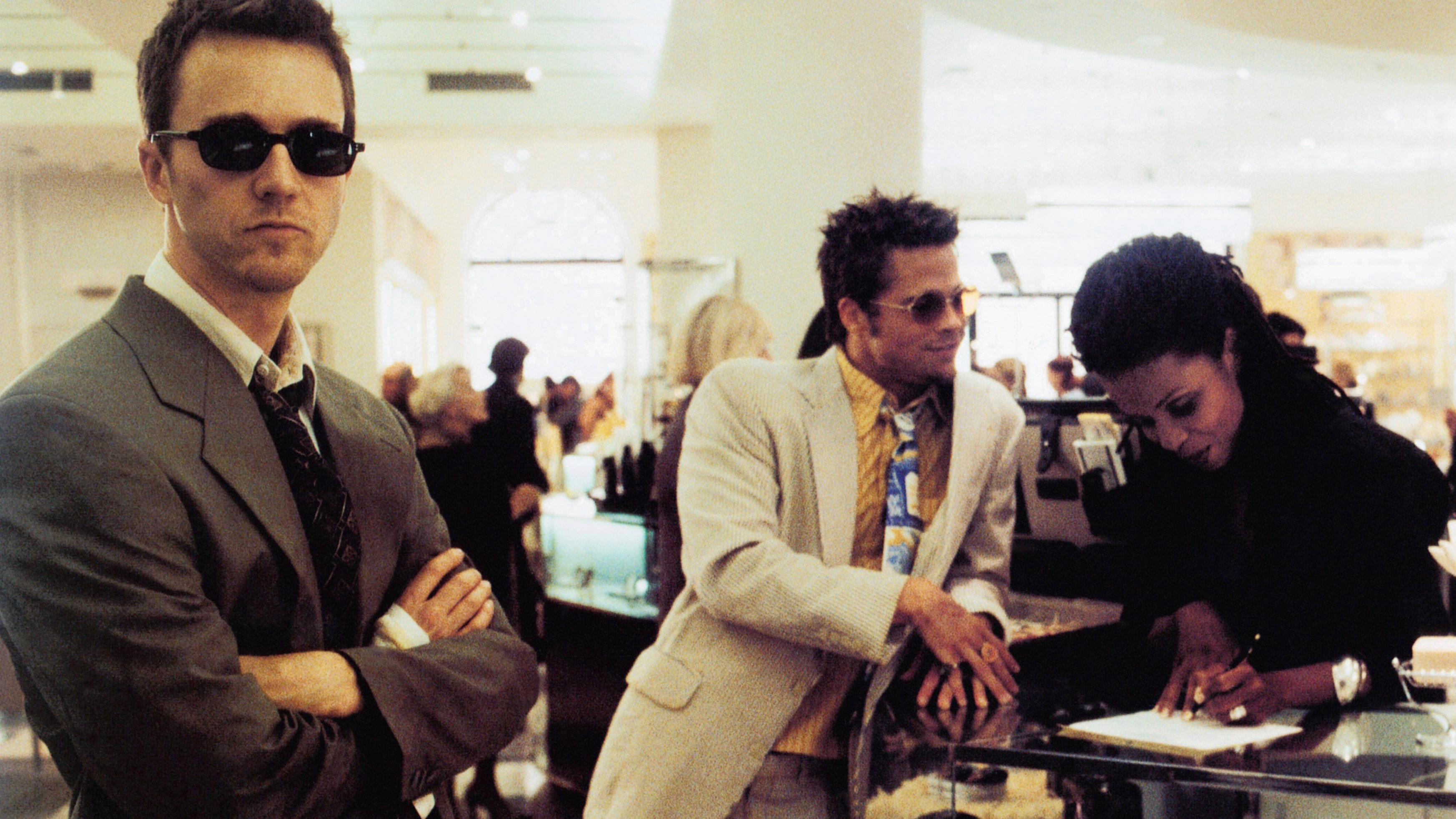
Edward Norton plays the narrator, a man caught up in male discontent and the rejection of consumer culture. His life becomes entangled with Tyler Durden (Brad Pitt), whose violent philosophy gives that dissatisfaction a direction, and Marla Singer (Helena Bonham Carter), with whom personal connection proves difficult. Rebellion promises a way out of an existence defined by what people buy and what men are expected to be. As violence becomes part of that promise, the narrator faces competing demands for belonging and independence. David Fincher directs this drama and thriller from Jim Uhls’ adaptation of Chuck Palahniuk’s novel.

Plays from YouTube when you press play; nothing loads from them until then.

Fi1m review

David Fincher’s Fight Club is a funny, disturbing account of male grievance, with Edward Norton and Brad Pitt making dangerous ideas horribly appealing. The later plotting works too hard, but the performances justify the attention.

David Fincher’s Fight Club is a sharp, funny thriller with a persuasive understanding of male self-pity. It knows how gratifying it can be to decide that ordinary life is beneath us, particularly when the alternative comes with Brad Pitt’s face. The anger at consumer culture has force, but the film is most interesting when it watches men enjoying their anger. We recommend it with a reservation about the later plotting, which keeps straining for effect after the satire has already made its point.

Jim Uhls adapts Chuck Palahniuk’s novel with a useful ear for the joke inside the complaint. The narrator’s dissatisfaction is allowed to sound seductive and ridiculous, sometimes within the same thought, and Edward Norton handles that shift without asking for sympathy. His performance gives the film someone whose unhappiness matters even when his conclusions do not deserve our agreement. In a thriller built around male grievance, that capacity for embarrassment is valuable; it keeps the central character from becoming merely a spokesman.

Pitt’s Tyler Durden provides the confidence Norton cannot supply, and Pitt makes that confidence unnervingly enjoyable. We laughed at his certainty, then felt uneasy about how much we enjoyed it. His ease makes the violent philosophy sound like a solution an agreeable person might offer, which explains its appeal better than another speech condemning it would. Helena Bonham Carter’s Marla Singer gives the film a welcome source of friction, especially when the narrator’s difficulty connecting with her exposes how little his rebellion helps him deal with another person.

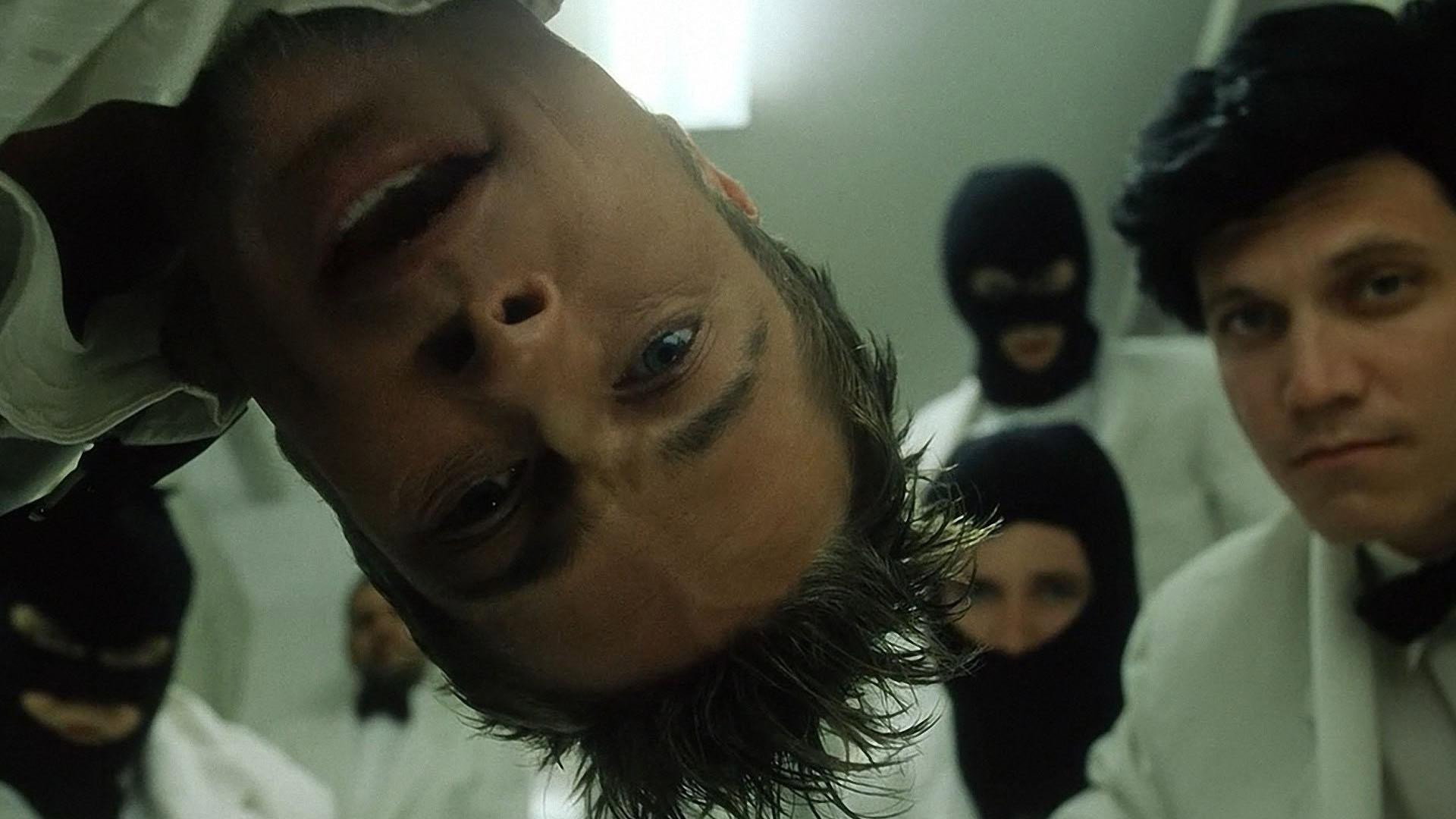
Jeff Cronenweth’s cinematography makes Pitt’s glamour part of the problem: Tyler looks like someone worth listening to before he has earned the attention. Violence retains an attraction even when it becomes unpleasant to watch. Alex McDowell’s production design makes the choice of surroundings feel bound up with the choice of a personality. That keeps the attack on consumer culture visible rather than leaving it entirely to the dialogue. We think that visual seduction is necessary, though Fincher occasionally enjoys it enough to make his criticism harder to hear.

James Haygood’s editing gives the comedy its speed and makes the changes in mood feel deliberately abrasive. A joke need not provide much relief when another shock is so close behind it. John King and Michael Simpson’s music keeps pressing against the action, an insistent physical accompaniment that suits Fincher’s determination to keep things moving. The combination is exhilarating, although the relentless push can leave a quieter performance, particularly Bonham Carter’s, fighting for attention.

The weakness comes when the thriller mechanics demand more attention than these people. The later plotting stays busy, but the observations about masculinity and consumption grow less precise; provocation begins to feel like a habit. There is no need to describe where the story goes to say that it becomes less convincing as it grows more elaborate. As a satire, it has already found plenty to examine in the narrator’s inability to connect with another person.

Thrillers about disaffected men can flatter their subjects simply by treating every grievance as profound. Fight Club has enough humour to resist that, and Norton keeps the hurt recognisable beneath the posturing. Give it an evening if abrasive comedy is welcome, but keep some distrust in reserve for Tyler.


Critical consensus AI synthesised

5 of 6
Positive
4
Mixed
0
Negative
1
Time Out
24 December 2014 · TCh
90*

The review calls it a cerebral comedy of startling, provocative and subversive ideas that is also funny, praising the performances, style and Jim Uhls' screenplay while hailing it as the only essential Hollywood film of 1999.

Read the full review →
Sight and Sound
80*

The critic describes Fight Club as a sophisticated conundrum that fits Fincher's pattern of solipsistic worlds, praising its inventive depiction of the divided self, performances by Norton and Pitt, and visceral style while noting that the twist and escalation to the fantastic lose some conceptual momentum.

Read the full review →
Empire
12 November 1999 · Adam Smith
75*

Fincher's film is a molasses-black comedy with blistering hyper-kinetic style, standout performances from Pitt and Norton, and a score that punches you in the chest, but it is afflicted with one flaw that ejects it from the masterpiece category as it degenerates into an entertaining but vacuous comedy in the final half hour.

Read the full review →
The Guardian
14 November 1999 · Philip French
75*

The critic describes Fight Club as a dazzling and disturbing fable about male discontent at the end of the century and the seductive attractions of its violent, anti-consumerist philosophy. It notes that the film falters a little towards the end and involves viewers viscerally in what it ultimately attacks.

Read the full review →
The Hollywood Reporter
13 September 1999 · Patrick Z. McGavin
40*

The critic finds the film impeccably made but deeply fascist, nihilistic, and hypocritical in its denunciation of consumer culture while using glamorous stars. It starts as promising satire but devolves into a confused, coercive thriller that celebrates violence.

Read the full review →
Film Comment
1 September 1999 · Gavin Smith

The critic describes the film as stunning, mordantly funny and formally dazzling, an anti-consumerist satire on corporate culture and the men's movement that destabilizes conventional masculinity through an anarchic force.

Read the full review →

Cast

Stills

Awards

Total Film Magazine Award, 2005

Won
Total Film Magazine Award

Online Film Critics Society Awards, 2001

Won
Online Film Critics Society Awards

Academy Awards, 2000

Nominated
Best Sound Editing

Jupiter Award, 2000

Won
Jupiter Award

Online Film & Television Association Award, 2000

Won
Online Film & Television Association Award

If you liked this, try…

Seconds poster

Seconds

1966 · Another bleak look at reinvention, consumer comfort and the promise of a better life.

La Haine poster90

La Haine

1995 · Male frustration and group loyalty become urgent problems on a smaller, harsher scale.

Cure poster

Cure

1997 · A quieter, colder thriller about violence and the disturbing appeal of suggestion.

The Edukators poster

The Edukators

2004 · Anti-consumerist rebellion meets personal compromise, with less glamour and more awkward conversation.

Sorry to Bother You poster

Sorry to Bother You

2018 · Workplace misery feeds a stranger, funnier attack on the things capitalism asks of us.