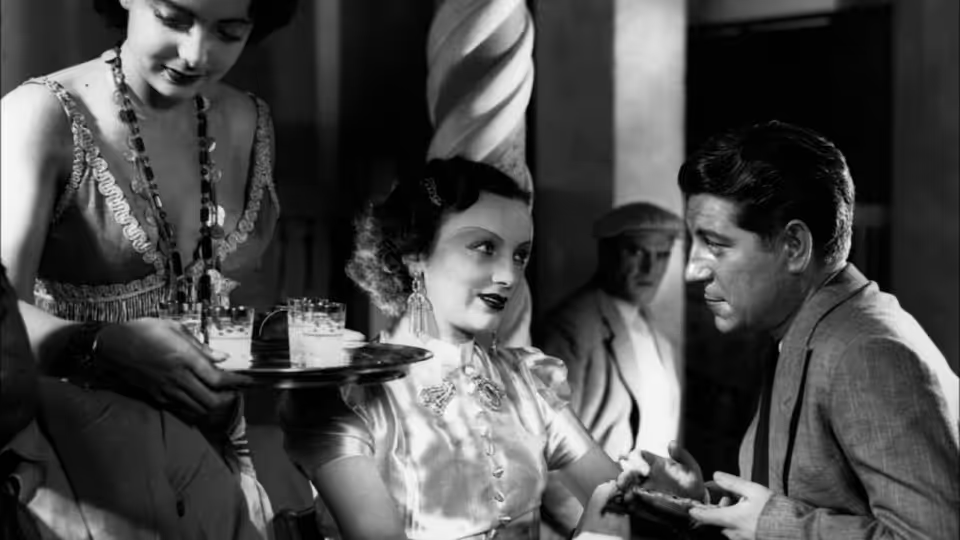
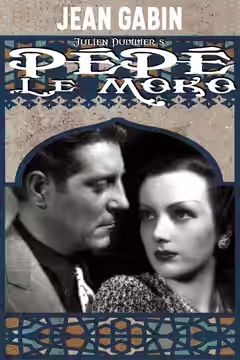
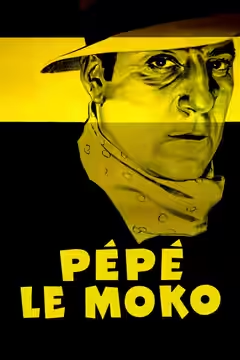
Julien Duvivier’s atmospheric crime romance is worth an evening for Jean Gabin alone. The Casbah’s shadows and the force of his close-ups make it moving, despite some leisurely passages and thinly written women.
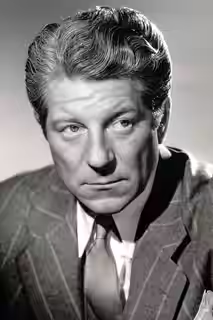
Julien Duvivier’s Pépé le Moko is a fine crime romance, with a leading performance that makes its sadness hard to resist. Jean Gabin makes the romantic longing persuasive without softening Pépé into someone harmless. We understand his restlessness because the performance makes it so recognisable.
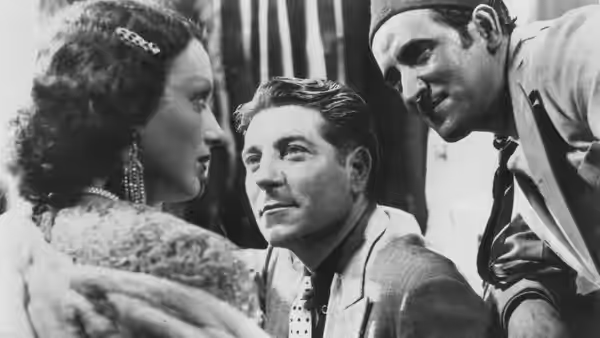
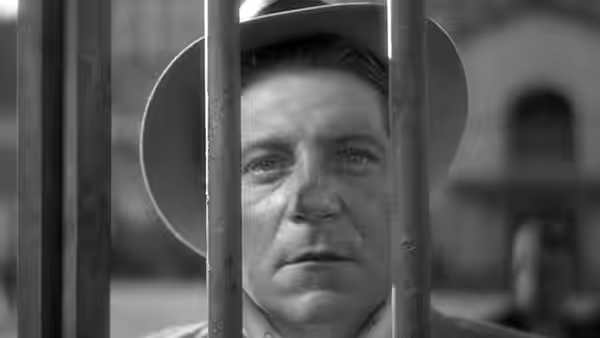
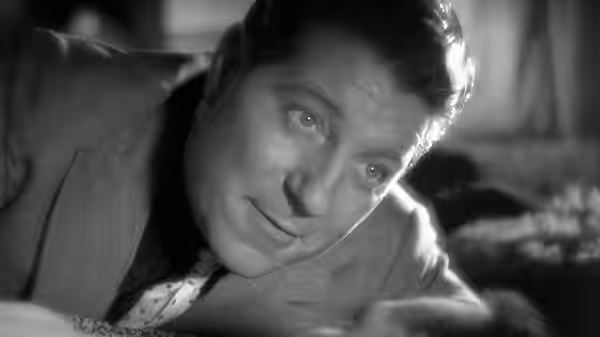
Jean Gabin’s Pépé has the manner of a man accustomed to having other people adjust themselves around him. His assurance is persuasive enough that small signs of unhappiness carry weight; there is no need for a wholesale change of performance when the romance takes hold. We were moved by his face in close-up, because the effort to appear untroubled is so plainly visible. The close framing lets us notice those changes without needing anyone else to comment on them.
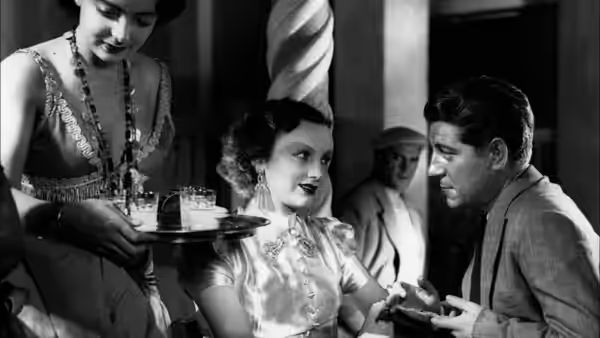
The shadowy cinematography by Jules Kruger and Marc Fossard makes the Casbah feel crowded even when our attention is fixed on one person. Darkness reduces the space around a face, and the close framing makes privacy seem difficult to come by. Jacques Krauss’s production design contributes to that pressure: the setting feels inhabited, with little room left for anyone to be alone. It remains an attractive place, too, which helps explain the film’s willingness to linger there.
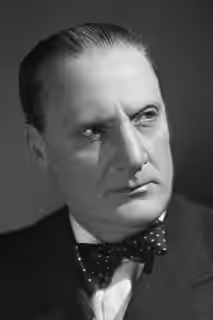
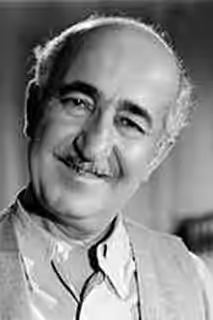
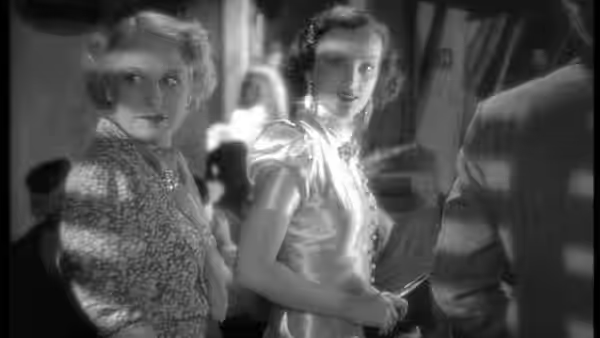
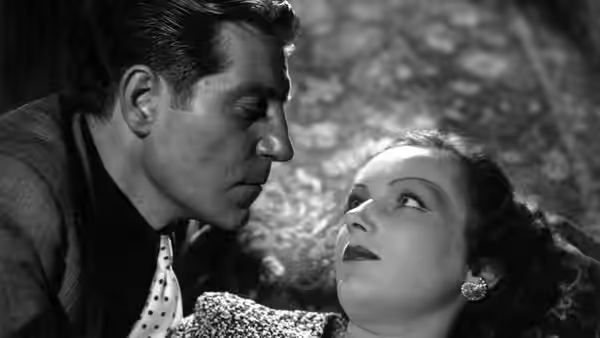
Lucas Gridoux makes Inspector Slimane’s patience a useful counterweight to all that longing. His restraint is welcome beside the more demonstrative performances. Mireille Balin is convincing as Gaby, but the woman is too tightly attached to Pépé’s longing; there is less opportunity to discover what she wants for herself. Line Noro gives Inès an immediacy that makes this limitation more noticeable. The screenplay by Julien Duvivier and Henri La Barthe gives the man doing the longing considerably more attention than either woman.
There is also a little more atmosphere than the story needs. At 94 minutes, this is hardly an endurance test, but Marguerite Beaugé’s editing sometimes lets the surrounding activity continue after the central predicament is clear. We begin waiting for another exchange between the principal characters when we ought to be enjoying the life around them. A tighter cut would have helped without depriving the place of its character.
The music by Mohamed Iguerbouchène and Vincent Scotto gives the romance a welcome directness. It allows more feeling than Pépé generally cares to display, without requiring Jean Gabin to make the performance more demonstrative. That is useful here, because the attraction is the ache of wanting something badly and being unable to conceal it. We respond to that more readily than to the familiar business of a crime thriller.
As an early example of the fatalistic crime film, Pépé le Moko still has an advantage over colder exercises in the genre: it makes desire understandable before making it dangerous. Its people can be vain, possessive and foolish without losing our sympathy. That generosity matters more than any claim made for its historical importance. Watch it for Jean Gabin, and allow the Casbah a little longer than it strictly needs.