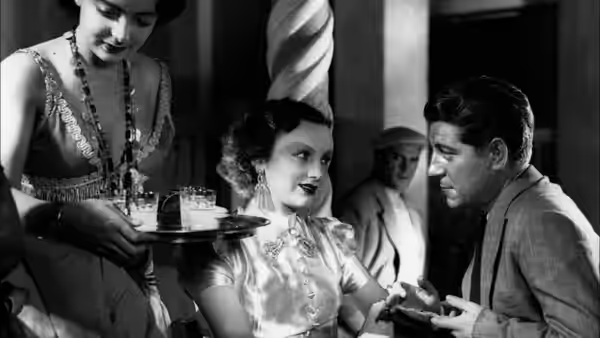
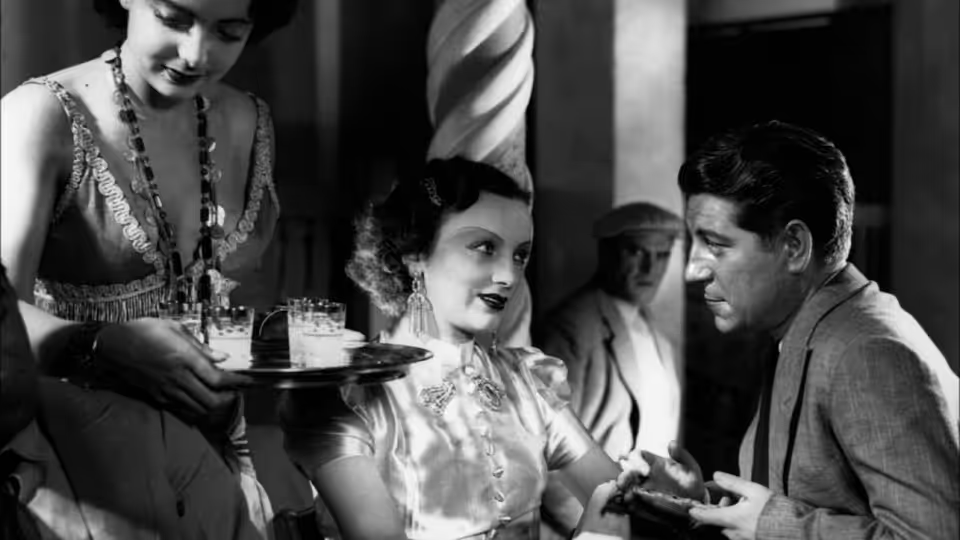
Pépé le Moko (Jean Gabin) speaks with a seated woman as a server offers refreshments
Film review

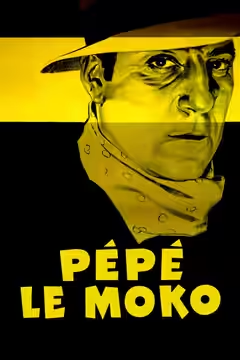
Pépé le Moko

1937 · Directed by Julien Duvivier · 1h 34m

In a sentenceJean Gabin looks troubled, and suddenly the plot can wait

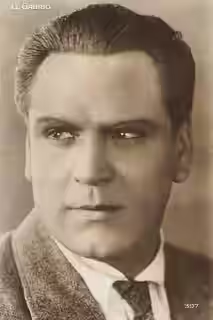
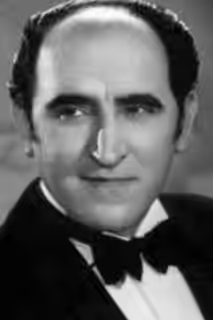
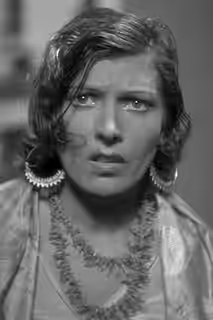
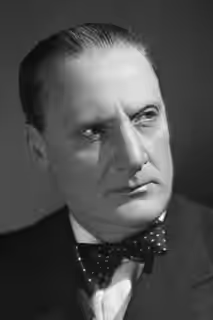
Pépé le Moko (Jean Gabin) is at the centre of a crime romance. Inès (Line Noro) is his mistress; Gaby (Mireille Balin) is a Parisian, and Lucas Gridoux plays Inspector Slimane. Other figures include Carlos (Gabriel Gabrio), Pierrot (Gilbert Gil) and Régis (Fernand Charpin), alongside L’Arbi (Marcel Dalio) and Maxime (Charles Granval). Julien Duvivier directs this adaptation of Henri La Barthe’s novel, with Gaston Modot as Jimmy, René Bergeron as Meunier and Saturnin Fabre as The Great Father.

Plays from YouTube when you press play; nothing loads from them until then.

Fi1m review

Julien Duvivier’s atmospheric crime romance is worth an evening for Jean Gabin alone. The Casbah’s shadows and the force of his close-ups make it moving, despite some leisurely passages and thinly written women.

Julien Duvivier’s Pépé le Moko is a fine crime romance, with a leading performance that makes its sadness hard to resist. Jean Gabin makes the romantic longing persuasive without softening Pépé into someone harmless. We understand his restlessness because the performance makes it so recognisable.

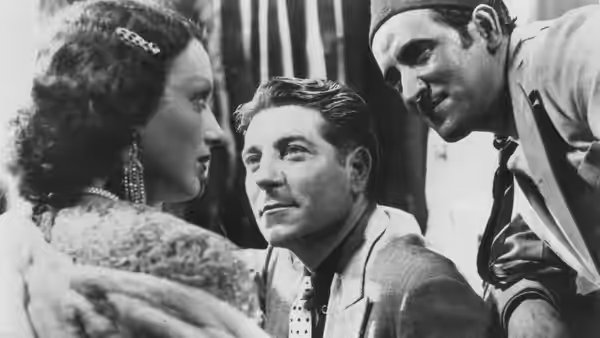
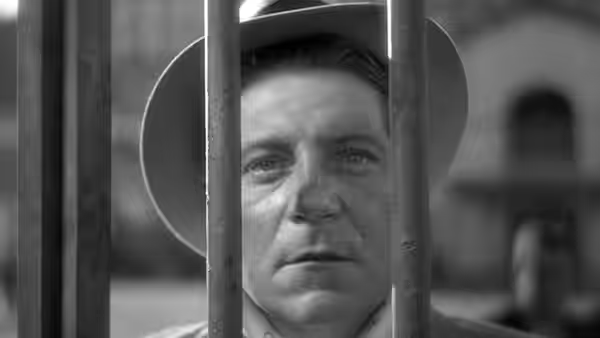
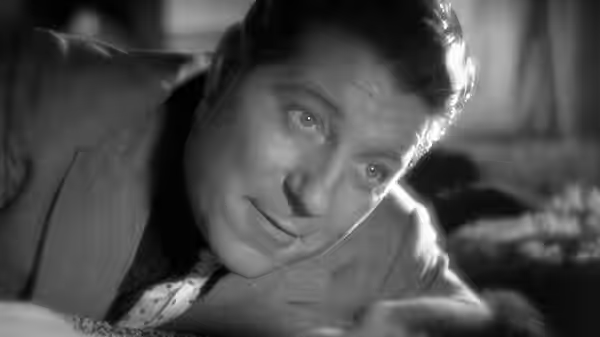
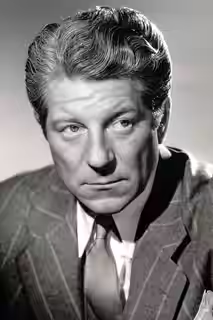
Jean Gabin’s Pépé has the manner of a man accustomed to having other people adjust themselves around him. His assurance is persuasive enough that small signs of unhappiness carry weight; there is no need for a wholesale change of performance when the romance takes hold. We were moved by his face in close-up, because the effort to appear untroubled is so plainly visible. The close framing lets us notice those changes without needing anyone else to comment on them.

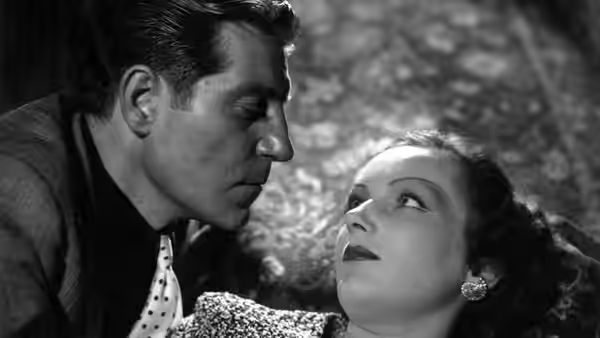
The shadowy cinematography by Jules Kruger and Marc Fossard makes the Casbah feel crowded even when our attention is fixed on one person. Darkness reduces the space around a face, and the close framing makes privacy seem difficult to come by. Jacques Krauss’s production design contributes to that pressure: the setting feels inhabited, with little room left for anyone to be alone. It remains an attractive place, too, which helps explain the film’s willingness to linger there.

Lucas Gridoux makes Inspector Slimane’s patience a useful counterweight to all that longing. His restraint is welcome beside the more demonstrative performances. Mireille Balin is convincing as Gaby, but the woman is too tightly attached to Pépé’s longing; there is less opportunity to discover what she wants for herself. Line Noro gives Inès an immediacy that makes this limitation more noticeable. The screenplay by Julien Duvivier and Henri La Barthe gives the man doing the longing considerably more attention than either woman.

There is also a little more atmosphere than the story needs. At 94 minutes, this is hardly an endurance test, but Marguerite Beaugé’s editing sometimes lets the surrounding activity continue after the central predicament is clear. We begin waiting for another exchange between the principal characters when we ought to be enjoying the life around them. A tighter cut would have helped without depriving the place of its character.

The music by Mohamed Iguerbouchène and Vincent Scotto gives the romance a welcome directness. It allows more feeling than Pépé generally cares to display, without requiring Jean Gabin to make the performance more demonstrative. That is useful here, because the attraction is the ache of wanting something badly and being unable to conceal it. We respond to that more readily than to the familiar business of a crime thriller.

As an early example of the fatalistic crime film, Pépé le Moko still has an advantage over colder exercises in the genre: it makes desire understandable before making it dangerous. Its people can be vain, possessive and foolish without losing our sympathy. That generosity matters more than any claim made for its historical importance. Watch it for Jean Gabin, and allow the Casbah a little longer than it strictly needs.
Critical consensus AI synthesised

84
Positive
6
Mixed
0
Negative
0

All six reviews are positive, with praise clustering around Jean Gabin’s performance and Julien Duvivier’s direction. Gabin’s charisma gives the romance much of its appeal, while Duvivier’s close-ups and atmospheric depiction of the Casbah draw repeated admiration. The critics also value the film’s poetic fatalism and toughness, with Jules Kruger’s shadowy photography singled out for its contribution to the thriller’s atmosphere. Several reviews stress how well the filmmaking endures.

The differences are chiefly matters of emphasis: some critics respond most strongly to the despairing romance, others to the characters and hard-edged thriller elements. The spread is fairly narrow, with no mixed or negative assessments among these reviews. Variety offers the clearest reservation, suggesting that the film could be trimmed, though it still praises Gabin and the vivid setting; its qualified approval sits below the warmer enthusiasm elsewhere.

Los Angeles Times
19 April 2002 · Kenneth Turan
90*

Turan presents the film as a beautifully crafted, moving, and still entertaining classic. He especially praises Jean Gabin’s charismatic performance and Julien Duvivier’s atmospheric depiction of the Casbah.

Read the full review →
The Guardian
11 September 2025 · Peter Bradshaw
90*

Bradshaw calls it a powerful, poetic and passionately despairing romantic drama. He particularly praises Jean Gabin’s luminous performance and Duvivier’s striking close-up filmmaking.

Read the full review →
Empire
1 January 2000 · empire
85*

Empire regards the film as pulp noir at its finest and a forerunner of later film noir. It praises the fascinating characters and the film’s tough sensibility.

Read the full review →
Evening Standard
10 April 2012
85*

The critic finds that the film’s artistry has endured and regards it as a poetic, fatalistic thriller. They single out Duvivier’s direction and Jules Kruger’s shadowy photography, especially in the scenes of masculine honour and vengeance.

Read the full review →
Time Out
6 August 2012
80*

Time Out presents the film as a gorgeous, evocative romance. It singles out Jean Gabin’s dashing performance as a source of its appeal.

Read the full review →
Variety
31 December 1936 · Variety Staff
75*

The critic calls the film a commendable finished product. They praise Jean Gabin’s performance and the vivid presentation of life in Casablanca’s native quarter, though they say the film could be trimmed.

Read the full review →

Straight answers AI written, from our review

Is Pépé le Moko worth watching?
Pépé le Moko is well worth watching for Jean Gabin’s moving performance and its shadowy crime romance; we score it 85 out of 100. We recommend it most warmly to anyone drawn to romantic longing and atmosphere, with the caveat that some passages linger too long and the women deserve fuller lives of their own.
How long is Pépé le Moko, and what is it rated?
Pépé le Moko runs 1h 34m. It is a drama and crime film.
Where can I watch Pépé le Moko in Spain?
Pépé le Moko is not on any streaming or rental service in Spain at the moment. It is available in 16 other countries; change your country at the top of the page to see where. Availability is checked daily.
How violent or frightening is Pépé le Moko, and is it suitable for children?
Pépé le Moko has no UK or US certificate supplied here, so we cannot give an age-based recommendation for children. We describe a shadowy crime romance with possessiveness and emotional tension, but do not establish how explicit its violence or frightening material is. That leaves too little information to assure parents or squeamish viewers of its suitability.
How does Pépé le Moko compare to The Third Man?
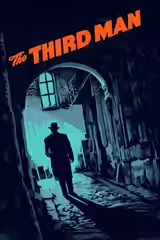
Pépé le Moko is our choice for romantic longing and Jean Gabin’s close-ups, while The Third Man is the better fit for a gripping mystery with humour. Both use city shadows to make escape look unlikely. We find the leisurely atmosphere of Pépé le Moko moving despite its pauses; The Third Man offers intrigue and a sharper concern with the harm friendship can excuse.
Is Pépé le Moko based on a true story or a book?
Pépé le Moko is adapted from Henri La Barthe’s novel, rather than presented as a true story. We make no claim about its fidelity to the book, but familiarity with the source is not needed to appreciate what we recommend here: Gabin’s persuasive longing, the crowded Casbah setting and the force of the close-ups.
What should I watch after Pépé le Moko?
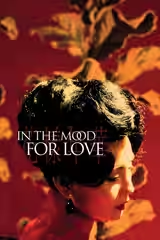
After Pépé le Moko, try Le jour se lève (1939, Fi1m 82): Jean Gabin gives another cornered man a bruised, stubborn dignity. Then The Third Man (1949, Fi1m 92): A fugitive, a divided city and shadows that make escape look unlikely; and In the Mood for Love (2000, Fi1m 91): For the close-ups, cramped rooms and desires that cannot find an outlet.

Cast

If you liked this, try…

  1. Le jour se lève (1939, Fi1m 82)Jean Gabin gives another cornered man a bruised, stubborn dignity.

  2. The Third Man (1949, Fi1m 92)A fugitive, a divided city and shadows that make escape look unlikely.

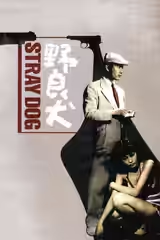
  3. Stray Dog (1949) · not on Fi1m yetA crowded city turns a police search into a study of desperation.

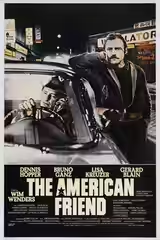
  4. The American Friend (1977) · not on Fi1m yetCrime grows out of loneliness, with friendship making every practical decision harder.

  5. In the Mood for Love (2000, Fi1m 91)For the close-ups, cramped rooms and desires that cannot find an outlet.

Pépé le Moko (1937) review: A shadowy romance with real feeling (Spain) | Fi1m