Bergman’s film about a nurse and the actress who has stopped speaking is 85 minutes long, in black and white, and among the most exposed things he made. It never says what happened between them, and we did not mind. You might.
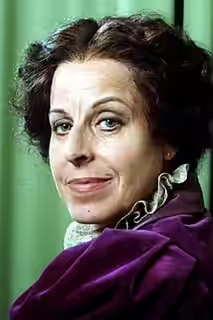
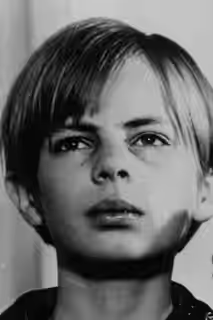
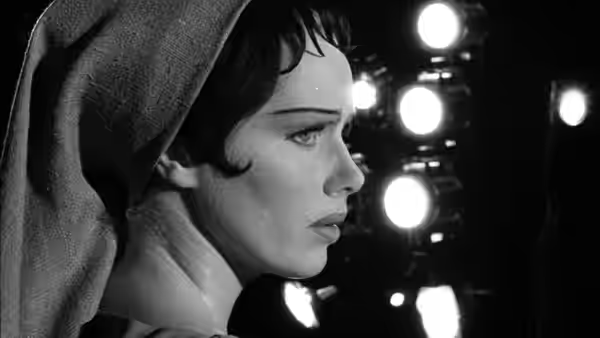
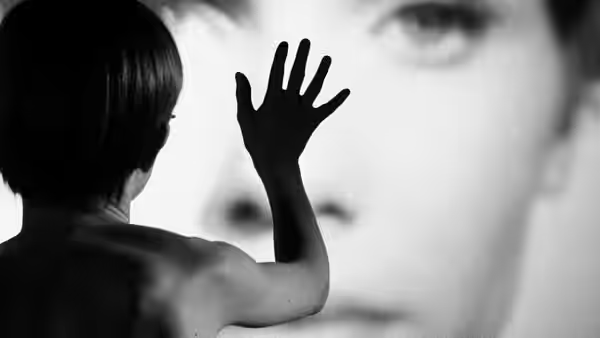
Ingmar Bergman starts with the machine. A projector’s arc lamp sparks, leader runs through the gate, and we get fragments: a cartoon, a spider, a nail hammered through a palm, and then a thin boy (Jörgen Lindström) waking in a white room among bodies under sheets, who turns and puts his hand up to an enormous, blurred woman’s face on the wall. Only then does the story begin. Elisabet Vogler (Liv Ullmann), a stage actress, has stopped speaking in the middle of a performance of Electra and has not said a word since. Her doctor (Margaretha Krook) can find nothing wrong, hands her to a young nurse, Alma (Bibi Andersson), and lends the pair her house by the sea for the summer.
That is the setup, and it is nearly the whole plot. Persona runs 85 minutes and it is one of the best things Bergman made, and we say that knowing it is also one of the hardest. It does not explain what happens between the two women. It barely agrees that anything happened at all. If you need a film to tell you what it was about, this is not your evening.
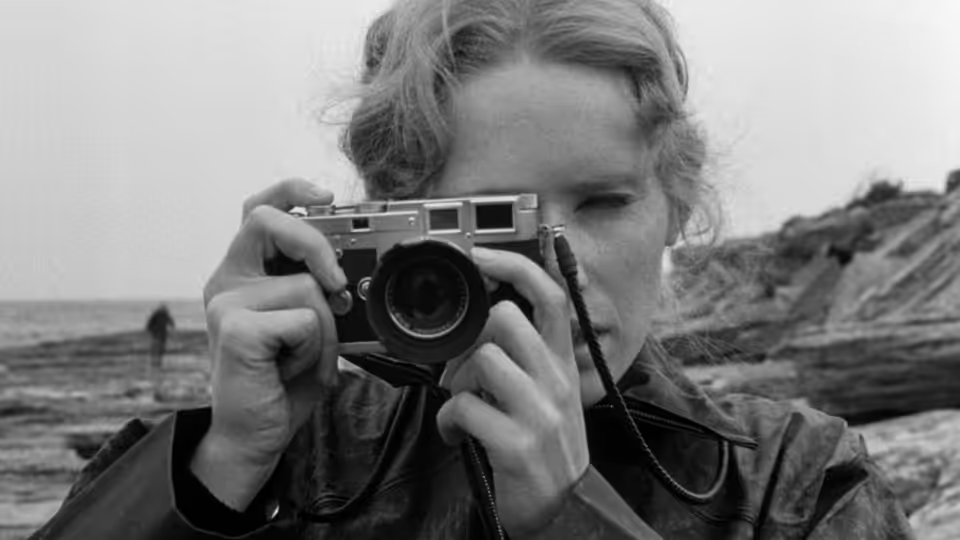
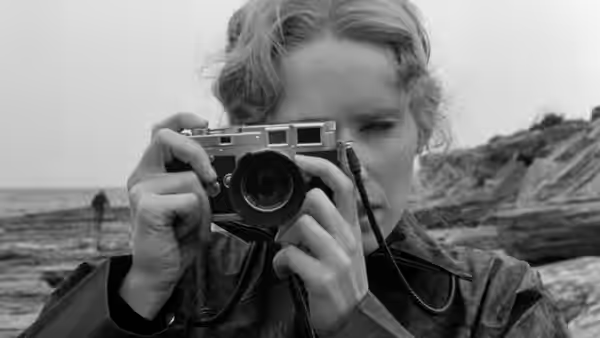
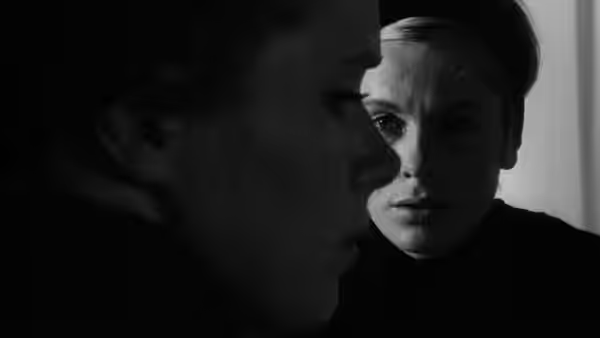
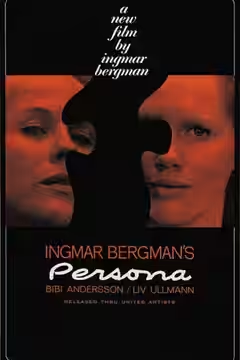
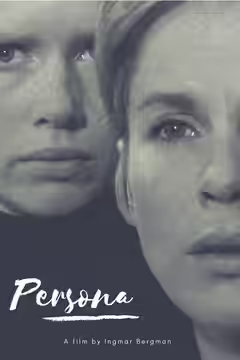
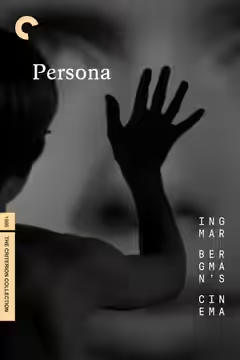
Sven Nykvist shoots it in black and white with almost no grey in it. Faces come out of dark rooms half-lit, one eye in light and one gone; the hospital and the house are white walls, white sheets and white light off the water. The famous image, two half-faces joined into one that belongs to neither woman, is on every poster and still works, because by then we have spent an hour with nothing to look at but these two faces. Ulla Ryghe cuts to match: long holds, then a jolt. Halfway through, the picture judders, catches and appears to burn, as if the projector from the opening had failed, and we will say no more about it.
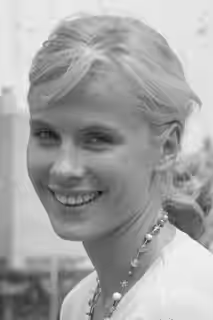
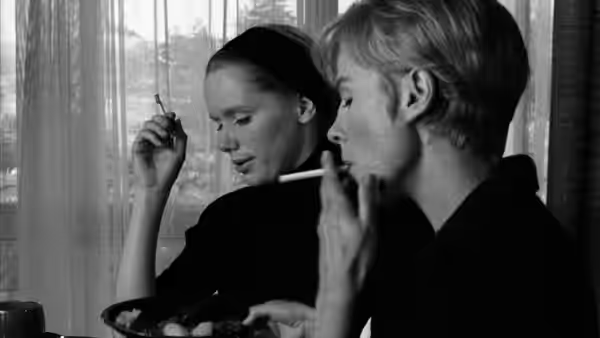
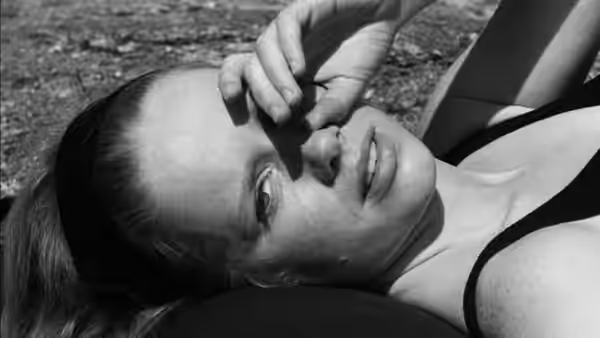
Bibi Andersson has the talking part, which is the showier one and not the easier. Alma fills the silence: her fiancé, her patients, whether she is a good person. One evening, over wine, she tells Elisabet about an afternoon on a beach with another woman and two boys, and Bergman gives her the whole story in a handful of unbroken takes, sat on a bed, in flat light, with nothing on the soundtrack. It is only talk, and it held us harder than any image in the film. We were embarrassed, and then something worse than embarrassed, because Alma is plainly enjoying being listened to and we could see what that was going to cost her.
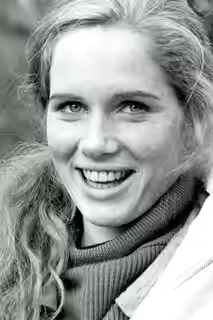
Liv Ullmann says almost nothing for 85 minutes and hers is the harder job. She has to make listening look like a decision rather than a symptom. Watch her when the hospital television shows a monk (Thích Quảng Đức) setting himself on fire and she backs into the corner: it is the one time Elisabet’s face moves before she can stop it. Max Goldstein puts Alma in a starched uniform and then, at the house, dresses both women in the same dark jumpers and wide sunhats, so from behind we cannot tell which is which. Bibi Lindström’s rooms are bare. Lars Johan Werle’s score is a scrape of strings and something struck, used perhaps four times.
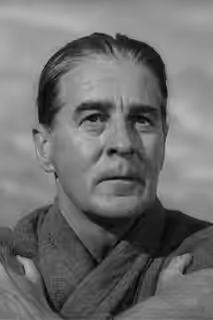
Early on, the doctor sits Elisabet down and tells her exactly why she has stopped speaking, and it is the one scene in which Bergman writes out what the rest of the film is content to show. We would rather not have heard it. The prologue is a director showing off, and one or two of its images, the nail above all, are there to make us flinch, which they did. And there is a passage in the second half involving Gunnar Björnstrand as Elisabet’s husband that we will not describe, except to say it is played as a dream and never quite decides whether it is one. It is the one stretch that felt slack to us.
It opened in British cinemas on 31 May 1967, and a good deal of the art cinema of the next twenty years, the films in which two women trade selves, took something from it. None of them has these two faces. Give it a quiet room, no phone and the 85 minutes it asks for. Do not expect to be told what happened. Bergman knows, and he is not saying.