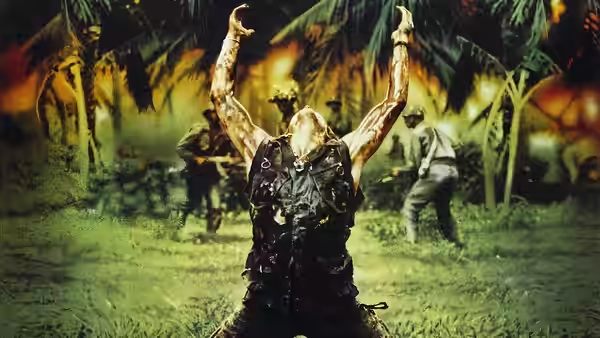
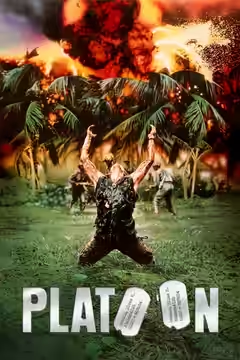
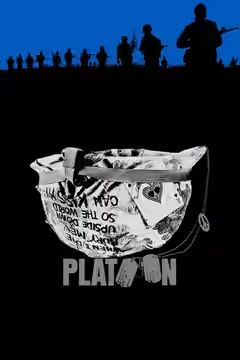
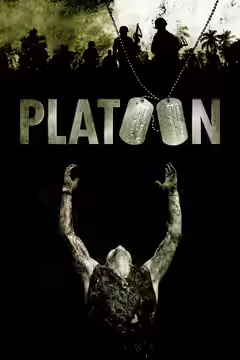
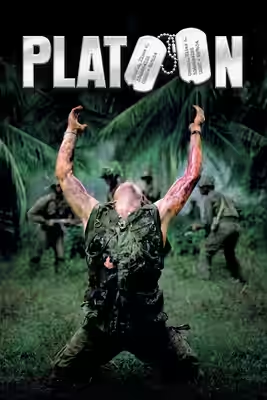
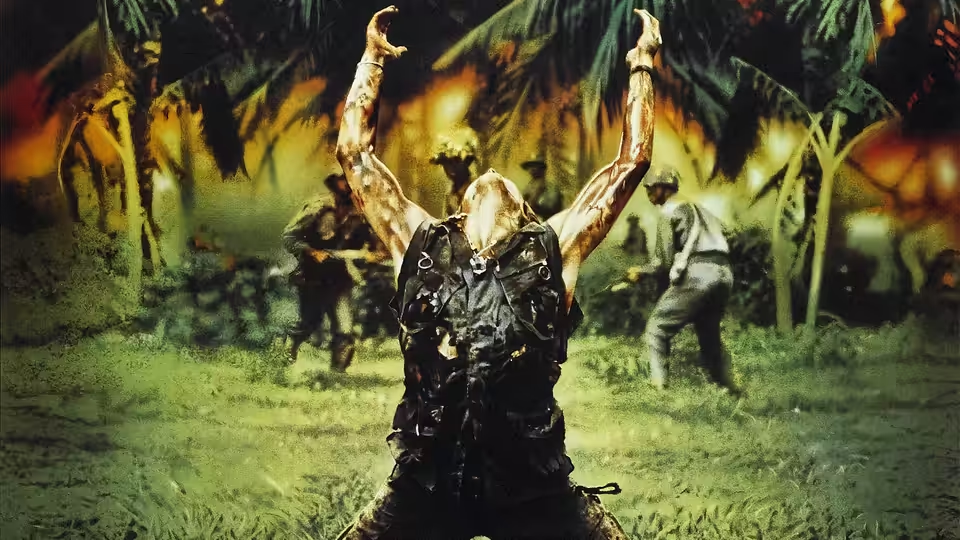
Sergeant Elias with arms raised in a burning jungle clearing
Film review

Platoon

1986 · Directed by Oliver Stone · 2h 00m

In a sentenceNobody should have to choose a father figure during a firefight

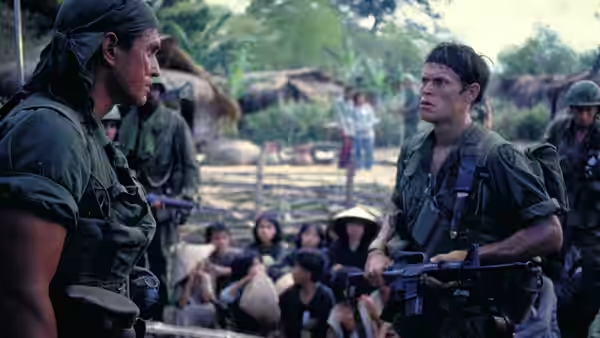
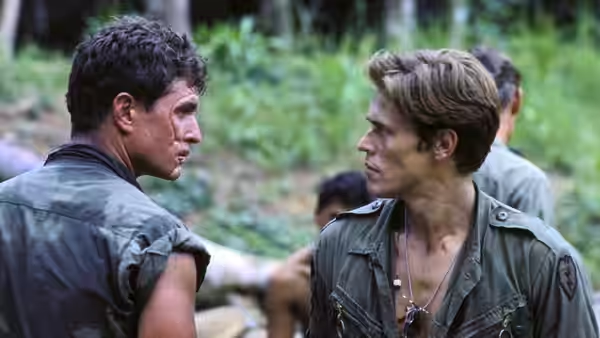
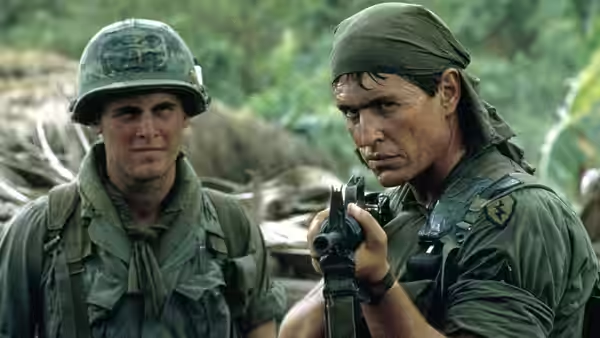
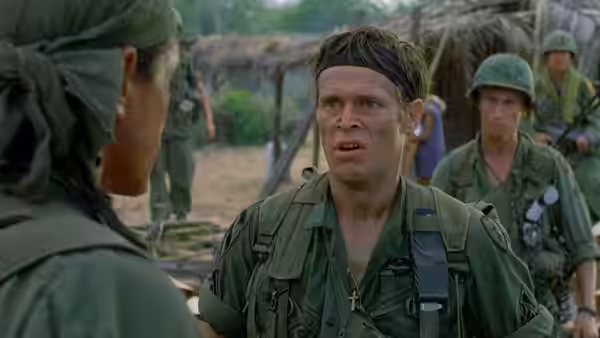
Chris Taylor (Charlie Sheen) is a young infantryman entering the war in Vietnam. Within his platoon, he comes under the influence of two sergeants: Elias (Willem Dafoe) and Barnes (Tom Berenger). As Taylor encounters combat, their conflict becomes part of his education in how the men around him behave under pressure. The soldiers face heat, mud and fear, while divisions within their own ranks complicate the business of getting through each day. Oliver Stone writes and directs a war drama that follows Taylor’s experience among men whose authority he must learn to judge.

Plays from YouTube when you press play; nothing loads from them until then.

Fi1m review

Oliver Stone’s Platoon makes combat frighteningly immediate, with performances that give the soldiers lives beyond their uniforms. We recommend it, despite a moral struggle between the sergeants that Stone makes too tidy.

Oliver Stone’s Platoon is a forceful, frightening war film that we recommend despite its rather tidy division of good and bad influence. Charlie Sheen plays Chris Taylor, a young infantryman in Vietnam whose education comes partly from the conflict between two sergeants. Stone keeps the immediate demands of soldiering in view, along with the heat, muck and fear. Before Taylor can decide what sort of man to become, he has to cope with being there.

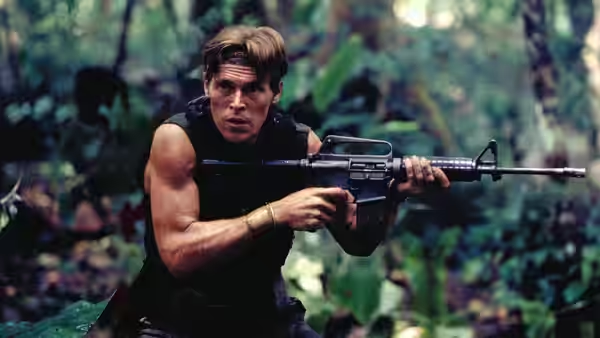
Sheen’s uncertainty gives the film a useful centre. He lets the other men make the stronger impression, which is right for a story about a recruit trying to understand the people who have authority over him. Willem Dafoe’s Elias and Tom Berenger’s Barnes are persuasive enough to make their competing influence credible. Berenger is especially effective at making authority frightening without making it difficult to understand why a soldier might submit to it.

Robert Richardson photographs the soldiers at ground level, making the heat and muck feel hard to escape. His images can be overwhelming, but they keep our attention on the men struggling through those conditions. Bruno Rubeo’s production design contributes to the same exhausting sense of daily life, with surroundings that look punishing to inhabit. It is important that the film takes physical discomfort seriously, because the men’s decisions are made when patience and judgement are already under strain.

Claire Simpson’s editing is especially good in the night battles, giving us enough information to follow the fighting without making it feel orderly. We were frightened by those sequences. Being able to grasp the soldiers’ immediate danger, while still feeling their confusion, made the violence harder to sit through. This is difficult action to cut well: too little clarity would let us retreat into bewilderment, while too much would make the men seem in control. Simpson gets the balance right.

The trouble comes when Stone the writer presses the sergeants into a moral contest whose terms are too easy to recognise. Dafoe and Berenger give us people worth watching, but the writing keeps encouraging us to sort them into opposing positions. That reduces the uncertainty the combat scenes have worked hard to create. Georges Delerue’s music adds to the sorrow, sometimes more insistently than the performances need. With Stone also leaning towards reflective explanation, the film can seem unwilling to leave a painful impression alone.

The other soldiers help prevent that scheme from taking over. Keith David as King and John C. McGinley as Sergeant O’Neill make their presence count without needing to compete with the leads. The platoon feels populated by men with different temperaments, and that keeps us attentive to more than Taylor’s education. By the standards of a combat drama, the attention paid to people between confrontations is one of the film’s considerable strengths.

At 120 minutes, it is a demanding evening, though the demand mostly comes from what Stone makes us face. The moral signposting is a real limitation, not a reason to avoid the film. We would choose it for the performances and the clear, frightening account of combat. Allow a little quiet afterwards; it is poor preparation for cheerful conversation.

Critical consensus AI synthesised

83
Positive
7
Mixed
2
Negative
0

With only 5 reviews in so far, most critics find Platoon a powerful, disturbing account of combat, with praise clustering around its immediacy, vivid soldiers and forceful images. The editing also earns credit for making nighttime battles clear without softening their terror. Reservations concern the storytelling rather than the production: Empire finds the moral struggle heavy-handed, though still gripping, while Variety argues that brutal immediacy and reflective hindsight weaken each other. The response ranges from enthusiastic praise to qualified approval, with Variety notably cooler about how fully the film’s effective scenes work together.

Radio Times
★★★★★ · Adrian Turner
100

The critic calls it a modern classic and personal exorcism for the director, who actually served in Vietnam. It highlights the authentic, messy tour of duty and the internal conflict between two sergeants fighting for the soul of the rookie soldier.

Read the full review →
RogerEbert.com
30 December 1986 · ★★★★/4 · Roger Ebert
100

Ebert calls Platoon the best film of 1986 for its ground-level, infantryman's view of combat that avoids making war look exciting or heroic. He singles out the disorienting battle scenes that convey constant danger and moral confusion without clear lines or choreography.

Read the full review →
Slant Magazine
15 June 2011 · Chris Cabin
90*

The critic praises Platoon as Stone’s masterwork and a deeply personal, accurate depiction of the Vietnam War that stands out for its environmental realism, philosophical depth, and experiential treatment of combat and morality. They highlight the film’s nuanced portrayal of opposing soldier archetypes (Barnes and Elias), its ambitious ensemble scope, and its lasting power to convey the brutality and moral ambiguity of war.

Read the full review →
The New York Times
19 December 1986 · Critic’s Pick · Vincent Canby
90*

The critic calls it possibly the best work of any kind about the Vietnam War since Dispatches, praising its vivid, terse and exceptionally moving portrayal of the infantryman's immediate experience at ground level. He highlights how it stands apart from other Vietnam films by focusing on raw reality in heat, muck and fear rather than myth or revisionism.

Read the full review →
Los Angeles Times
19 December 1986 · Sheila Benson
85*

The critic praises the film's frightening immediacy, placing viewers directly into the soldiers' boots with no preamble for a ground-zero view of war unlike any crane-shot predecessors. She singles out the vivid, immediate characterizations of the platoon members and exceptional editing that clarifies nighttime battles.

Read the full review →
Time Out
22 November 2011 · NF
85*

The review describes it as a savage yet moving account of a young soldier's baptism under fire, centering personal experience while touching on broader political divisions within the platoon. It praises the eye-blistering images for their awesome power that disturbs the mind.

Read the full review →

Straight answers AI written, from our review

Is Platoon worth watching?
Platoon is worth watching for anyone prepared for a frightening, physically punishing account of combat in Vietnam, and we scored it 84. The night battles, cut by Claire Simpson, are the strongest reason to see it, alongside Tom Berenger and Willem Dafoe as the rival sergeants. Our reservation is that Oliver Stone's script sorts those two men into good and bad too neatly.
How long is Platoon, and what is it rated?
Platoon runs 2h 00m. It is a drama and war film.
Where can I watch Platoon in Ecuador?
Platoon is not on any streaming or rental service in Ecuador at the moment. It is available in 50 other countries; change your country at the top of the page to see where. Availability is checked daily.
How violent or frightening is Platoon, and is it suitable for children?
Platoon carries a UK 15 certificate and is not suitable for children. Its night battles are frightening rather than exciting, with violence the film makes hard to sit through, and the men live in heat, mud and constant fear. Older teenagers who can take a sombre war drama will manage; the squeamish should expect to look away.
How does Platoon compare to The Battle of Algiers?
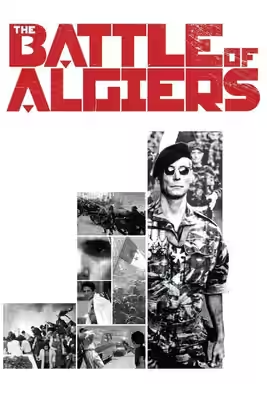
Platoon is the more personal film, following one recruit's education among the men who have authority over him, while The Battle of Algiers widens ground-level conflict into a sharper study of occupation, resistance and civilian suffering. Pontecorvo's documentary style keeps the violence close but spends less time with individuals; Stone gives his soldiers fuller lives but signposts his moral argument. We rate the earlier film the more rigorous of the two.
What should I watch after Platoon?
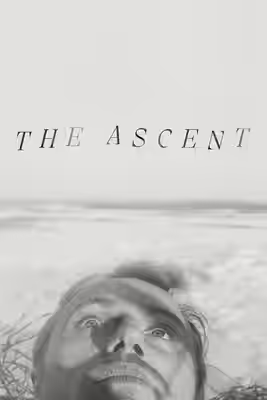
After Platoon, try The Big Red One (1980, Fi1m 82): Another infantryman’s war, with exhaustion and experience shaping the soldiers’ daily decisions. Then The Ascent (1977, Fi1m 88): For a harsher moral ordeal, with soldiers pushed beyond endurance in the snow; and The Battle of Algiers (1966, Fi1m 93): Ground-level conflict widens into a sharper examination of occupation, resistance and civilian suffering.

Cast

Awards

Academy Awards, 1987

Nominated
Best Cinematography
Nominated
Best Supporting Actor
Won
Best Director
Won
Best Film Editing
Won
Best Picture
Won
Best Sound

BAFTA Film Awards, 1987

Won
Best Direction
Won
Best Editing

Golden Globes, 1986

Won
Best Director
Won
Best Motion Picture – Drama
Won
Best Supporting Actor – Motion Picture

If you liked this, try…

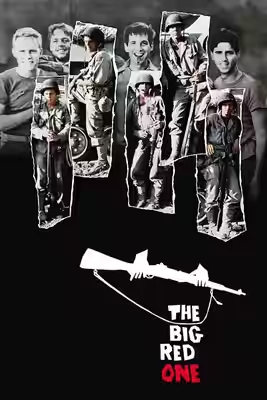
  1. The Big Red One (1980, Fi1m 82)Another infantryman’s war, with exhaustion and experience shaping the soldiers’ daily decisions.

  2. The Ascent (1977, Fi1m 88)For a harsher moral ordeal, with soldiers pushed beyond endurance in the snow.

  3. The Battle of Algiers (1966, Fi1m 93)Ground-level conflict widens into a sharper examination of occupation, resistance and civilian suffering.

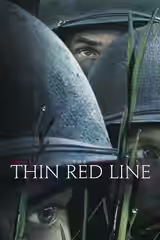
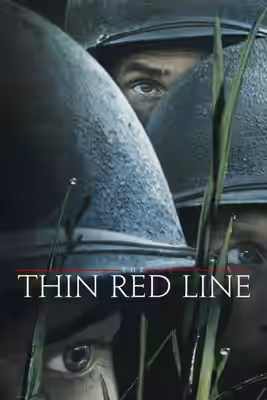
  4. The Thin Red Line (1998, Fi1m 84)For the fear and confusion of combat, with more space for inward reflection.

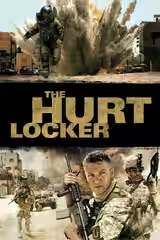
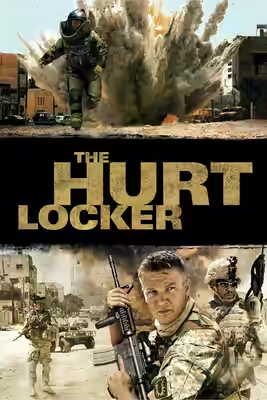
  5. The Hurt Locker (2008, Fi1m 86)Another close view of soldiers whose professional competence does not make them safe.

Free account

Know what to watch tonight

Two lists that know where things are streaming, collections you can share, your own score beside ours, and Discover that remembers what you have seen.

  • Want to see, sorted by what is streaming now
  • Seen, with your score out of ten
  • No adverts, ever