John Boorman’s fractured revenge thriller is worth the concentration, chiefly for Lee Marvin’s grim authority. The people around him can feel remote, but the film makes remembered violence disturbingly difficult to put aside.
John Boorman makes the simple business of following a revenge plot feel unsafe. Point Blank is a fine crime thriller, and its complications have a purpose: violence keeps returning when we would rather move on. Lee Marvin gives us a firm centre while the telling breaks into fragments around him. The reservation is that the people beside him can seem too remote to care about.
The screenplay is credited to Rafe Newhouse, Alexander Jacobs and David Newhouse, from a novel by Donald E. Westlake. Revenge gives the story an understandable direction, which matters when the sequence of events refuses to behave itself. A revenge thriller usually lets us share the lead’s certainty about what needs doing. Here, we can follow the pursuit without being allowed that comfort. John Boorman uses the familiar plot to keep us interested while making the telling considerably stranger.
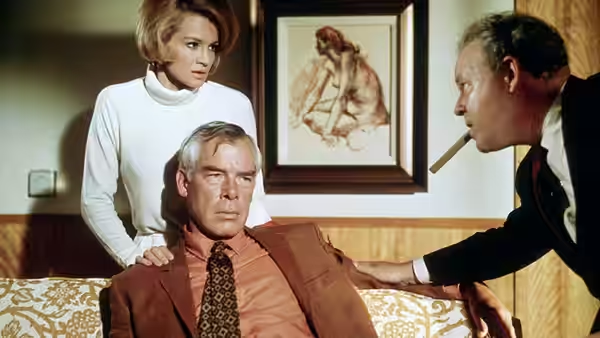
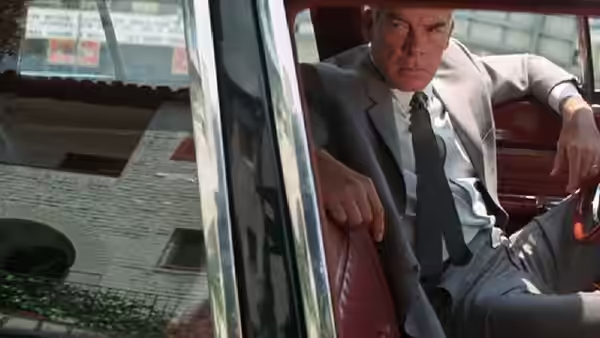
Lee Marvin’s Walker is the reason this remains involving. His gravitas lets the film take risks with our bearings without losing its main source of interest. We do not need to find Walker agreeable to want to keep watching him, and Lee Marvin does not soften the character to win our affection. The danger is that such a commanding lead makes everyone around him too easily overlooked.
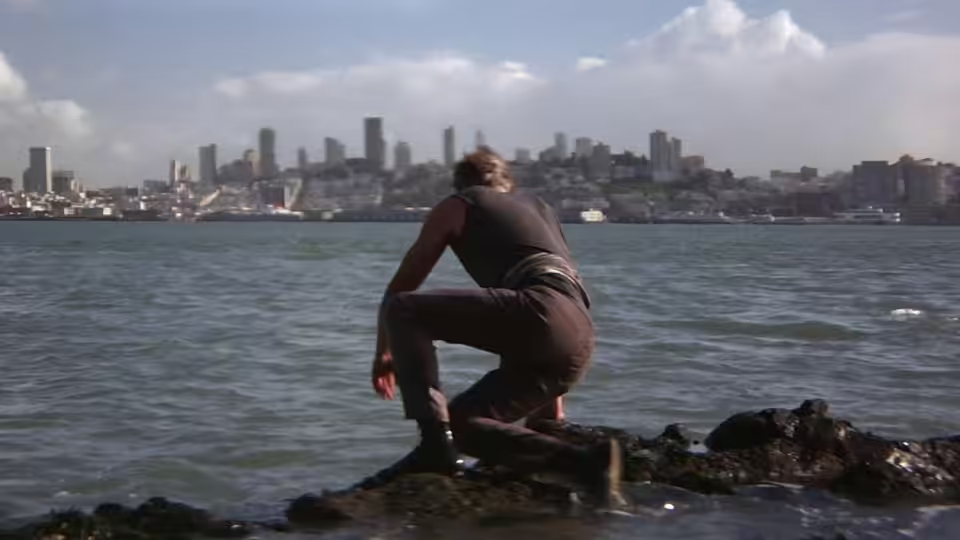
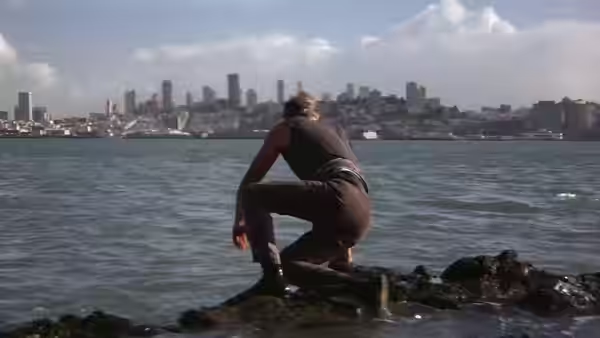
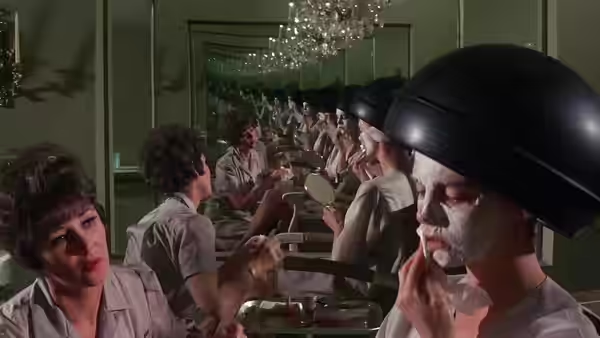
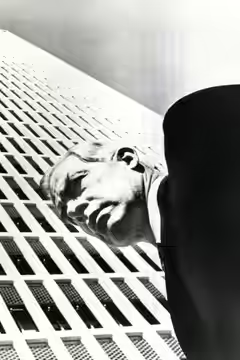
Philip H. Lathrop’s cinematography makes the landscape feel as unsettled as the telling. The visual strangeness keeps us looking, even when we cannot quite work out how one piece of the film fits beside another. That uncertainty is useful: the surroundings never become somewhere we can relax while waiting for the next confrontation. We remain alert to the images throughout, looking for something that will help us get our bearings.
Henry Berman’s editing gives remembered violence an uncomfortable persistence. The past interrupts the forward movement of revenge, so remembering becomes part of the action we are trying to follow. We felt unsettled by those returns to violence, because they made it difficult to believe that anything was safely over. This is where the fractured storytelling earns the concentration it asks of us: each interruption makes the pursuit feel less secure.
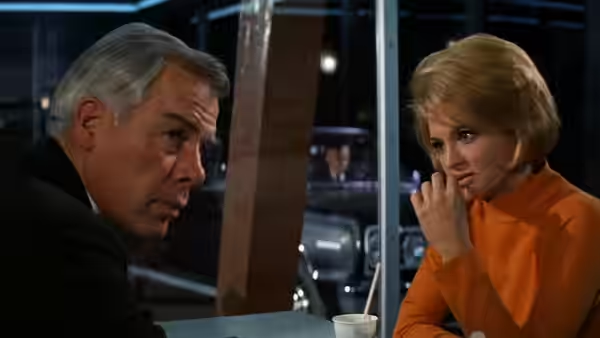
Johnny Mandel’s music contributes to that unease, although the images and the cutting are what stay with us. The limitation is John Boorman’s interest in keeping people at a distance. Angie Dickinson’s Chris and John Vernon’s Mal Reese can feel secondary to the business of tracking Walker through this broken sequence. We wanted more room for them to matter on their own terms. That leaves a chill which sometimes dulls our interest in the people, even while the thriller keeps us attentive.
The temptation is to treat every dislocation as a clue and spend the film trying to restore a tidy chronology. We would resist it on a first viewing. At 92 minutes, there is no great burden in letting John Boorman set the pace and leave a few questions open. See it when there is enough quiet to pay attention, rather than expecting a straightforward evening of revenge.