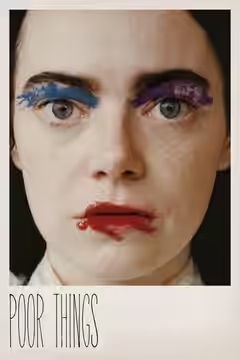
Lanthimos’s Frankenstein comedy is the best-looking film he has made and the one most anxious to please. Emma Stone is remarkable in it, and the film runs out of new things to say about her a good half hour before it stops.
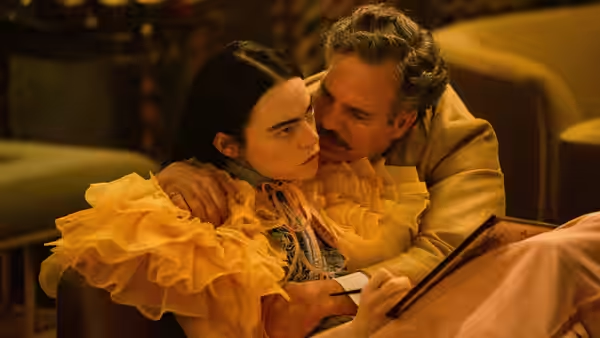
Bella Baxter lives in a large London house with Godwin Baxter (Willem Dafoe), a surgeon whose face is a patchwork of old stitches, and she calls him God. She has a woman’s body and a small child’s mind, and Godwin explains why quite early. He hires a medical student, McCandles (Ramy Youssef), to keep notes on her progress; a lawyer, Duncan Wedderburn (Mark Ruffalo), turns up with papers and an offer to show her the world. Tony McNamara’s screenplay, adapted from the novel, follows her out of the house and across a Europe that never existed. It is the best-looking film Yorgos Lanthimos has made. It also wants badly to be liked.
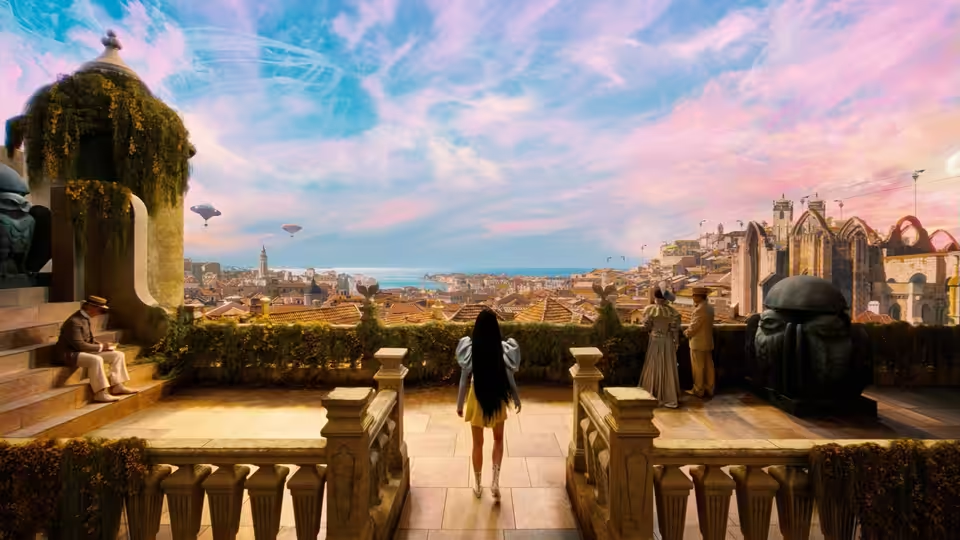
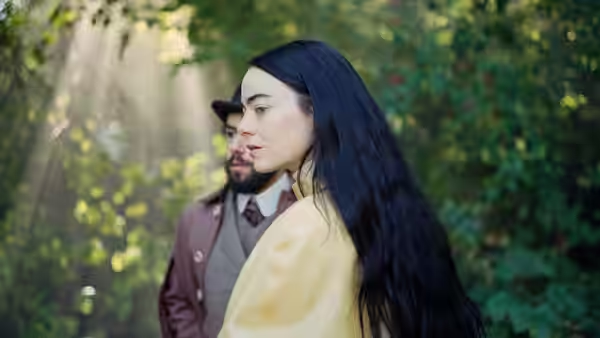
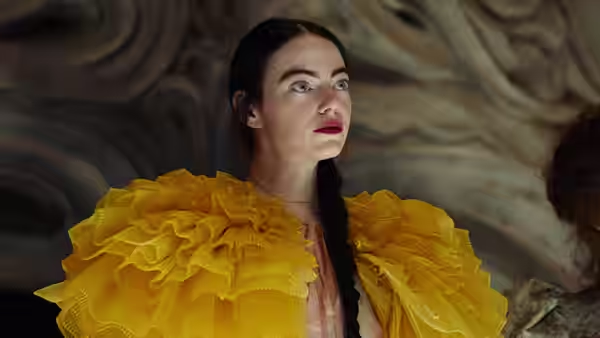
James Price and Shona Heath have built the whole thing on stages. The sky over Lisbon is painted, the sea is a sheet of moving cloth, and a tram travels on a wire above rooftops that lean at the wrong angles. Robbie Ryan shoots the London house in black and white through a fisheye lens that bows the walls, and when Bella leaves the film goes into colour so heavy the rooms look lit from inside the furniture. Holly Waddington dresses Stone in sleeves the size of pillows, bloomers under a short jacket, nothing laced, the clothes of someone who has not yet been told to be ashamed.
Stone begins stiff-legged and open-mouthed, a toddler handed a full-grown body who would like to see what it breaks. Over 141 minutes she straightens, her sentences lengthen and she learns to lie, and she plays each stage as a complete person rather than a step towards the next. She reports on sex, which the film calls furious jumping, like a scientist reading out results. It is physical comedy first, and it is funny. Then there is a scene on the deck of a ship where she looks down at something we will not describe, and her face gives way in stages, and we were moved more than a film with this many jokes about self-pleasure had led us to expect.
Ruffalo plays Duncan as a cad who believes himself a rake, and for about an hour he is the funniest thing on screen. That is roughly when the character is meant to become tiresome, and he does, on schedule. Dafoe, under a face of scar tissue, gives Godwin a gentleness we did not expect; his account of his own father is the saddest thing in the film. Kathryn Hunter arrives late, small and hoarse, and takes charge of every scene she is in. Jerskin Fendrix’s score bends its strings flat and lets its piano wander out of tune, as though the instruments were learning to play while Bella learned to speak. It is the best idea in the film, and by the third city it has become a tic.
The argument is that a woman with no shame is a scandal to every man she meets, and the film makes it well in the first hour. Every man Bella encounters is a fool or a brute, or a fool who turns out to be a brute, and by the third we could draw the scene before it arrived. Yorgos Mavropsaridis cuts briskly inside each scene, but nobody seems to have asked whether every scene was needed, and 141 minutes is long for one lesson learned in several outfits. We caught ourselves waiting for the next set of clothes, and we were a little sorry about that.
Dogtooth and The Lobster were cold films, and the cold was the point. The Favourite, also written by McNamara, let some warmth in. Poor Things is warmer still, and it wants us to love it, which is new for Lanthimos, and the wanting shows. Jokes land and then the film holds for a beat, as if to check we got them.
It is an 18, and it earns the certificate in the first half hour, so choose your company. See it on the largest screen you can find; the sets were built to be looked at from a distance, and at home the repetitions are easier to count.