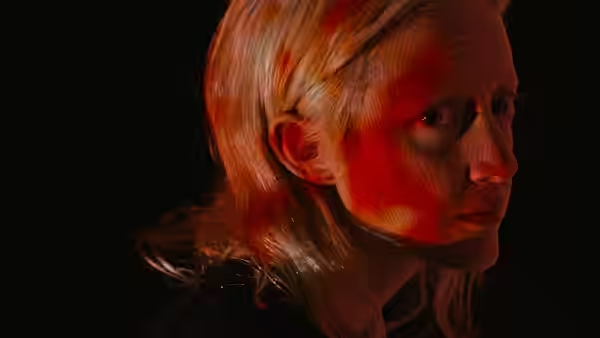
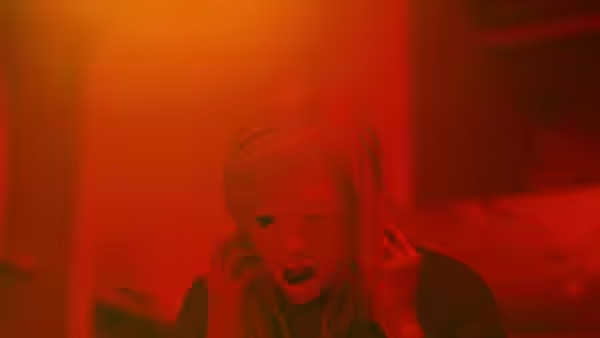
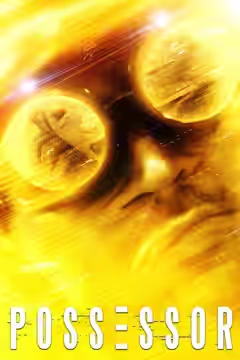
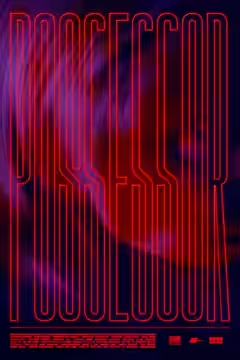
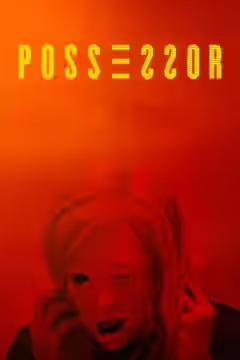
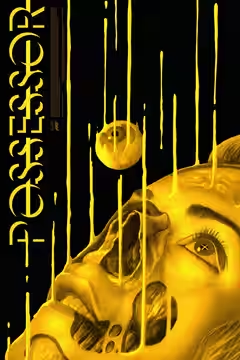
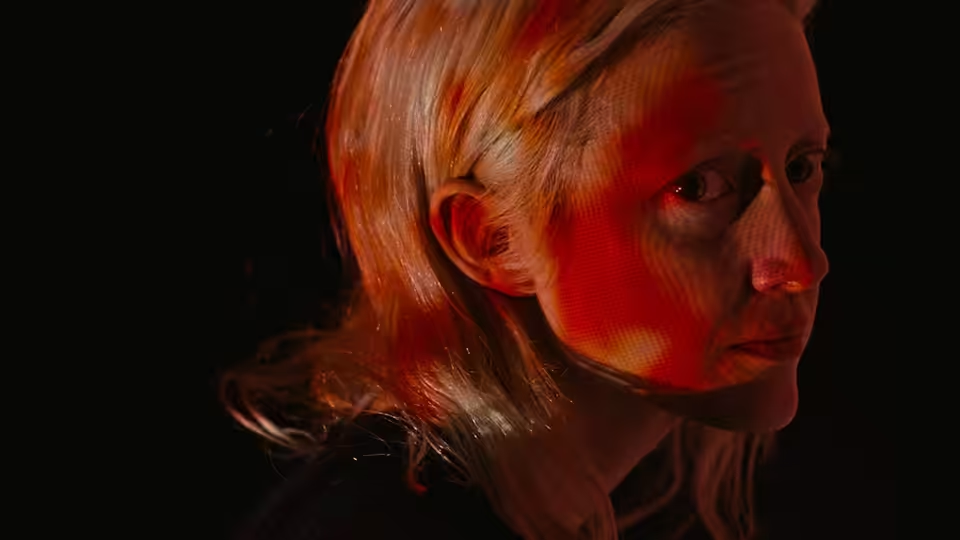
A blonde woman turns toward the light in a dark room
Film review

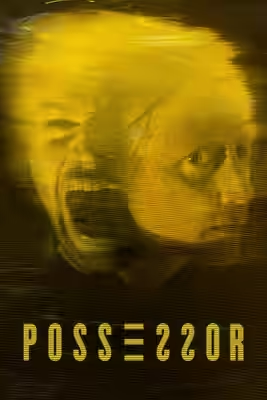
Possessor

2020 · Directed by Brandon Cronenberg · 1h 43m

In a sentenceThe assassin wears another man’s body to work, and by Wednesday neither of them wants it back

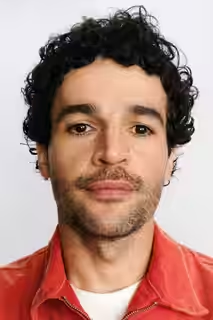
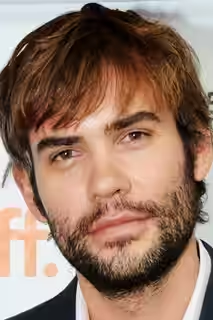
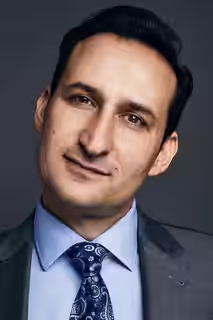
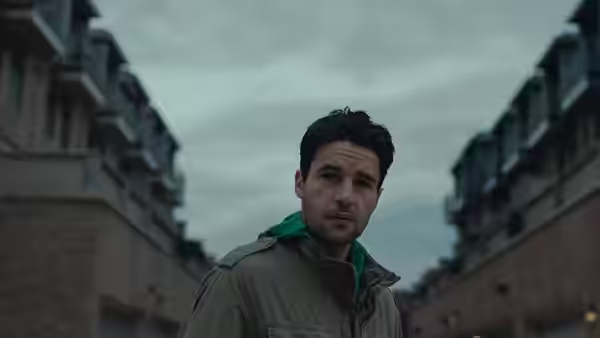
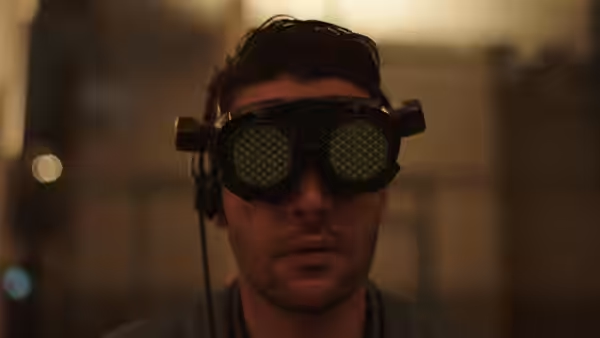
Tasya Vos (Andrea Riseborough) kills people for a living without ever being present. A company run by Girder (Jennifer Jason Leigh) implants her mind into a stranger’s body; she carries out the murder wearing their face, then turns the gun on the host and wakes up in a chair back at the office. It opens mid-job: Holly (Gabrielle Graham), a wire in her scalp, walking into a party. Vos is worn down, rehearsing small talk before she can face her husband Michael (Rossif Sutherland) and son Ira (Gage Graham-Arbuthnot). Girder gives her a bigger contract: enter Colin Tate (Christopher Abbott), fiancé of Ava Parse (Tuppence Middleton), and kill Ava’s father John Parse (Sean Bean), who runs a data company. Colin, it turns out, does not intend to stay quiet.

Plays from YouTube when you press play; nothing loads from them until then.

Fi1m review

Brandon Cronenberg’s second film puts an assassin inside a stranger’s body and watches the two of them fight for the steering wheel. It is cold, violent, handsomely shot and sharper about surveillance than about people. Worth your evening if you have the stomach.

Brandon Cronenberg’s second film is colder, cleaner and more frightening than his first, Antiviral (2012). Tasya Vos (Andrea Riseborough) kills for hire from a chair miles away: a company run by Girder (Jennifer Jason Leigh) wires her mind into a stranger’s body, she does the murder wearing their face, and the plan is that the host then puts a gun to their own head and Vos wakes up back at the company. Her new job is Colin Tate (Christopher Abbott), engaged to Ava Parse (Tuppence Middleton), whose father John Parse (Sean Bean) runs a data company. Colin does not go quietly. The film is well made, hard to watch and sharp about surveillance, and we recommend it, warning you now about the violence.

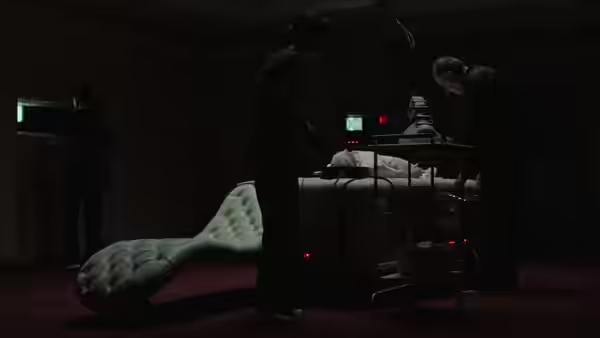
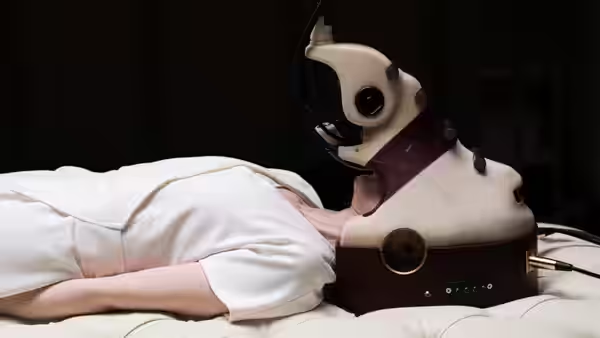
Karim Hussain shoots it in deep red and chemical blue, and the transfer sequences look as if they were done in front of the camera rather than inside one. A wax head with Riseborough’s face softens and runs; Abbott’s features push up through hers like a face through a sheet. Jim Williams’s score is synthesisers that drone for a long time and then stab. Rupert Lazarus’s production design keeps Girder’s premises white, bare and medical, and gives the Parse house glass, hard surfaces and nothing out of place.

The film’s sharpest idea is Colin’s job. He works for his future father-in-law in a dim open-plan office of people in headphones, looking through strangers’ webcams and logging the make and colour of their curtains, which the company sells on. Nobody there finds this odd. Vos, inside Colin, has to do the work well enough to pass, and we watched her try with a dread that nothing bloodier in the film matched. It is also the one place Cronenberg lets himself be funny, and we wished he had stayed longer.

Riseborough plays Vos grey and withdrawn, a woman who stands outside her own front door rehearsing what she will say to her husband Michael (Rossif Sutherland) and son Ira (Gage Graham-Arbuthnot) before she can go in. Abbott has the harder job: he is Colin, then Vos doing a poor impression of Colin, then both at once, and he marks the changes with a half-second’s wrongness in the eyes. Sean Bean enjoys himself as a rich man who is rude for sport. Jennifer Jason Leigh’s Girder speaks to Vos the way a good manager speaks to a valued employee who is about to be let go.

The violence is frank. The opening killing, which Holly (Gabrielle Graham) carries out at a party with a knife, is shown close, and Cronenberg holds the shot several seconds past where most directors would cut. We flinched, and we do not flinch easily. The 18 certificate is not a formality. Later set pieces are harder still, and we will not describe them, except to say that the film does things to a face we had not seen done before.

What the film lacks is a person at its centre, which is partly the point and partly a fault. Cronenberg wants us to ask how much of Vos is left after years of this, but he gives Michael and Ira perhaps six minutes between them, so there is nothing to measure her against. The last half hour drifts into pictures: faces laid over faces, strobing, a great deal of red. Some are remarkable; the story stops while we look at them. Matthew Hannam’s editing, tight and clear for the first hour, goes slack here. A few critics found it empty; we understand the complaint without sharing it.

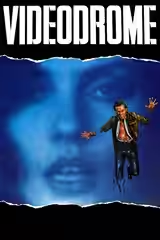
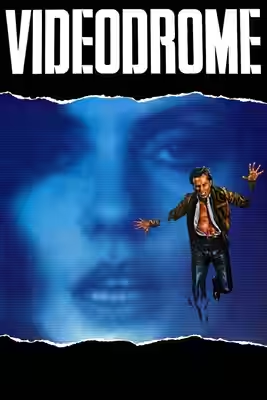
Cronenberg does not run from the comparison with his father: there are cables going into skulls and a company that owns your flesh, and anyone who has seen Videodrome will nod. But the closer relative is the corporate thriller. The best material is about work, about clocking in each morning as somebody else and being judged on how well you pass, and that part is his own. It is a more disciplined film than Antiviral and a much more frightening one.

Watch it with the lights off and nobody squeamish on the sofa, and do not expect to feel better afterwards. It runs 103 minutes and does not need one more.
Critical consensus AI synthesised

75
Positive
19
Mixed
4
Negative
2

Most critics come away rattled and impressed. Nineteen of twenty-five reviews are positive, and the praise gathers in two places: the body horror, done in camera with practical effects, and the two leads. Andrea Riseborough’s slow loss of self and Christopher Abbott’s fight between host and intruder are named repeatedly as what holds the film together. The production design and sound are mentioned often, and several reviewers note that Brandon Cronenberg’s ideas and methods are his own rather than his father’s.

The reservations are about the shape of the story. More than one critic finds the final third drifts into abstraction, and IndieWire thinks the ending falls short of the set-up. Others say the coldness and the brutality keep viewers at a distance. The spread is wide: /Film gives it full marks, while The Wrap finds it accomplished to look at and empty underneath, and a waste of Riseborough. Consequence objects to unexamined racial imagery in the opening scene.

The Guardian
26 November 2020 · Peter Bradshaw
90*

Bradshaw finds the film an ingenious, unsettling sci-fi horror with a disturbing final twist. He praises its thought-through premise and queasy allegory of corporate control and surveillance.

Read the full review →
Variety
2 October 2020 · Peter Debruge
90*

Debruge praises the film as a bold, unsettling work with ideas and execution distinct from its director’s famous father. He singles out the lead performances and the inventive visual techniques that convey the characters’ struggle for control.

Read the full review →
The i Paper
26 November 2020 · Christina Newland
85*

Newland finds the film stylish, brutal, and genuinely unnerving, calling it one of the year’s most unforgettable viewing experiences. She especially praises Andrea Riseborough’s portrayal of a woman losing her sense of self and the film’s eerie production design and score.

Read the full review →
The AV Club
1 October 2020 · B+ · A.A. Dowd
83

Dowd finds Possessor a stylish, provocative blend of science fiction and visceral horror, though it sometimes favors thrills over ideas. He praises Andrea Riseborough’s performance and the film’s unsettling exploration of identity.

Read the full review →
Little White Lies
23 November 2020 · 4/4/4 · Leila Latif
80

The critic finds the film fascinating and exhausting, calling it a nightmare that lingers. She praises its uncanny world-building, especially the detailed production design and sinister soundscape.

Read the full review →
Radio Times
★★★★ · Josh Winning
80

The review is positive about Cronenberg’s audacious science-fiction horror. It singles out the queasy body horror and wickedly clever assassin plot for praise.

Read the full review →

Straight answers AI written, from our review

Is Possessor worth watching?
Possessor is worth watching for anyone who can take frank, close-up violence, and we scored it 73. Brandon Cronenberg's film about an assassin wired into a stranger's body is cold, well shot and sharper about surveillance than about people, with a last half hour that drifts into pictures. Do not expect to feel better afterwards.
How long is Possessor, and what is it rated?
Possessor runs 1h 43m. It is a horror and thriller film.
Where can I watch Possessor in Saudi Arabia?
Possessor is not on any streaming or rental service in Saudi Arabia at the moment. It is available in 30 other countries; change your country at the top of the page to see where. Availability is checked daily.
How violent or frightening is Possessor, and is it suitable for children?
Possessor is an 18 in the UK and R in the US, and it is not suitable for children or younger teenagers. The violence is shown close and held longer than most directors would dare, including an opening knife killing at a party, and later set pieces do things to a face we had not seen before. The squeamish should sit this one out.
How does Possessor compare to Videodrome?
Possessor is Brandon Cronenberg's film and Videodrome is his father David's, and the shared family appetite shows in cables into skulls and companies that own your flesh. The son's film is the colder and more disciplined of the two, and its best material is a corporate thriller about passing as somebody else at work; the father's looks like nothing else but comes apart in its second half.
What should I watch after Possessor?
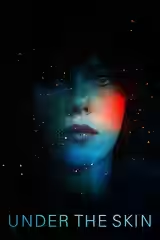
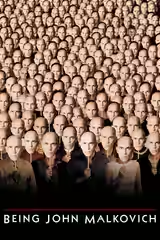
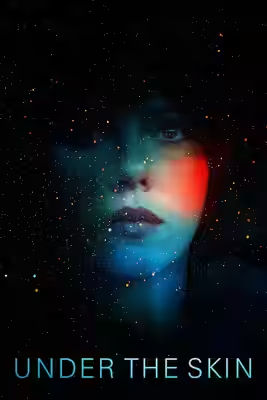
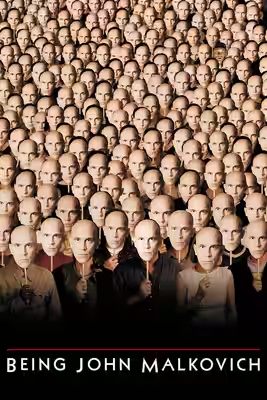
After Possessor, try Videodrome (1983, Fi1m 82): The father’s film about a signal that gets into the flesh; same family, same appetite. Then Under the Skin (2013, Fi1m 81): Scarlett Johansson wears a borrowed body through wet Glasgow; slower, stranger, quieter; and Being John Malkovich (1999, Fi1m 89): The comic version: a portal into another man’s head, and a queue to use it.

Cast

Awards

Sitges Film Festival Best Director award, 2020

Won
Sitges Film Festival Best Director award

Sitges Film Festival Best Feature-Length Film award, 2020

Won
Sitges Film Festival Best Feature-Length Film award

If you liked this, try…

  1. Videodrome (1983, Fi1m 82)The father’s film about a signal that gets into the flesh; same family, same appetite.

  2. Under the Skin (2013, Fi1m 81)Scarlett Johansson wears a borrowed body through wet Glasgow; slower, stranger, quieter.

  3. Being John Malkovich (1999, Fi1m 89)The comic version: a portal into another man’s head, and a queue to use it.

  4. Perfect Blue (1997, Fi1m 82)Japanese animation about a pop star losing track of which life is hers.

  5. Beyond the Black Rainbow (2010) · not reviewed yetA Canadian institution, reds and blues and a mind held captive; even slower, equally handsome.

Free account

Know what to watch tonight

Two lists that know where things are streaming, collections you can share, your own score beside ours, and Discover that remembers what you have seen.

  • Want to see, sorted by what is streaming now
  • Seen, with your score out of ten
  • No adverts, ever