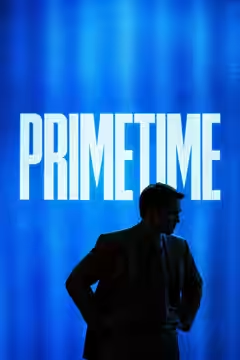
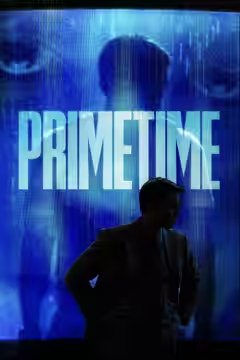
Robert Pattinson gives Primetime a disturbing centre, but Lance Oppenheim’s media satire has less to say than its aggressive style suggests. Strong performances make it watchable, though its questions about television deserve closer attention.
Lance Oppenheim’s Primetime is a decent thriller about sensationalist television, carried by Robert Pattinson and weakened by its shallow account of why the spectacle attracts people. It knows that an appetite for punishment can be profitable, and that a presenter can mistake public attention for public service. It spends considerable energy making those points unpleasant to watch. There is less effort to take them further, though the performances give us reasons to stay.
Pattinson’s Chris Hansen is the reason to stay most of all. The impersonation has an eerie vacancy that makes the presenter’s self-importance funny without making him good company, and Pattinson sustains that unpleasantness without becoming merely a collection of mannerisms. We laughed at his pomposity, then felt uncomfortable about how much entertainment we were getting from it. For a while, watching this man is enough to make us question our own appetite for the programme.
Merritt Wever’s Andie Bender brings a welcome force to the ensemble, while Skyler Gisondo’s Dan Plum helps prevent Hansen from being the only person worth attending to. Both performances make us want more time with the people surrounding the presenter. Ajon Singh’s screenplay keeps returning to Hansen’s ego, however, and the supporting cast cannot entirely compensate for that narrowness. There is enough acting talent here to examine an entire working culture, but the other characters receive too little attention.
David Bolen’s cinematography uses neon and changes of visual format to give the television world a queasy, unstable appearance. Those choices work when they make the spectacle difficult to enjoy innocently; they become tiring when every image insists on being unsettling. Alex DiGerlando’s production design contributes to the claustrophobic atmosphere, although the visual pressure leaves little room to consider the surroundings separately. We would have welcomed a quieter look at these workplaces, where ordinary professional habits might have told us something the lurid images do not.
Daniel Garber’s editing and Ari Balouzian’s score help keep that pressure on, bringing the performances and shifting images together into an absorbing stretch of unease. The collaboration is effective enough to explain why the film remains watchable even when its thinking stalls. But the constant insistence gradually becomes counterproductive, and a slower final stretch exposes how little new ground the drama has covered. At 110 minutes, it feels longer than it needs to because the same judgement keeps arriving with renewed force.
A satire about exploitative television has a difficult job: it must show what makes the programme compelling without simply repeating its cruelties. Oppenheim is good at the first part and less convincing at the second. The people harmed by this culture deserve more consideration than the presenter’s vanity, yet his personality keeps dominating our attention. The film makes its disgust clear enough; we wanted more interest in the people who are not making television history.
For viewers interested in Pattinson, there is enough here to justify the evening, and Wever is a further reason to give it time. The lurid style will be harder work for anyone hoping for a patient examination of journalism. Come for the actors, with modest expectations of what the screenplay will give them to do.