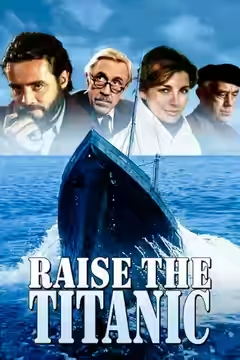
Jerry Jameson’s film of the Clive Cussler bestseller spends an hour in offices discussing a salvage, then stages the salvage itself handsomely for ten minutes. John Barry’s score and one scene for Alec Guinness are the rest of what survives.
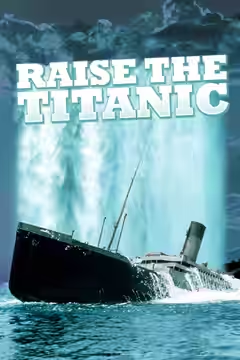
Lew Grade wanted a blockbuster and bought the rights to one. Clive Cussler’s novel has a premise any producer would pay for: the American missile defence programme needs a rare mineral called byzanium, the only known supply went down with the Titanic in 1912, so somebody must go to the bottom of the Atlantic and bring the whole ship up. It is a daft idea and a good one for a film. Jerry Jameson’s version, from a screenplay by Adam Kennedy, spends most of its 115 minutes proving that even this can be turned into a film about meetings. The ship comes up, handsomely, for about ten of them. We were bored for a good deal of the rest, and the reviews at the time were poor and have not softened since.
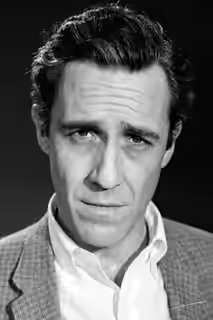
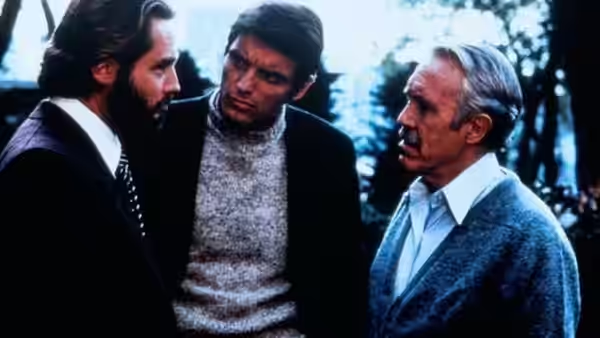
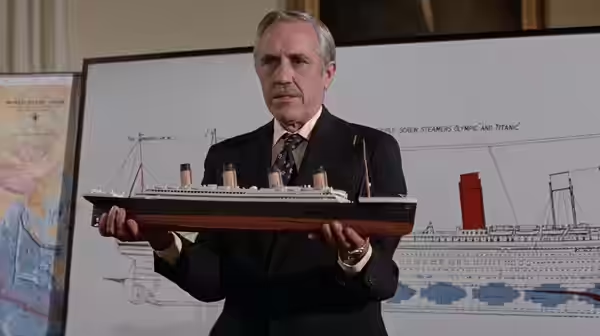
The first hour belongs to Dr Gene Seagram (David Selby), the scientist who needs the mineral, and Admiral James Sandecker (Jason Robards), who runs the people who will go and get it. They argue in an office, then in a corridor, then in a car. Dirk Pitt (Richard Jordan) is brought in as the man of action, and Kennedy’s script mostly has him explain things: what a submersible does and what the Russians know. Jordan plays him easy and unhurried and never once seems to be in danger. Dana Archibald (Anne Archer) is a journalist who used to be with Pitt and is now with Seagram; the film remembers this every twenty minutes and does nothing with it. We were bored by the third office, and the fourth was the one with the maps in.
Things improve underwater. Matthew F. Leonetti shoots the search as cones of light moving over mud, the submersibles’ lamps picking out a railing, a boiler, a line of portholes, with black on every side. It is slow, and Robert F. Shugrue and J. Terry Williams cut it slowly, and for once that is right: a wreck should be found a piece at a time. Then the film surfaces and goes back to the meetings. The Soviet threat, Captain Prevlov (Bo Brundin), is a man in another office reading reports, given one quiet moment of menace and otherwise there so that somebody can say “the Russians”.
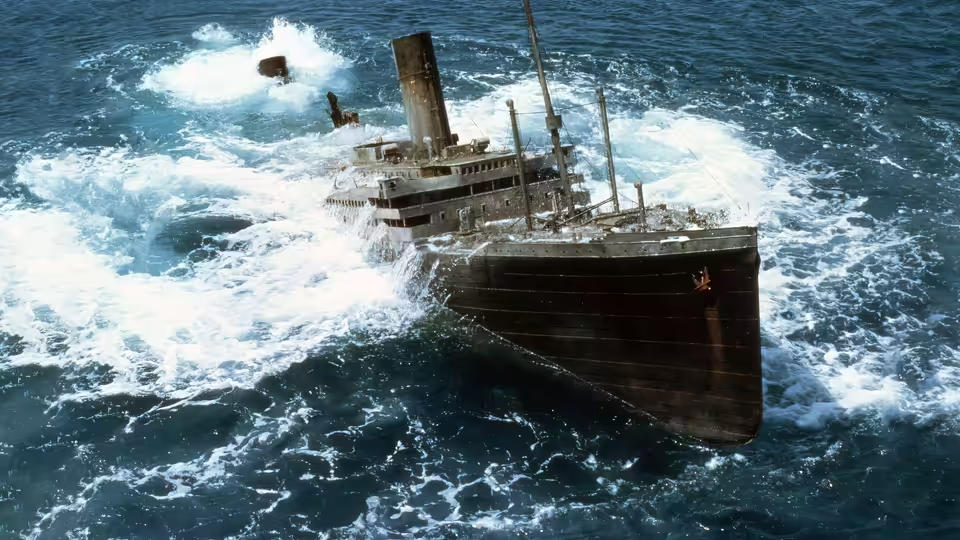
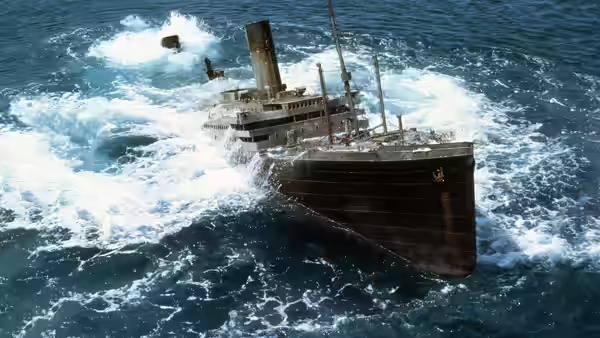
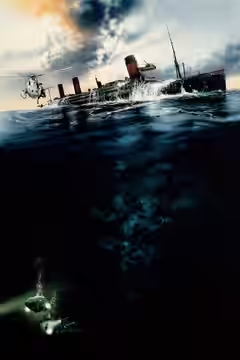
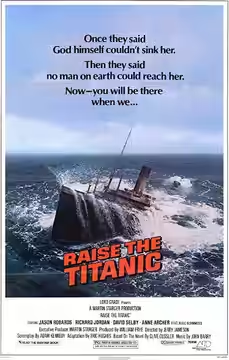
Then the ship comes up. John DeCuir’s model of the liner, rusted brown and streaming water, breaks the surface bow first in a wide shot while John Barry’s theme climbs under it, slow brass over strings. We sat up. For the length of that sequence the film is the one Grade paid for: something nobody had seen before, shot so that you can see all of it, scored by a man who understood that a ship rising is a sad sight as well as a thrilling one. Barry’s music is the best thing here by a distance, and the reason the film is remembered at all.
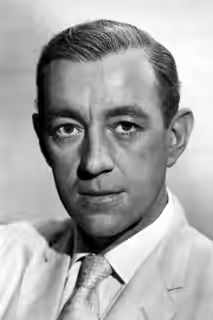
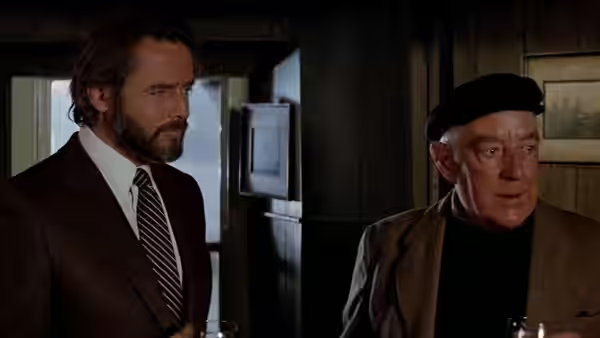
The other reason is Alec Guinness. He plays John Bigalow, an old man in a cottage on the English coast who was aboard the ship as a young crewman, and he has one scene, in which he tells Pitt what he saw that night. He does it sitting down, without raising his voice, and it is the only time in the film anyone talks like a person rather than a briefing. It moved us more than the rest of the picture put together, and it is over in a few minutes. Robards is good value too: dry, tired, and plainly enjoying being the one man at the table who does not have to pretend to be excited.
Inside the raised ship, DeCuir’s sets are the real thing: corridors furred with rust, a grand staircase gone black, water still running off everything. The second half takes a turn we will not describe, and it comes closest to the adventure the title promises, though it is handled with the same flat competence as the meetings. Jameson directs it like an episode of something: the camera finds the person speaking and waits.
Grade said afterwards that it would have been cheaper to lower the Atlantic, and the line is better than any in the film. It is a poor adventure film with a fine composer and two good actors doing what they can. If you want it, want it for the ten minutes and the music. Watch it at home, where you can talk through the meetings and rewind the raising.