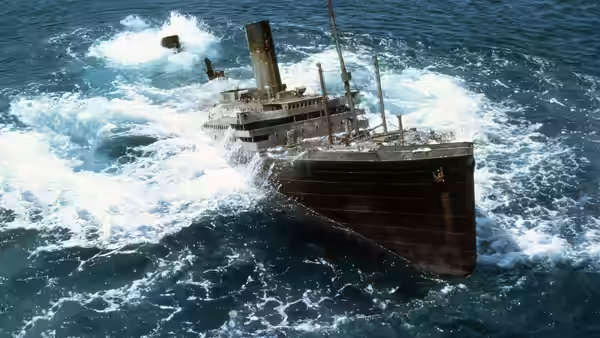
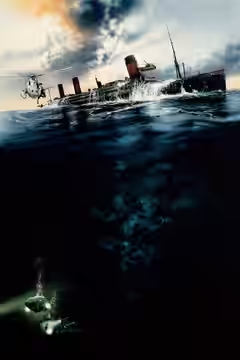
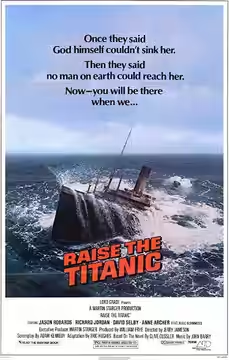
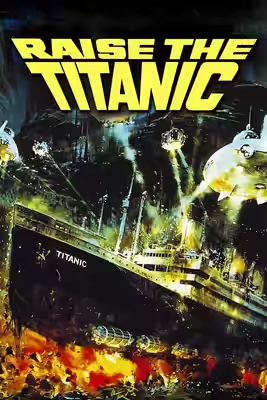
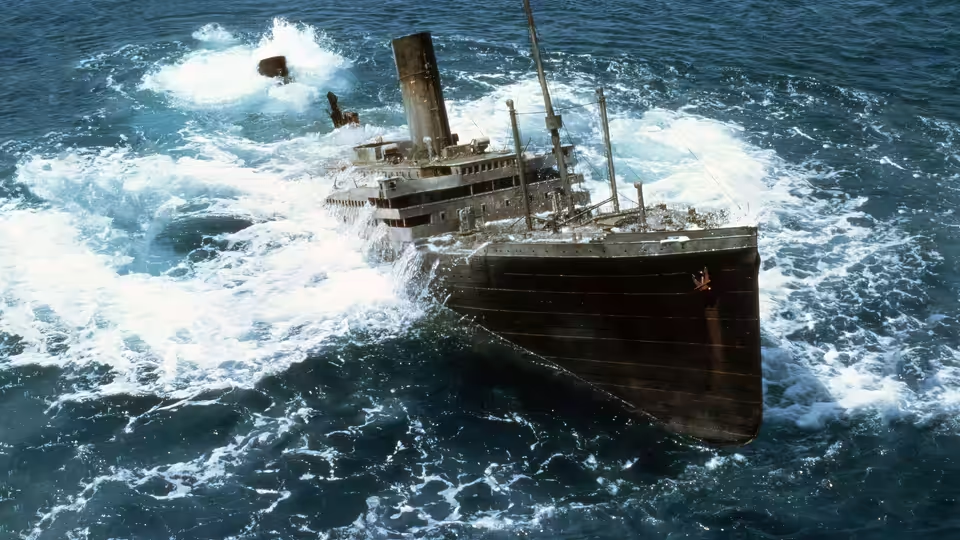
A passenger liner pitches through towering waves in a stormy sea
Film review

Raise the Titanic

1980 · Directed by Jerry Jameson · 1h 55m

In a sentenceThe ship comes up in ten fine minutes; the other hundred and five are spent in meetings

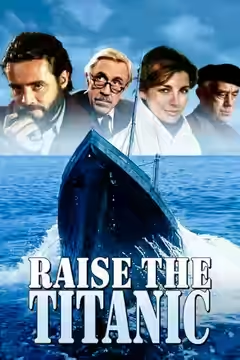
Dr Gene Seagram (David Selby) is building the Sicilian Project, an American missile defence system that will not work without byzanium, a mineral so rare that the only known supply was mined in 1912 and loaded, in crates, onto the Titanic. So the ship must come up. Admiral James Sandecker (Jason Robards) and the salvage man Dirk Pitt (Richard Jordan) are given the job and a budget nobody will say out loud. Dana Archibald (Anne Archer), a journalist, is Seagram’s girlfriend and used to be Pitt’s. Pitt crosses the Atlantic to find John Bigalow (Alec Guinness), an old man who was aboard the ship as a young crewman and may remember where the crates were stowed. Submersibles begin combing the sea floor, and the Soviet navy, in the person of Captain Prevlov (Bo Brundin), starts to take an interest.

Plays from YouTube when you press play; nothing loads from them until then.

Fi1m review

Jerry Jameson’s film of the Clive Cussler bestseller spends an hour in offices discussing a salvage, then stages the salvage itself handsomely for ten minutes. John Barry’s score and one scene for Alec Guinness are the rest of what survives.

Lew Grade wanted a blockbuster and bought the rights to one. Clive Cussler’s novel has a premise any producer would pay for: the American missile defence programme needs a rare mineral called byzanium, the only known supply went down with the Titanic in 1912, so somebody must go to the bottom of the Atlantic and bring the whole ship up. It is a daft idea and a good one for a film. Jerry Jameson’s version, from a screenplay by Adam Kennedy, spends most of its 115 minutes proving that even this can be turned into a film about meetings. The ship comes up, handsomely, for about ten of them. We were bored for a good deal of the rest, and the reviews at the time were poor and have not softened since.

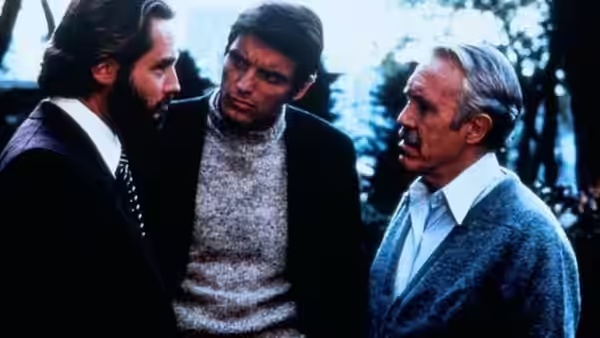
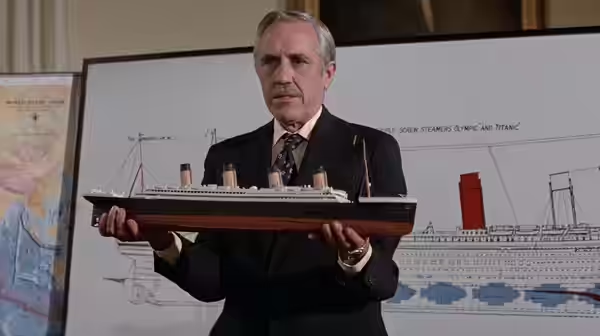
The first hour belongs to Dr Gene Seagram (David Selby), the scientist who needs the mineral, and Admiral James Sandecker (Jason Robards), who runs the people who will go and get it. They argue in an office, then in a corridor, then in a car. Dirk Pitt (Richard Jordan) is brought in as the man of action, and Kennedy’s script mostly has him explain things: what a submersible does and what the Russians know. Jordan plays him easy and unhurried and never once seems to be in danger. Dana Archibald (Anne Archer) is a journalist who used to be with Pitt and is now with Seagram; the film remembers this every twenty minutes and does nothing with it. We were bored by the third office, and the fourth was the one with the maps in.

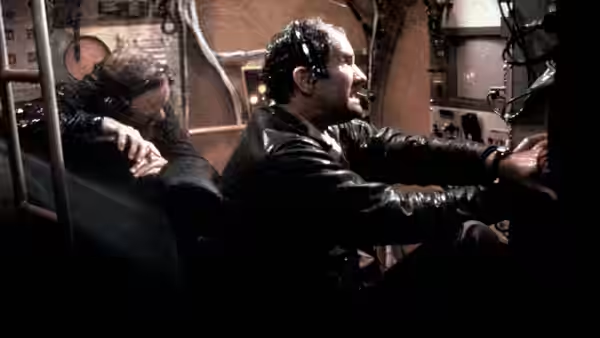
Things improve underwater. Matthew F. Leonetti shoots the search as cones of light moving over mud, the submersibles’ lamps picking out a railing, a boiler, a line of portholes, with black on every side. It is slow, and Robert F. Shugrue and J. Terry Williams cut it slowly, and for once that is right: a wreck should be found a piece at a time. Then the film surfaces and goes back to the meetings. The Soviet threat, Captain Prevlov (Bo Brundin), is a man in another office reading reports, given one quiet moment of menace and otherwise there so that somebody can say “the Russians”.

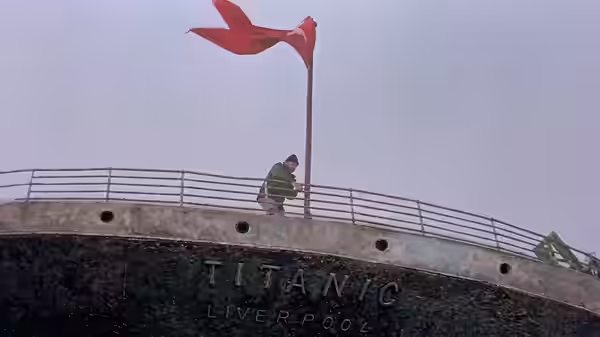
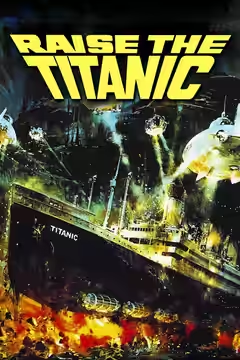
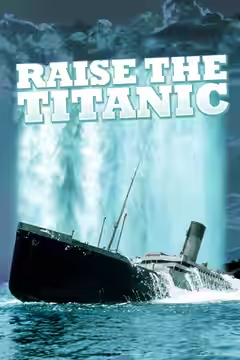
Then the ship comes up. John DeCuir’s model of the liner, rusted brown and streaming water, breaks the surface bow first in a wide shot while John Barry’s theme climbs under it, slow brass over strings. We sat up. For the length of that sequence the film is the one Grade paid for: something nobody had seen before, shot so that you can see all of it, scored by a man who understood that a ship rising is a sad sight as well as a thrilling one. Barry’s music is the best thing here by a distance, and the reason the film is remembered at all.

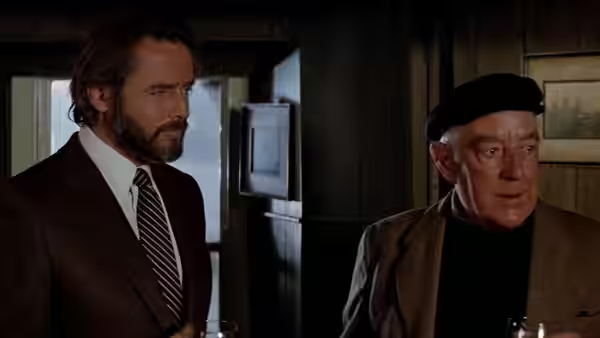
The other reason is Alec Guinness. He plays John Bigalow, an old man in a cottage on the English coast who was aboard the ship as a young crewman, and he has one scene, in which he tells Pitt what he saw that night. He does it sitting down, without raising his voice, and it is the only time in the film anyone talks like a person rather than a briefing. It moved us more than the rest of the picture put together, and it is over in a few minutes. Robards is good value too: dry, tired, and plainly enjoying being the one man at the table who does not have to pretend to be excited.

Inside the raised ship, DeCuir’s sets are the real thing: corridors furred with rust, a grand staircase gone black, water still running off everything. The second half takes a turn we will not describe, and it comes closest to the adventure the title promises, though it is handled with the same flat competence as the meetings. Jameson directs it like an episode of something: the camera finds the person speaking and waits.

Grade said afterwards that it would have been cheaper to lower the Atlantic, and the line is better than any in the film. It is a poor adventure film with a fine composer and two good actors doing what they can. If you want it, want it for the ten minutes and the music. Watch it at home, where you can talk through the meetings and rewind the raising.
Critical consensus AI synthesised

26
Positive
0
Mixed
1
Negative
5
RogerEbert.com
63*

The supplied page is blocked, so the critic’s verdict cannot be verified. No specific praise or complaint can be confirmed from the available text.

Read the full review →
Radio Times
★★ · Joanna Berry
40

Berry calls it a memorable flop but says it still has plenty to recommend. She singles out John Barry’s rousing score for praise.

Read the full review →
Time Out
· PG
15*

The review is strongly negative, describing the film as a flop and its adaptation as limp. It singles out the would-be blockbuster’s failure to bring the bestseller to life.

Read the full review →
Variety
31 December 1979 · Variety Staff
15*

The critic finds the film a dull and clumsy disappointment. They single out Alec Guinness’s scene as a dramatic highlight amid the poor script, performances, and effects.

Read the full review →
Empire
31 July 2006 · Ian Nathan
10*

Nathan delivers a strongly negative verdict, calling the film wooden, bland and unable to generate excitement. He singles out John Barry’s score, Jason Robards’ performance and the underwater photography as its few strengths.

Read the full review →
The New York Times
1 August 1980 · Vincent Canby
10*

Canby pans the film as a major failure. He objects to its implausible story and execution.

Read the full review →

Straight answers AI written, from our review

Is Raise the Titanic worth watching?
Raise the Titanic is not worth an evening for most people, and we scored it 36. The ship rising from the Atlantic to John Barry's theme is a fine ten minutes, and Alec Guinness has one scene that moves more than the rest of the film put together, but the other hour and a half is spent in offices. Watch it at home, where you can skip the meetings and rewind the raising.

How long is Raise the Titanic, and what is it rated?
Raise the Titanic runs 1h 55m. It is an action and adventure film.
Where can I watch Raise the Titanic in Slovakia?
Raise the Titanic is not on any streaming or rental service in Slovakia at the moment. It is available in 4 other countries; change your country at the top of the page to see where. Availability is checked daily.
How violent or frightening is Raise the Titanic, and is it suitable for children?
Raise the Titanic is a PG certificate and about as mild as an adventure film gets. The review found nothing frightening or violent to report: the submersible search is slow and dark rather than tense, the Soviet threat is a man reading reports, and most of the running time is people talking in rooms. Children will be safe and, in all likelihood, bored.
Is Raise the Titanic based on a true story or a book?
Raise the Titanic is adapted from Clive Cussler's bestselling novel of the same name and is not a true story. The premise, a rare mineral called byzanium that went down with the ship in 1912 and must be recovered for an American missile defence system, is fiction. You do not need to know the book; the film explains its plot at length, in meetings.
What should I watch after Raise the Titanic?
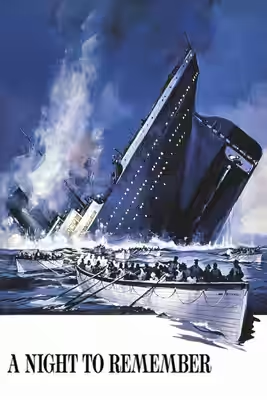
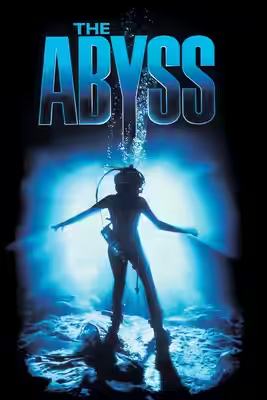
After Raise the Titanic, try A Night to Remember (1958, Fi1m 85): The sinking itself, told plainly and without a hero, and still the best Titanic film. Then The Abyss (1989, Fi1m 71): Deep-sea salvage with people in actual peril and a director who loved the water; and Das Boot (1981, Fi1m 89): If the underwater stretch was what held you, here is a whole film of it.

Cast

Awards

Golden Raspberry Award for Worst Picture, 1981

Nominated
Golden Raspberry Award for Worst Picture

Golden Raspberry Award for Worst Screenplay, 1981

Nominated
Golden Raspberry Award for Worst Screenplay

Golden Raspberry Award for Worst Supporting Actor - Razzie Award, 1981

Nominated
Golden Raspberry Award for Worst Supporting Actor - Razzie Award

If you liked this, try…

  1. A Night to Remember (1958, Fi1m 85)The sinking itself, told plainly and without a hero, and still the best Titanic film.

  2. The Abyss (1989, Fi1m 71)Deep-sea salvage with people in actual peril and a director who loved the water.

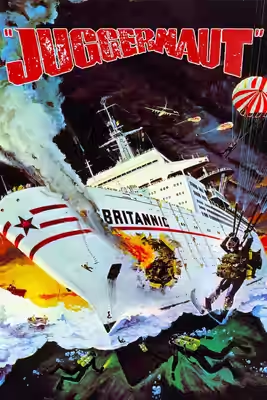
  3. Juggernaut (1974) · not reviewed yetA liner, a bomb and Richard Harris: the tight British thriller this wanted to be.

  4. Ice Station Zebra (1968) · not reviewed yetCold War retrieval mission by submarine, slow in the same way but better company.

  5. Das Boot (1981, Fi1m 89)If the underwater stretch was what held you, here is a whole film of it.

Free account

Know what to watch tonight

Two lists that know where things are streaming, collections you can share, your own score beside ours, and Discover that remembers what you have seen.

  • Want to see, sorted by what is streaming now
  • Seen, with your score out of ten
  • No adverts, ever