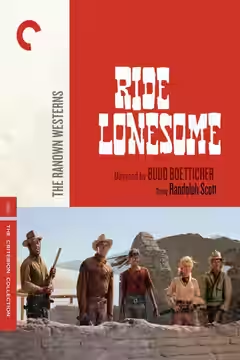
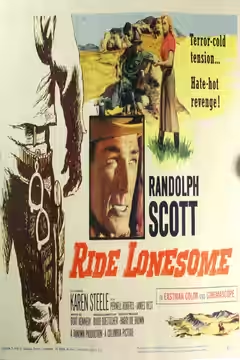
Budd Boetticher’s spare Western is tense, quietly moving and well worth an evening. Randolph Scott anchors the lean storytelling, although a few brief scenes push harder than the otherwise measured performances need.
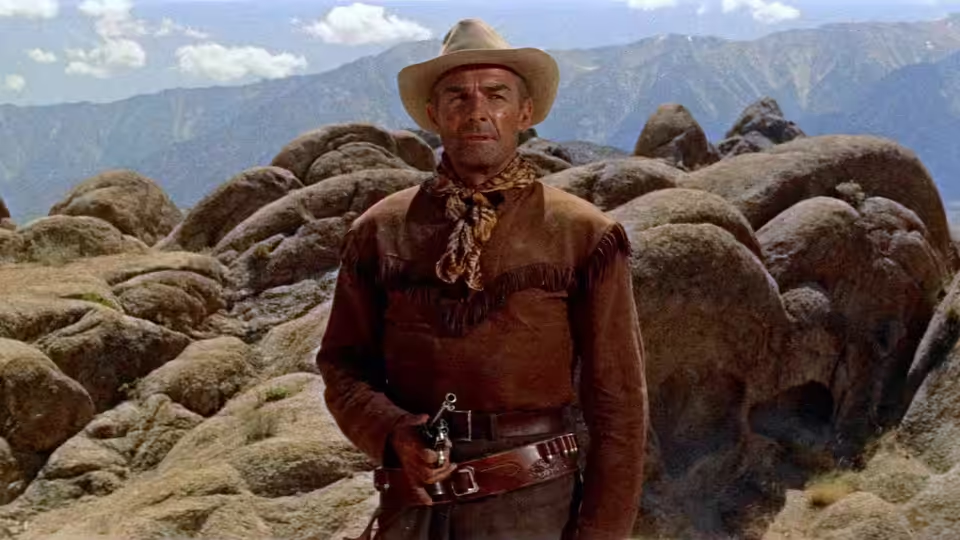
Ride Lonesome is a spare, affecting Western, and we recommend it with one reservation: its occasional overplayed moments are less convincing than its quieter acting. Budd Boetticher keeps the chase moving without neglecting the people involved. At 73 minutes, there is little room for anything that does not earn its place. The film still gives Randolph Scott, as Ben Brigade, time to interest us without explaining every feeling.
Burt Kennedy’s screenplay is the first reason this works. The dialogue is sharp without constantly asking to be admired, and its economy leaves the actors room to suggest something beyond the immediate business of the chase. There is pleasure in hearing a line land and being allowed to move on. For the most part, Budd Boetticher understands that this writing needs clear delivery and a little patience, without further help from the director.
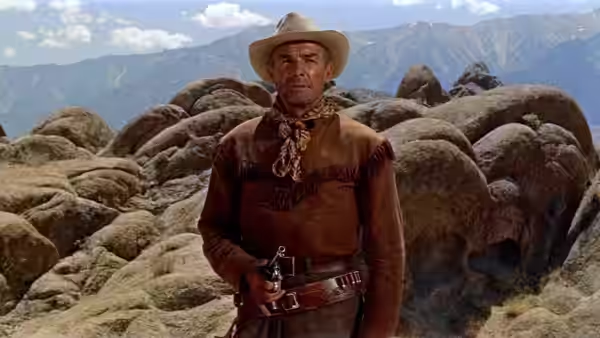
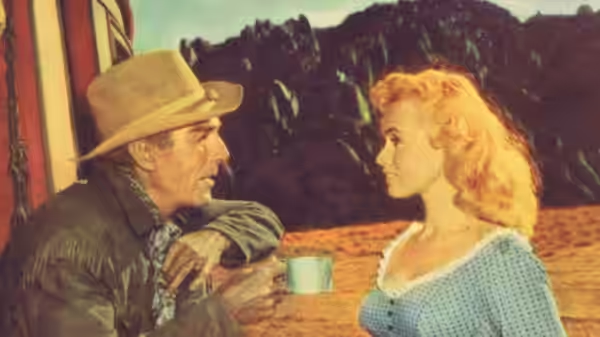
We were moved by how little Randolph Scott gives away as Ben Brigade. His restraint makes us watch more closely, and what might have seemed an unresponsive performance becomes the reason to care. It helps that he does not appear to be competing with the story for our attention. We sense the effort of keeping feelings under control, without needing the actor to advertise that effort at every opportunity.
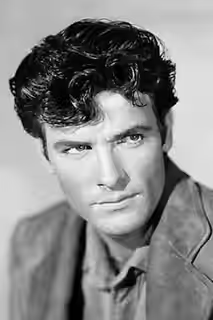
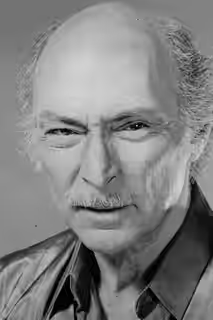
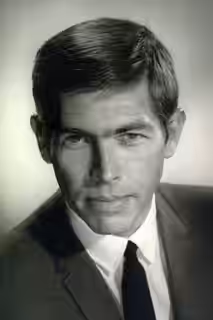
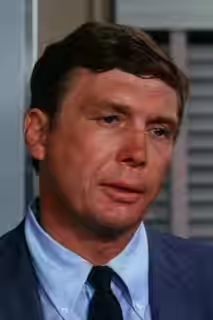
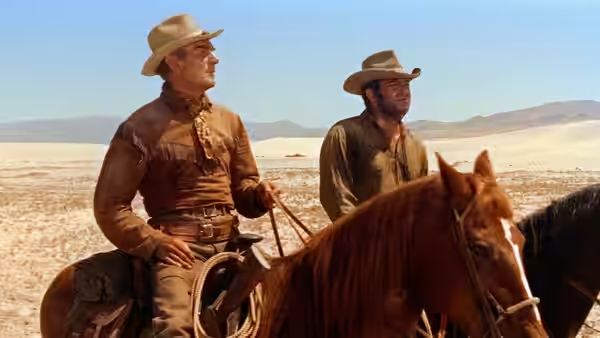
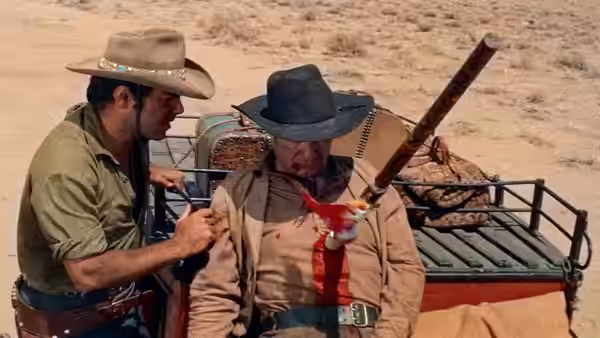
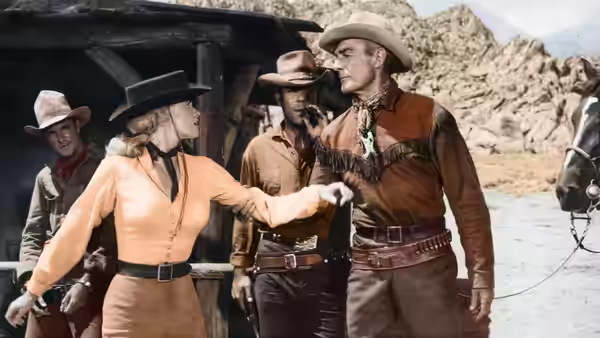
James Best, as Billy John, and Pernell Roberts, as Sam Boone, provide welcome changes of mood. Both performances make an impression without requiring the screenplay to stop and introduce a separate drama around them. Their presence also means that Randolph Scott need not supply every variation in tone. The cast can carry a brisk story and still leave us curious about the people in it, which is harder than simply making each character recognisable.
Charles Lawton Jr. makes good use of CinemaScope, giving the eye more to do than wait for the next speaker. The width encourages us to look across the picture, an important pleasure in a Western this short and spare. Jerome Thoms keeps the cutting economical without making the film feel impatient with its actors. We have enough time to register a performance, rather than merely collect the information needed to understand the next scene.
The music by Heinz Eric Roemheld is less central to the film’s appeal than its confidence in faces and dialogue. Our reservation concerns the brief scenes that press too hard: the drama becomes less persuasive when the emphasis grows conspicuous. Budd Boetticher is so measured elsewhere that these moments feel out of place. They interrupt the mood, but they do not undo the care with which the rest is handled.
The bleakness is worth stressing, because the brisk running time might suggest an easier evening than this offers. By the standards of the compact Western, it is unusually attentive to the feelings its leading performance keeps in check. We would not ask for a longer film, though we would welcome the same restraint in every scene. Watch it for the actors, and give Randolph Scott the attention he declines to demand.