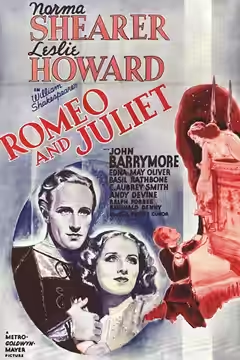
George Cukor’s Shakespeare is faithful, handsome and carefully spoken, and it treats a play about two children in a hurry as if it were a state occasion. Barrymore, Edna May Oliver and ten minutes on a balcony are the reasons to stay.
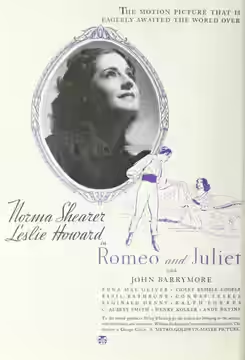
Irving Thalberg produced it, George Cukor directed it, and the intention is plain in every frame: to prove that Hollywood could do Shakespeare without embarrassing itself. It does not embarrass itself. This is a faithful, handsome, carefully spoken 125 minutes that keeps a great deal of the text and treats the play like an heirloom. The trouble is that the heirloom is a story about two children who meet, marry and come to grief inside a week, and nothing here moves as if it knew that.
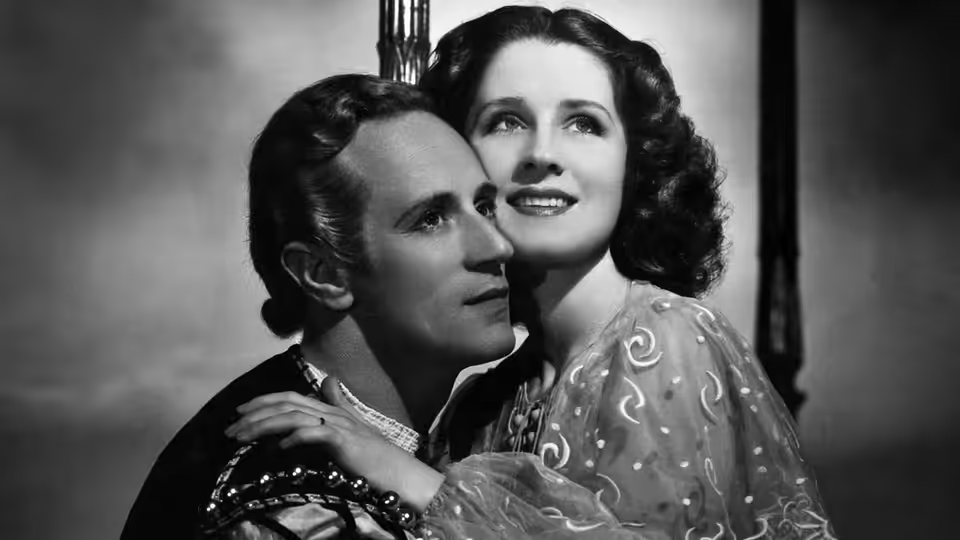
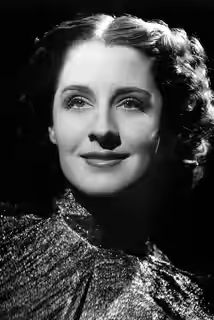
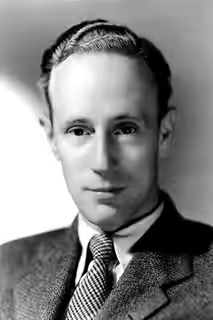
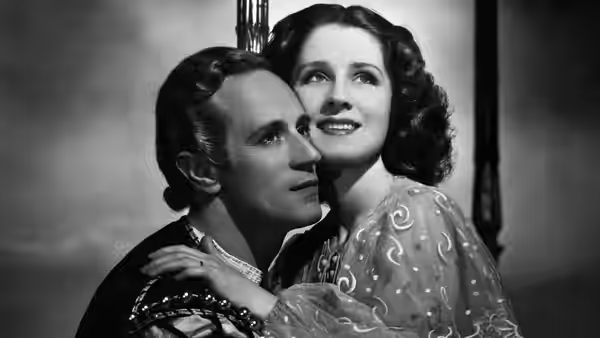
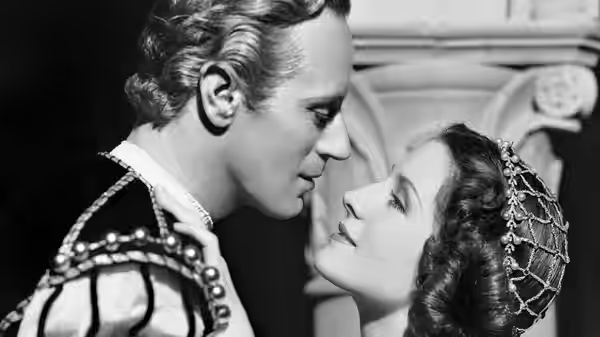
Norma Shearer was in her mid-thirties when she played Juliet and Leslie Howard was past forty when he played Romeo, and the film knows we know it. Shearer’s answer is lightness: she runs, she laughs, she turns her head quickly, she plays a girl who has never had to wait for anything. In the early scenes it works better than it has any right to. Howard’s answer is thought. He speaks the verse as a man who understands every line of it, and the result is a Romeo who has read Romeo and Juliet, which is not quite the same as being him.
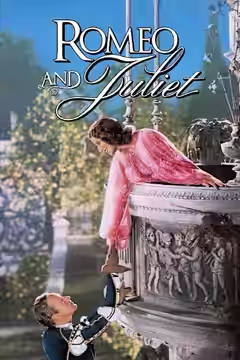
And yet the balcony scene got to us. We had come braced to be polite about it, and instead we sat forward. Shearer plays it as a girl who cannot believe her luck and Howard as a man who cannot believe his, and for ten minutes the ages fall away and the words come out as if nobody had ever said them before. William H. Daniels lights the garden in soft silver and holds Shearer in close-up long enough for the lines to land. It is the one stretch where the film is about the two of them rather than about the play.
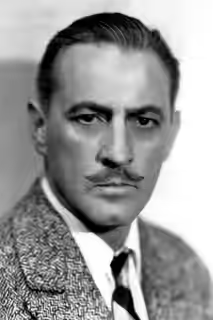
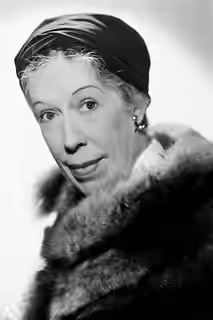
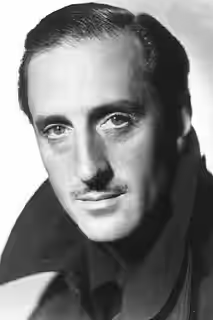
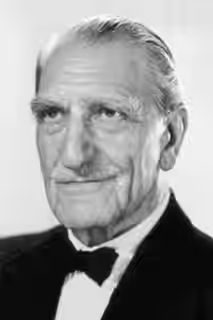
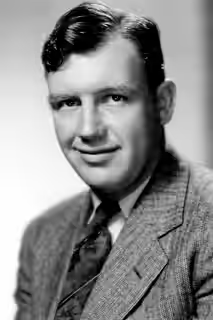
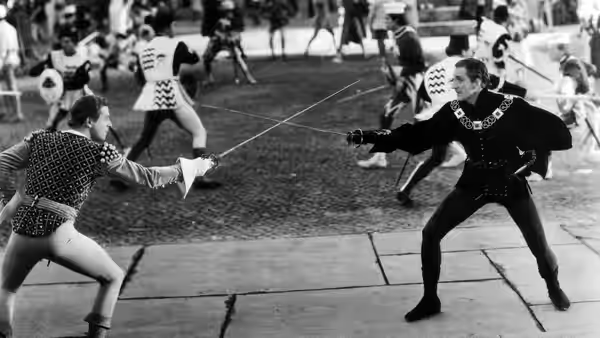
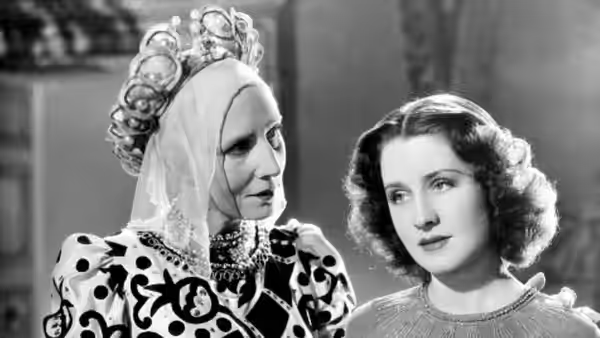
Elsewhere the life is in the supporting cast. John Barrymore plays Mercutio as a man who has never left a party of his own accord, ripe and showy and slightly dangerous, and he delivers the Queen Mab speech as a drunk’s turn that keeps getting away from him. We laughed, and we were meant to. Edna May Oliver’s Nurse is dry, bossy and endlessly delayed in getting to the point, and she has the best comic timing in the film. Basil Rathbone gives Tybalt a lean, coiled menace; he is the only person in Verona who looks as if he could hurt someone. C. Aubrey Smith plays Lord Capulet as a retired English colonel, and Andy Devine’s gravel voice as the servant Peter is an odd joke that the film tells once and then forgets.
The production is enormous and it wants you to notice. The Capulet ball is staged as a spectacle first and a scene second, with dancers filling the frame while the plot waits at the edge of it. Adrian dresses everyone in heavy Renaissance velvets and headdresses that belong in a museum, and the actors move like people who have been told what the costumes cost. Herbert Stothart’s strings swell whenever the lovers look at each other, which is often, and tell us what to feel a moment before Shearer has had the chance to. Margaret Booth cuts with patience, and patience is the problem: scenes are laid out as tableaux and left to sit.
Somewhere in the second hour we caught ourselves admiring a doorway. That is the honest measure of it. The play’s engine is speed, a marriage within a day and a catastrophe within days of that, and Cukor, who is at his best with actors in rooms, has here let the rooms win. The diction is a real virtue, and anyone who wants to hear the text spoken clearly by people who understand it will get that. Whether they will get the play’s panic is another matter.
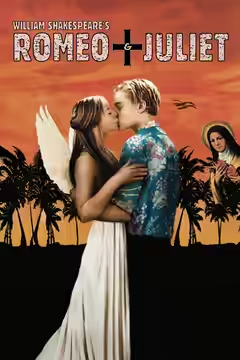
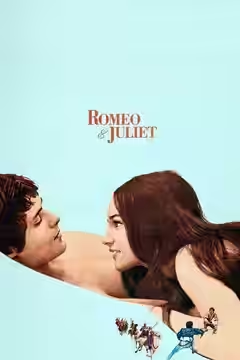
Every later version has answered this one by getting younger. Franco Zeffirelli cast teenagers in 1968; Baz Luhrmann put guns and neon under the verse in 1996. Both understood that the film needs to feel as reckless as its lovers, and neither is as well spoken as this. See it for Barrymore, for Oliver, for Rathbone’s Tybalt and for the balcony. The ending is the most famous in the language and we will not spell it out; the film takes its time getting there.