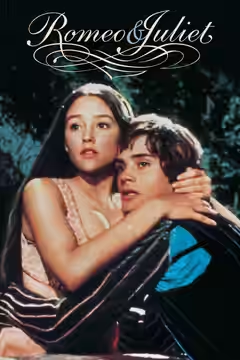
Zeffirelli puts teenagers in the leads, real Italian stone behind them and a great deal of sweat on everyone, and for its first half this is Shakespeare that moves like a film. The verse suffers for it, and the second half slows to a crawl.
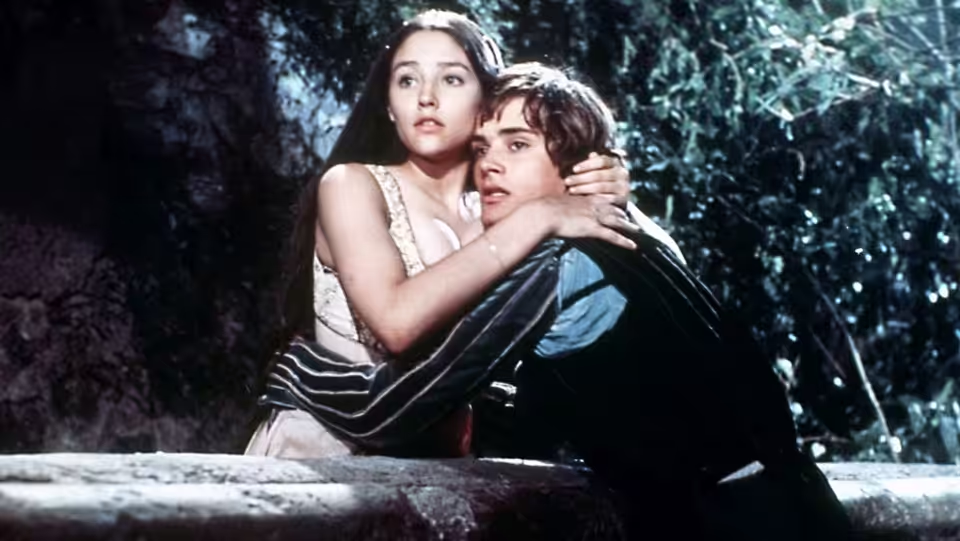
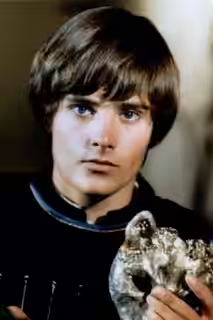
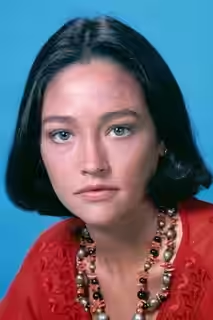
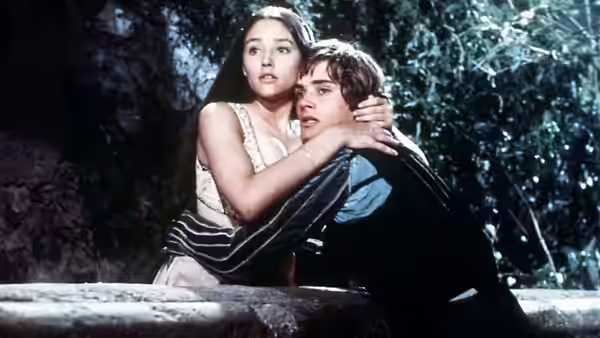
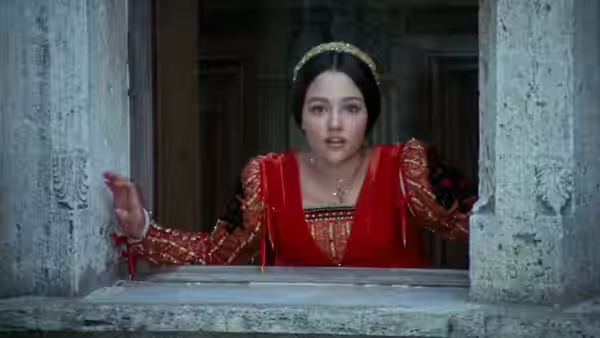
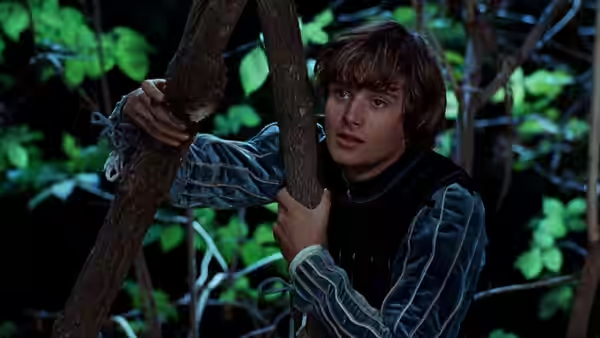
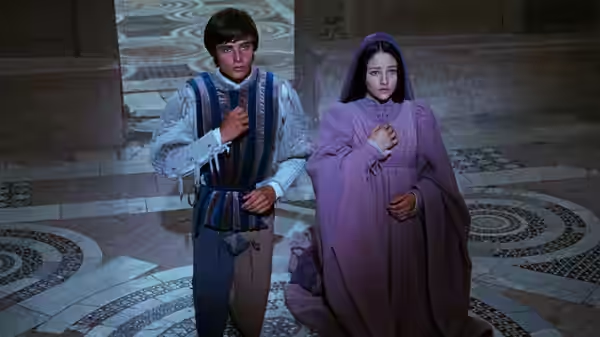
Franco Zeffirelli’s Romeo and Juliet does the thing the play asks for and productions rarely give it: it casts the lovers at the age Shakespeare wrote them. Leonard Whiting and Olivia Hussey are teenagers, and Zeffirelli puts them in real Italian streets and courtyards, under a sun that makes everyone squint, and lets the play run at the temperature of the people in it. It is a hot, dusty, impatient film, and for an hour or so it is close to thrilling. Then it has to do the difficult scenes, and it does them less well.
The opening brawl sets the terms. Montague and Capulet servants swagger into the market looking for trouble, and within a minute the square is full of men swinging swords they barely know how to use. Zeffirelli shoots it as a riot rather than a fencing display: dust, thrown fruit, boys running along rooftops, a crowd that has come to watch. Pasqualino De Santis keeps the camera down among the bodies, often handheld, and the light is white and hard. When Robert Stephens’s Prince rides in to stop it, he looks as tired of these people as they should be of themselves. Reginald Mills cuts it fast without once losing us.
The ball is the centre of the film. Lorenzo Mongiardino fills a Capulet hall with candles and dark wood, and Danilo Donati dresses the guests in reds and golds heavy enough to sweat in, with the Montagues in blues so we always know who should not be in the hall. Nino Rota gives the scene a slow round dance and then a boy singing a ballad about youth being a passing thing, and while he sings Zeffirelli simply cuts between two faces finding each other across a crowd. We did not expect to be moved by a scene we have watched played a dozen ways, and we were, because Hussey plays it as a girl who has just learnt something about herself and Whiting plays it as a boy who has forgotten everything else. Rota’s tune goes on to carry the rest of the film, sometimes more than it should.
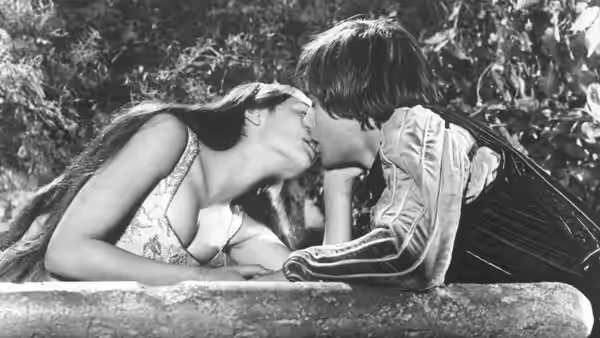
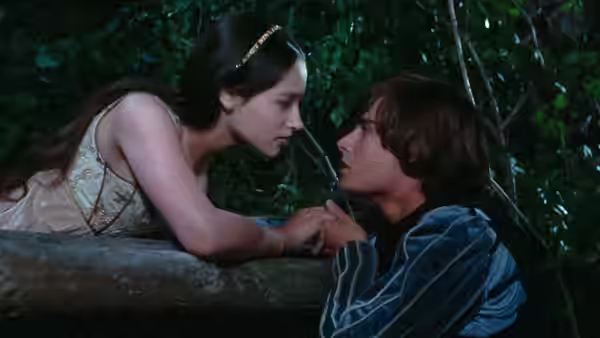
The verse is the price. Whiting and Hussey speak Shakespeare as if the words were their own, which is the idea, and it works when the lines are short; the balcony scene is played as two children whispering so as not to wake the house, and it is lovely. It does not work when the lines are long. Whiting rushes the big speeches, Hussey leans on hers, and the screenplay by Zeffirelli, Franco Brusati and Masolino D’Amico has cut the text hard enough that what remains has to do more than it can. Most critics have made this complaint since 1968 and they are right, though they should also admit that few filmed versions have lovers who look this capable of doing something rash.
The supporting cast carries the middle. John McEnery’s Mercutio is the performance people remember, a mocking, restless man who gives the Queen Mab speech as if it frightens him, which most Mercutios never think to do. Michael York’s Tybalt is all hair and heat. Milo O’Shea’s Friar Laurence is a fusser, kind and slightly foolish, and Pat Heywood’s Nurse is broad and bawdy and then, when it counts, quiet. Paul Hardwick and Natasha Parry give the Capulets a marriage with its own cold history. The duel in the square, which we will not describe further, is the best staged violence in the film: two men who start by showing off and end by meaning it.
The second half slows. Once the plot turns on letters and potions, Zeffirelli has less to shoot, and the film starts to feel its 138 minutes. Scenes that need stillness get soft focus and swelling strings instead, and the closing stretch, which the prologue promised in the first minute, is played at a length the young actors cannot hold. We were restless in the last half hour, and a little cross about it, because the first half had been so alive.
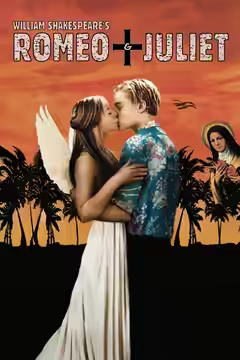
Against Zeffirelli’s own The Taming of the Shrew (1967) this is the better film, less shouted and more felt. Against Baz Luhrmann’s version of 1996 it is the calmer one and has aged more kindly, though Luhrmann’s lovers speak the verse with more care. See it for the brawl, the ball and McEnery, and see it with someone young enough to be surprised by the story. The poetry is on the page; the film is interested in the people.