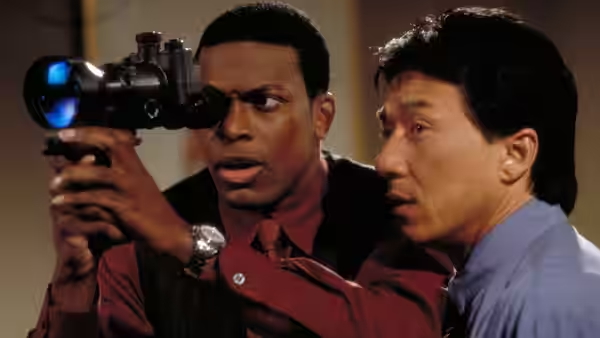
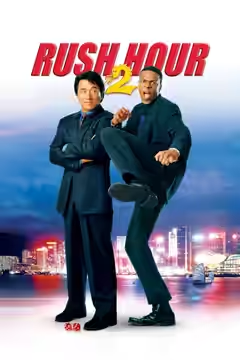
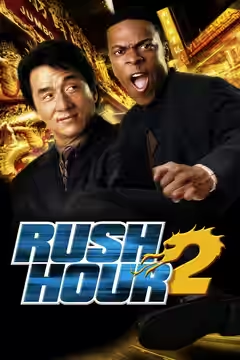
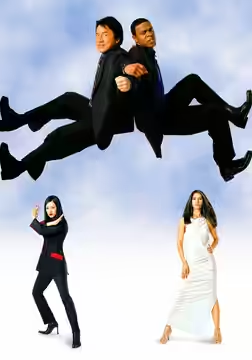
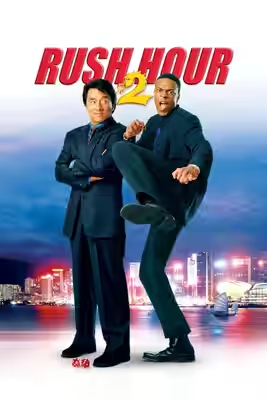
Jackie Chan’s acrobatics and his rapport with Chris Tucker make Rush Hour 2 a decent diversion for the already persuaded. The thin plotting and repetitive racial jokes leave everyone else with less to enjoy.
Brett Ratner has the right pair for an action comedy, and Rush Hour 2 still gets some mileage from putting Jackie Chan beside Chris Tucker. We would call it a decent diversion for existing admirers, with the physical comedy doing most of the work. The partnership survives a thin crime story and a supply of jokes that too often take racial difference as sufficient reason to laugh. At 90 minutes, it asks for a modest investment of time, though there are stretches when the chatter makes it feel longer.
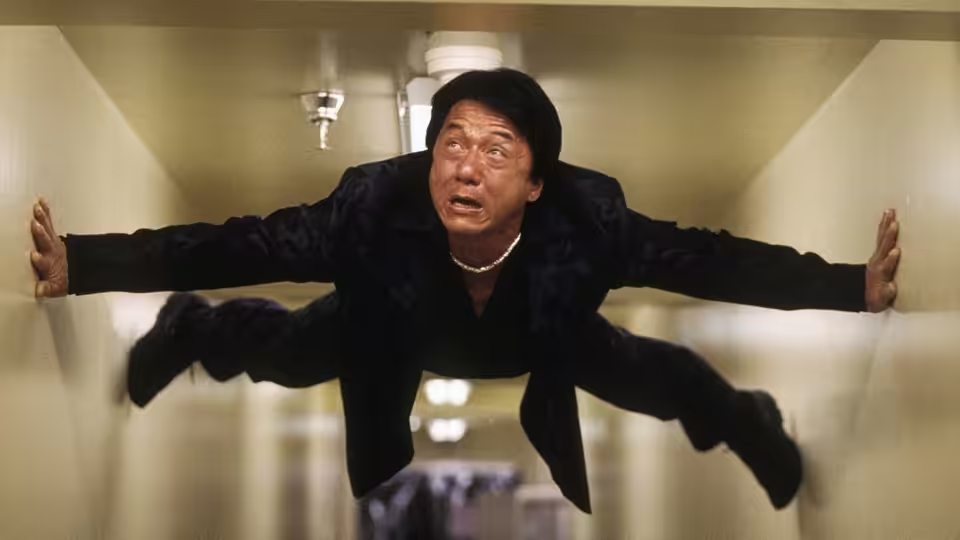
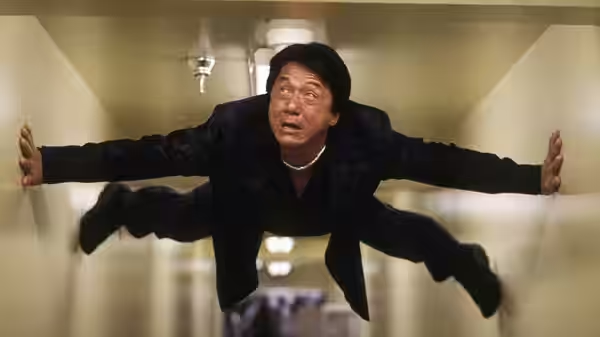
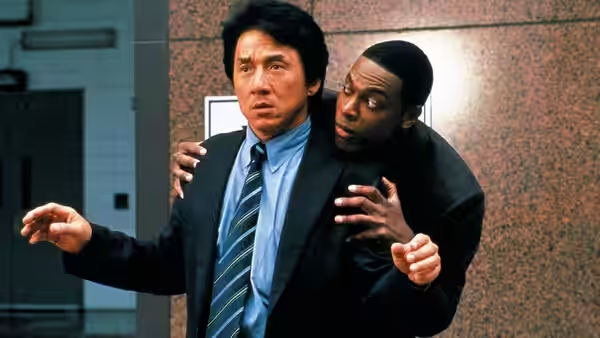
We were disappointed by the opening fight: Jackie Chan’s movement is graceful, but the sequence gives it too little comic invention. His acrobatic slapstick remains the chief pleasure, especially when physical effort becomes part of the joke. He can make a difficult movement look controlled without removing the sense of a body doing something difficult. That is a useful quality in an action comedy, and Brett Ratner too often seems content simply to have it available.
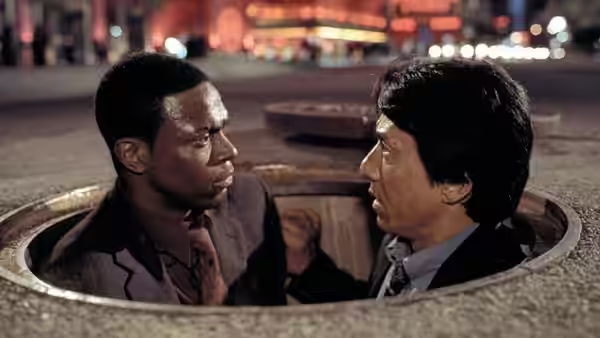
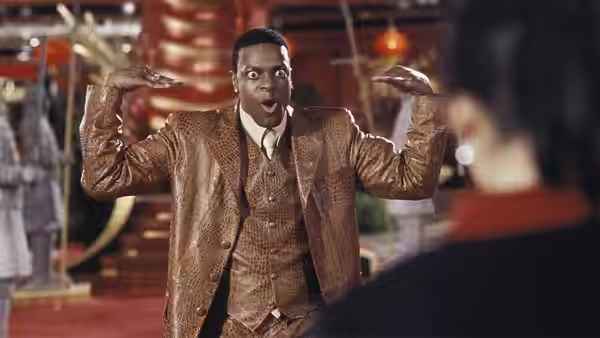
Chris Tucker supplies energy without much variation, and Jeff Nathanson’s screenplay does not give him enough fresh material. The running commentary works when it meets resistance from his partner; left to carry a scene, it becomes wearing. Jokes about Asian stature are particularly feeble, asking recognition of a difference to do the work of a comic idea. We do not need James Carter to become polite, but we do need the next exchange to offer something the previous one did not.
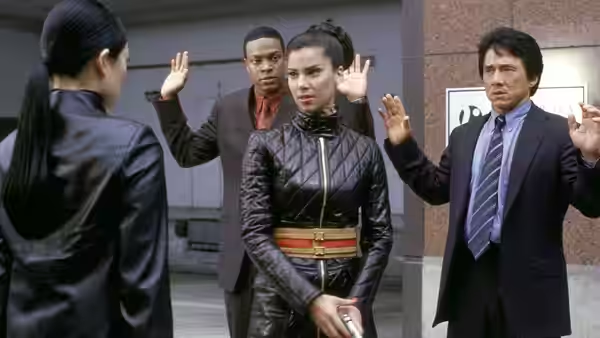
Zhang Ziyi gives Hu Li a forcefulness that helps interrupt that routine. She holds our attention without competing with Chris Tucker’s volume, which is a relief. The chemistry between the leads is still persuasive, and it would be unfair to pretend that familiarity has removed every pleasure from their company. There is simply too little in the crime story to occupy us when the partnership stops being funny.
Matthew F. Leonetti’s cinematography is most rewarding when Jackie Chan’s movement is the attraction. The Las Vegas battle has a welcome scale, with Terence Marsh’s production design giving the action surroundings worth noticing. Those passages make a stronger case for the film than the exchanges between fights, even if the action itself is not consistently inventive. For this sort of comedy, the physical business needs to keep surprising us, and here it sometimes settles for keeping us occupied.
Mark Helfrich and Robert K. Lambert’s editing keeps the film brisk without solving that repetition. The same weaknesses recur even when the cutting hurries us along, and the film rarely lets a comic exchange develop beyond its first provocation. Lalo Schifrin’s music adds energy, though excitement is not what the film lacks. A little less insistence would give the performers more room to make the comedy work.
The outtakes are a further pleasure, although it is awkward when mistakes are funnier than portions of the script. They remind us how appealing these performers can be when a laugh does not feel compulsory. Anyone coming chiefly for Jackie Chan’s physical comedy should allow for a fair amount of shouting between fights.