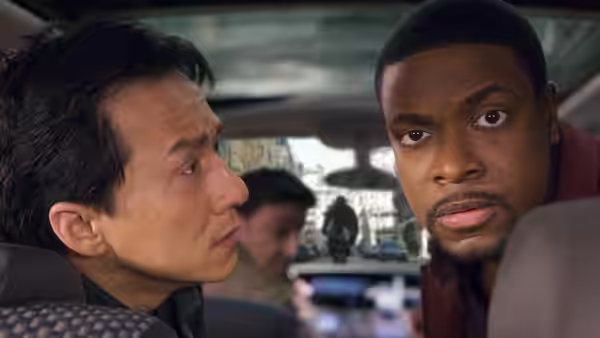
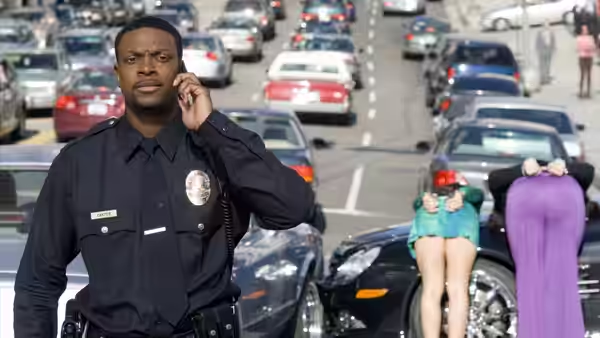
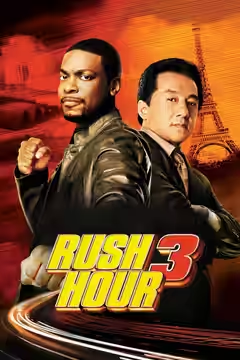
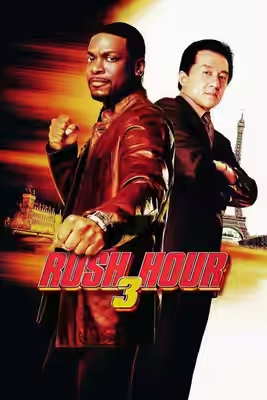
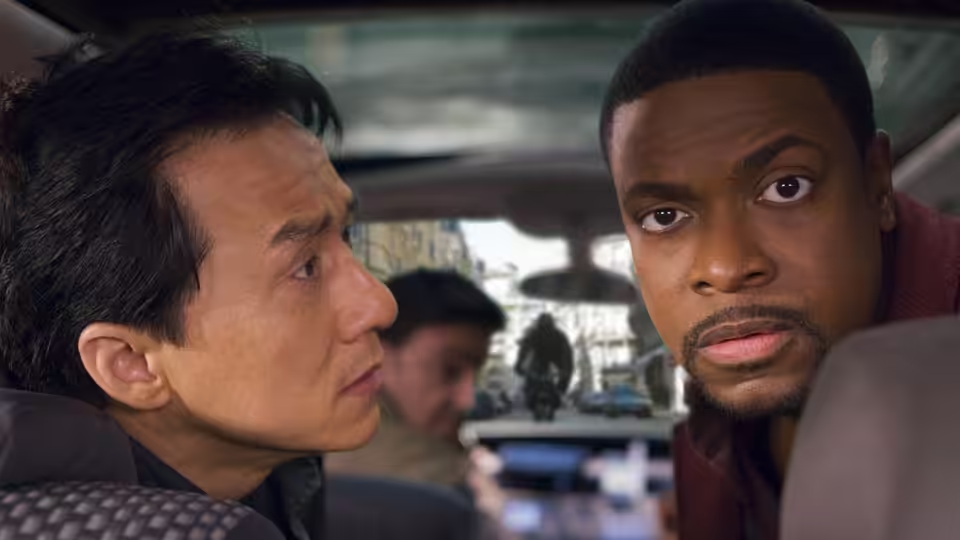
Yan Naing Lee (Jackie Chan) and James Carter (Chris Tucker) sit together inside a vehicle
Film review

Rush Hour 3

2007 · Directed by Brett Ratner · 1h 30m · CNC 12

In a sentenceThe outtakes suggest they should have kept the mistakes and cut a few more jokes

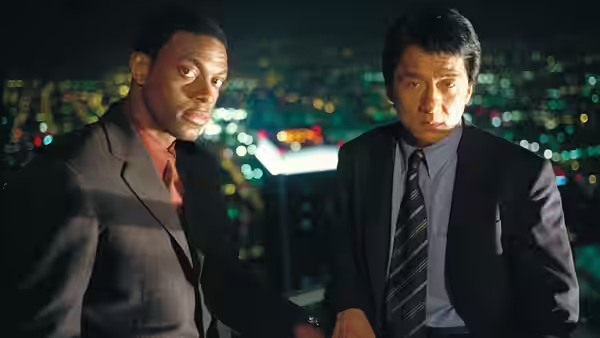
Yan Naing Lee (Jackie Chan) and James Carter (Chris Tucker) are the mismatched partners at the centre of this crime comedy. Lee’s physical comedy sits alongside Carter’s quips, with fights alternating with the pair’s verbal exchanges. The cast of characters includes Kenji (Hiroyuki Sanada), Varden Reynard (Max von Sydow) and George (Yvan Attal). Soo Yung (Zhang Jingchu), Genevieve (Noémie Lenoir) and Solon Han (Tzi Ma) also feature in this third outing for the pair, which combines a crime plot with action and jokes about their contrasting temperaments.

Plays from YouTube when you press play; nothing loads from them until then.

Fi1m review

Jackie Chan supplies the few reasons to stay with Brett Ratner’s tired action comedy. Chris Tucker can still land a joke, but the script keeps asking familiarity to do the work.

Rush Hour 3 is a poor action comedy kept intermittently watchable by Jackie Chan. Brett Ratner has a straightforward job here: give the mismatched partners something worth arguing about, then give them trouble that requires both their skills. Too often, the film settles for letting them repeat familiar behaviour while the crime story moves them between fights. We do not need a complicated case, but we do need a reason to enjoy following it. There are too few surprises in either the investigation or the jokes.

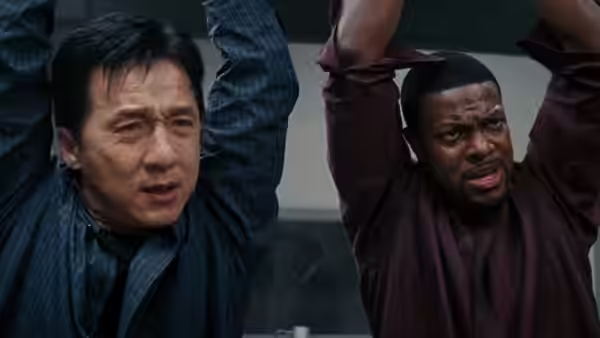
Jackie Chan remains the reason to pay attention. In the prop-based fights, his timing gives individual movements a comic purpose, so that handling an object can be as enjoyable as landing a blow. We laughed when he made the objects around him part of the fighting; for a moment, the movement itself supplied all the comedy needed. His quieter manner also gives the partnership some warmth. There is still pleasure in watching him work out how to make an action funny.

Chris Tucker supplies the volume, and sometimes a quip sharp enough to justify it. The trouble is how often the delivery is treated as sufficient: a line arrives loudly, receives its allotted space and leaves without producing much of a laugh. Beside his partner’s physical precision, the insistence becomes tiring. Jeff Nathanson’s screenplay also leans on crude stereotypes, giving the performers less to work with than their rapport deserves. Their ease together survives, but too many jokes depend on that alone.

The gaps between set-pieces are the larger problem. Editors Dean Zimmerman, Mark Helfrich and Don Zimmerman leave the intervening scenes feeling like delays before the next bout of activity. At 90 minutes, this ought to be a compact evening’s entertainment; instead, it repeatedly seems to be waiting for something to start. The conversations need a rhythm that makes us enjoy spending time with the partners, and too often they simply occupy the time between fights.

J. Michael Muro’s cinematography gives the action a glossy finish, and the production design by Chad S. Frey and Ed Verreaux is more carefully judged than much of the writing. The picture remains handsome even when the scenes themselves have run out of interest. Lalo Schifrin’s music helps the action along, though it cannot make the pauses between jokes feel any shorter. The care spent on the film’s appearance makes the lack of care over what the partners say more conspicuous.

A buddy comedy can survive a thin crime plot. It struggles when the partners have nothing new to discover about each other, because their disagreements should be producing the jokes. Ratner gives us recognisable routines without finding enough situations to make them funny again. The occasional burst of inventive movement makes those stretches of repetition harder to forgive.

The outtakes offer a glimpse of the looser, more playful entertainment this might have been. Watching the performers enjoy themselves is a modest pleasure, though it is a poor bargain when the discarded material is livelier than the scenes retained. Even devoted followers of this partnership would be better served by another evening with an earlier instalment.

Critical consensus AI synthesised

35
Positive
0
Mixed
2
Negative
10

Most critics find Rush Hour 3 a tired sequel, with recycled jokes and a weak script doing little to justify another outing for the mismatched partners. The limited praise centres on Jackie Chan: his comic restraint, playful fighting and inventive stunt work still offer pleasures, even where the action feels mechanical. Several reviews find moments to enjoy in the set-pieces, but these rarely offset complaints about sluggish pacing and diminished energy.

The spread is largely between disappointment and outright dismissal, rather than any substantial defence of the film. The leads’ partnership divides opinion: the Los Angeles Times still values Chan and Tucker’s chemistry, while The Hollywood Reporter finds that chemistry missing from their familiar routine. Tucker’s humour earns some approval elsewhere, but also draws complaints about tired material, shrillness and stereotypes. The AV Club finds more comic energy in the end-credits outtakes than in the film itself.

RogerEbert.com
64*

The page URL identifies this as RogerEbert.com’s review of the film. Its verdict and the specific point singled out for praise or criticism are unavailable because the page is blocked.

Read the full review →
The AV Club
10 August 2007 · C · Nathan Rabin
57

Rabin dismisses the film as a creatively unnecessary, forgettable sequel. He singles out the end-credits outtakes as funnier and more energetic than the movie itself.

Read the full review →
Radio Times
★★ · Jamie Russell
40

Russell finds the sequel under-par and less witty than its predecessors. He singles out Chris Tucker’s quips as fun, while criticizing the script and crass stereotypes.

Read the full review →
Variety
2 August 2007 · Robert Koehler
40*

Koehler finds the film a familiar but diminished entry that ends flatly. He praises Chan’s comic turn and the Eiffel Tower stunts, while faulting the reduced action and Tucker’s increasingly tired shtick.

Read the full review →
Slant Magazine
7 August 2007 · ★½/4 · Nick Schager
38

Schager gives the sequel a sharply negative verdict, calling it a sluggish, superfluous repeat of its predecessors. He singles out Ratner’s glossy direction for adding little energy or style to the vacuous plot and tame action.

Read the full review →
Los Angeles Times
10 August 2007 · Kevin Crust
35*

Crust finds the franchise formula worn out, though fans may still enjoy its action and familiar humor. He praises the chemistry between Chan and Tucker but faults the recycled gags and drawn-out stretches between set-pieces.

Read the full review →

Straight answers AI written, from our review

Is Rush Hour 3 worth watching?
Rush Hour 3 is hard to recommend beyond an interest in Jackie Chan’s physical comedy; we score it 38 out of 100. His inventive use of props supplies a few laughs, but the repetitive jokes, crude stereotypes and sluggish stretches between fights make even this 90-minute outing feel overlong.
How long is Rush Hour 3, and what is it rated?
Rush Hour 3 runs 1h 30m and is rated 12 by the CNC in France. It is an action and comedy film.
Where can I watch Rush Hour 3 in France?
Rush Hour 3 is streaming on HBO Max and Amazon Prime Video in France, and it is also available to rent from Amazon Prime Video and Apple TV from €2.99. Availability is checked daily; the links above go straight to each service.
How violent or frightening is Rush Hour 3, and is it suitable for children?
Rush Hour 3 has a UK 12A certificate and combines fights with comic action and jokes that lean on crude stereotypes. The certificate allows children under 12 to attend with an adult, but we would not treat that as a blanket recommendation for younger viewers, particularly where the fighting is a concern.
How does Rush Hour 3 compare to Midnight Run?
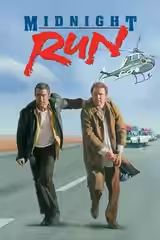
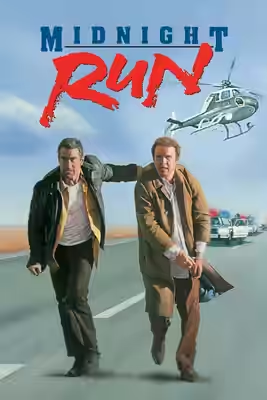
Rush Hour 3 is the weaker choice beside Midnight Run, which we recommend for funnier, warmer exchanges between incompatible men. Chan’s prop-based fighting gives Rush Hour 3 its chief appeal, while Robert De Niro and Charles Grodin sustain the bickering in Midnight Run without wearing out their welcome, even when the pursuit interrupts their conversations.

Cast

If you liked this, try…

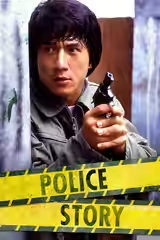
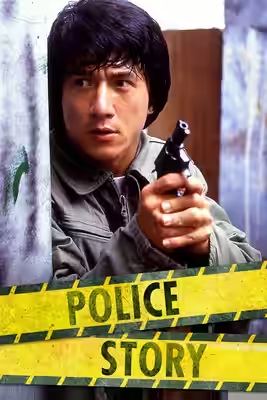
  1. Police Story (1985) · not reviewed yetJackie Chan gets room for physical invention and comedy built into the action.

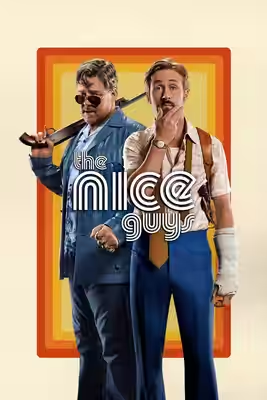
  2. The Nice Guys (2016) · not reviewed yetAnother mismatched partnership, with sharper quarrels and a crime story worth following.

  3. Midnight Run (1988, Fi1m 88)Two incompatible men sustain the bickering without wearing out their welcome.

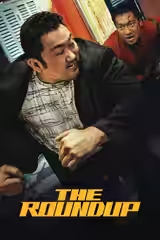
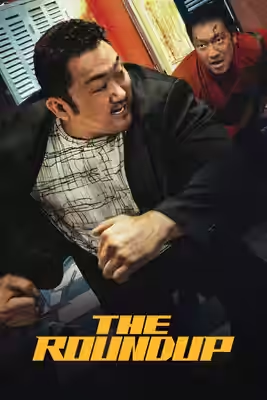
  4. The Roundup (2022) · not reviewed yetBlunt physical comedy and brisk fights, with little patience for unnecessary business.

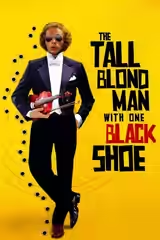
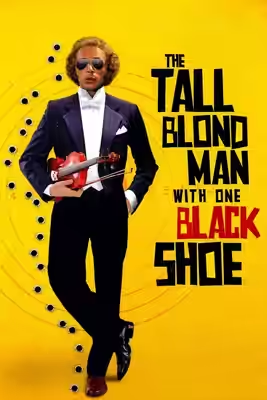
  5. The Tall Blond Man with One Black Shoe (1972) · not reviewed yetA mistaken-identity spy comedy whose misunderstandings keep producing fresh trouble.

Free account

Know what to watch tonight

Two lists that know where things are streaming, collections you can share, your own score beside ours, and Discover that remembers what you have seen.

  • Want to see, sorted by what is streaming now
  • Seen, with your score out of ten
  • No adverts, ever