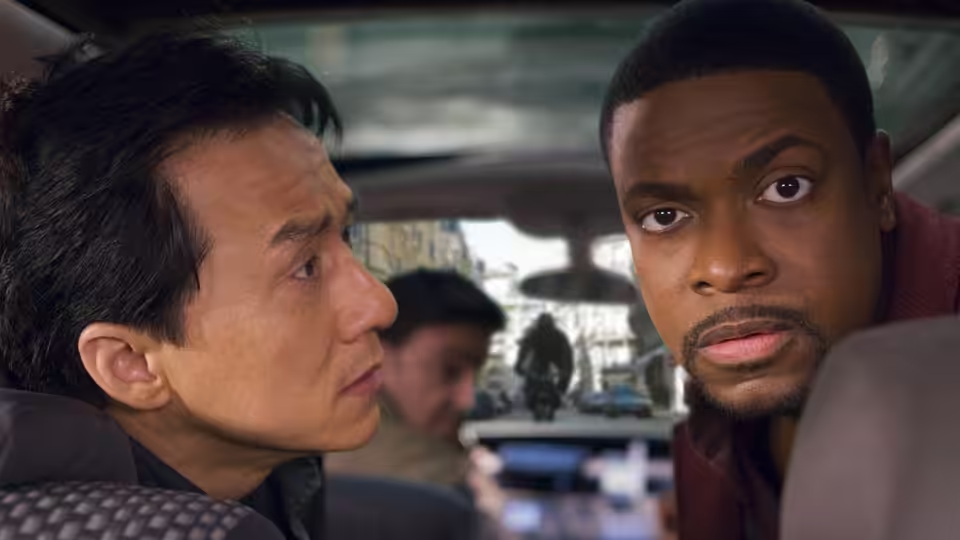
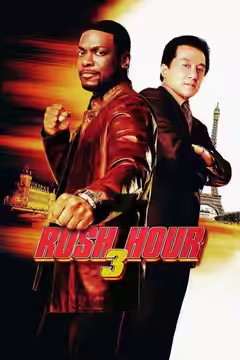
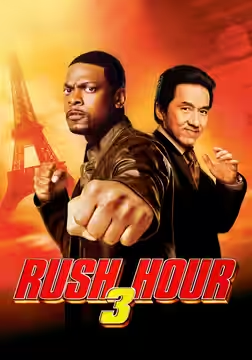
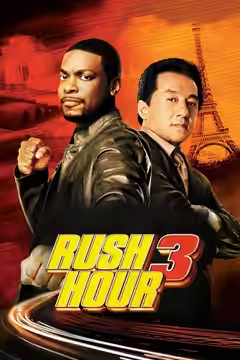
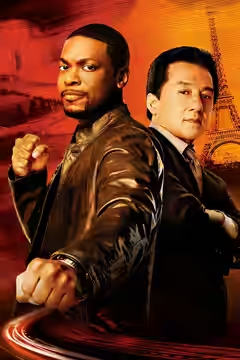
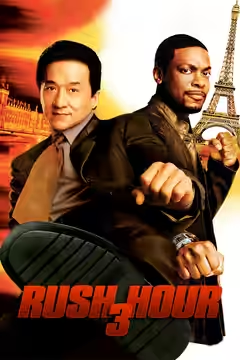
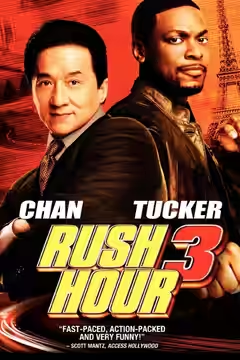
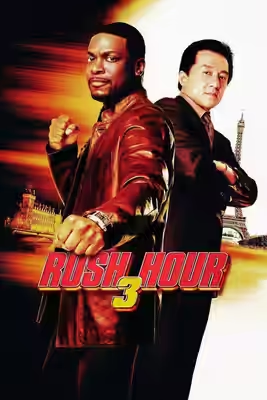
Jackie Chan supplies the few reasons to stay with Brett Ratner’s tired action comedy. Chris Tucker can still land a joke, but the script keeps asking familiarity to do the work.
Rush Hour 3 is a poor action comedy kept intermittently watchable by Jackie Chan. Brett Ratner has a straightforward job here: give the mismatched partners something worth arguing about, then give them trouble that requires both their skills. Too often, the film settles for letting them repeat familiar behaviour while the crime story moves them between fights. We do not need a complicated case, but we do need a reason to enjoy following it. There are too few surprises in either the investigation or the jokes.
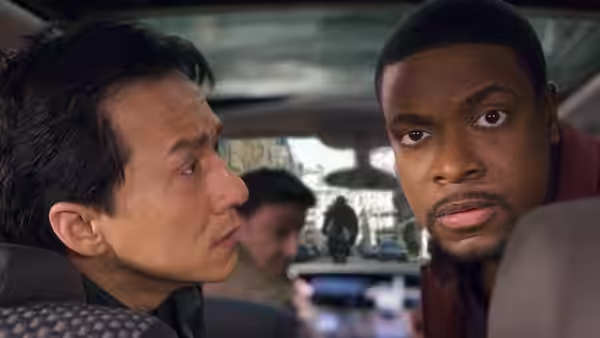
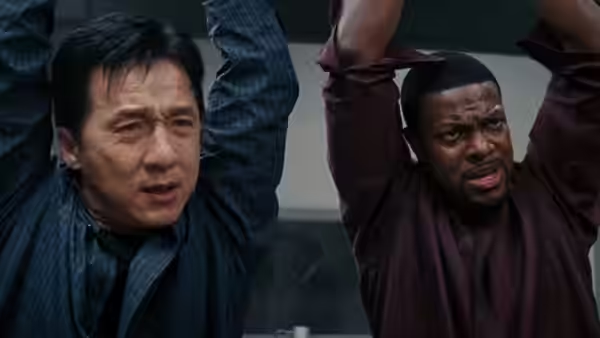
Jackie Chan remains the reason to pay attention. In the prop-based fights, his timing gives individual movements a comic purpose, so that handling an object can be as enjoyable as landing a blow. We laughed when he made the objects around him part of the fighting; for a moment, the movement itself supplied all the comedy needed. His quieter manner also gives the partnership some warmth. There is still pleasure in watching him work out how to make an action funny.
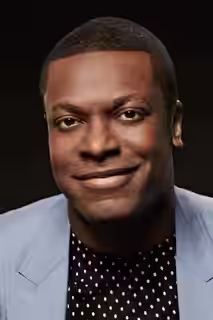
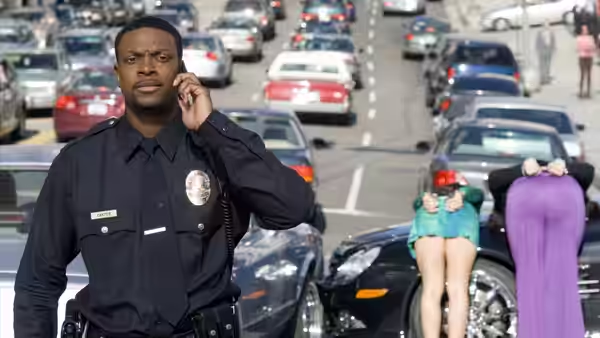
Chris Tucker supplies the volume, and sometimes a quip sharp enough to justify it. The trouble is how often the delivery is treated as sufficient: a line arrives loudly, receives its allotted space and leaves without producing much of a laugh. Beside his partner’s physical precision, the insistence becomes tiring. Jeff Nathanson’s screenplay also leans on crude stereotypes, giving the performers less to work with than their rapport deserves. Their ease together survives, but too many jokes depend on that alone.
The gaps between set-pieces are the larger problem. Editors Dean Zimmerman, Mark Helfrich and Don Zimmerman leave the intervening scenes feeling like delays before the next bout of activity. At 90 minutes, this ought to be a compact evening’s entertainment; instead, it repeatedly seems to be waiting for something to start. The conversations need a rhythm that makes us enjoy spending time with the partners, and too often they simply occupy the time between fights.
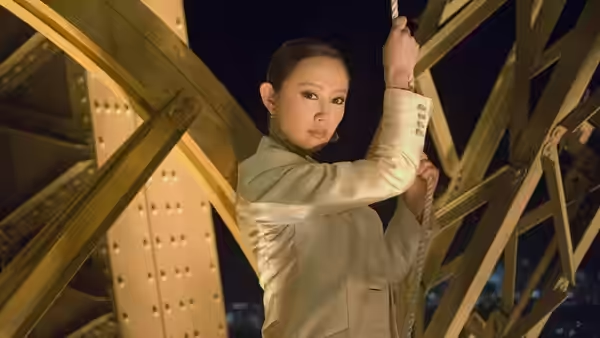
J. Michael Muro’s cinematography gives the action a glossy finish, and the production design by Chad S. Frey and Ed Verreaux is more carefully judged than much of the writing. The picture remains handsome even when the scenes themselves have run out of interest. Lalo Schifrin’s music helps the action along, though it cannot make the pauses between jokes feel any shorter. The care spent on the film’s appearance makes the lack of care over what the partners say more conspicuous.
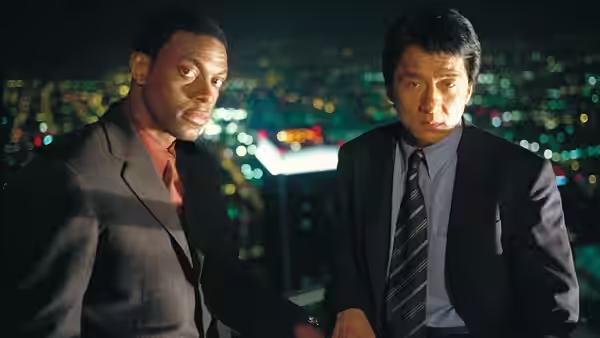
A buddy comedy can survive a thin crime plot. It struggles when the partners have nothing new to discover about each other, because their disagreements should be producing the jokes. Ratner gives us recognisable routines without finding enough situations to make them funny again. The occasional burst of inventive movement makes those stretches of repetition harder to forgive.
The outtakes offer a glimpse of the looser, more playful entertainment this might have been. Watching the performers enjoy themselves is a modest pleasure, though it is a poor bargain when the discarded material is livelier than the scenes retained. Even devoted followers of this partnership would be better served by another evening with an earlier instalment.