Brad Peyton flattens Los Angeles and San Francisco with real skill and a rooftop pool we will not forget, then asks us to care about one family’s divorce. Johnson and Giamatti hold it up; the script keeps letting go.
Brad Peyton’s San Andreas takes 114 minutes to break California in half, and for most of them it is good at the breaking. The idea, from a story by Jeremy Passmore and Andre Fabrizio, is the old one: a record earthquake hits the West Coast, and we follow a handful of people through it. Carlton Cuse’s screenplay narrows that handful to one family with a divorce to mend. The buildings come down convincingly. The marriage does not.
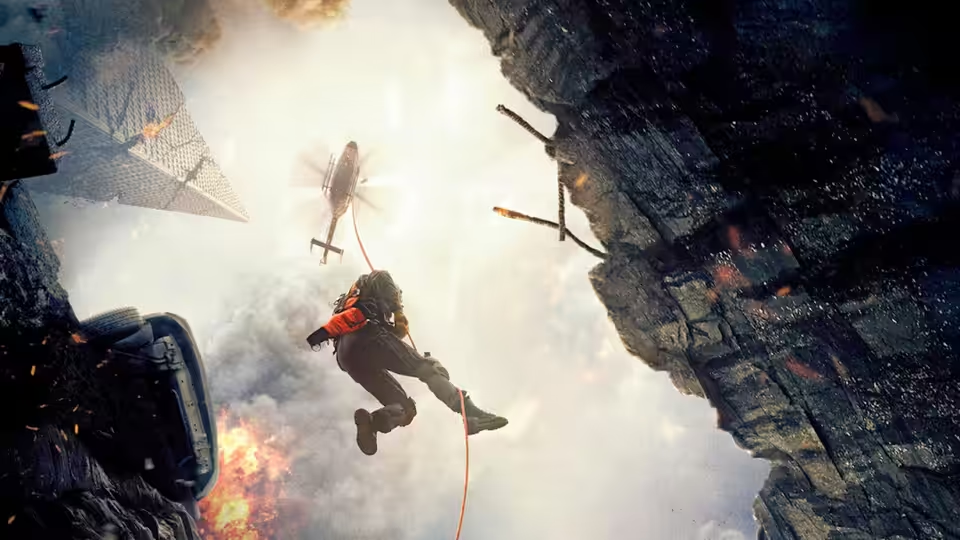
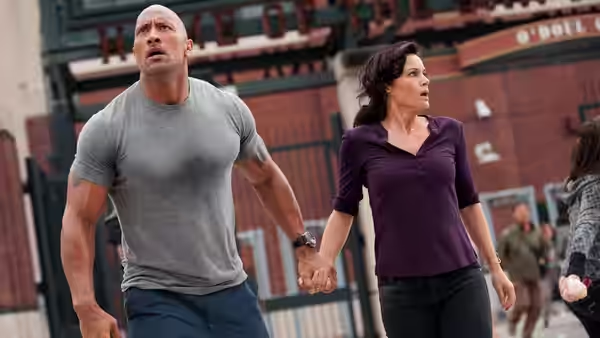
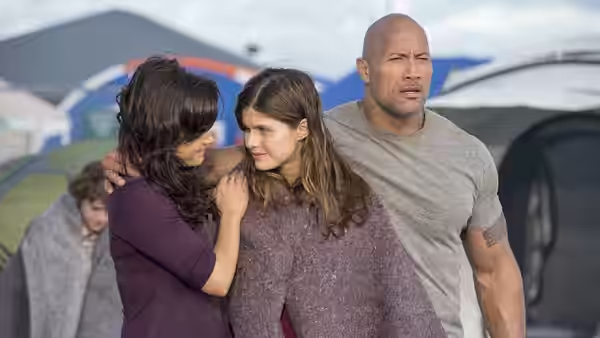
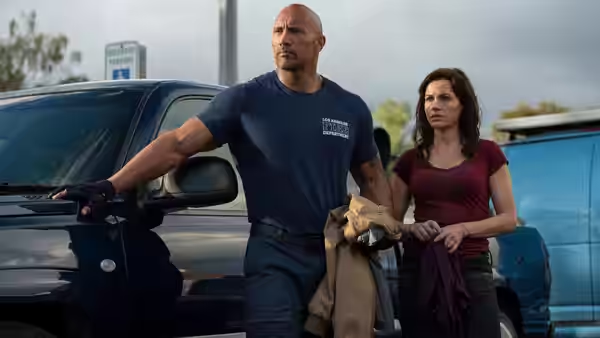
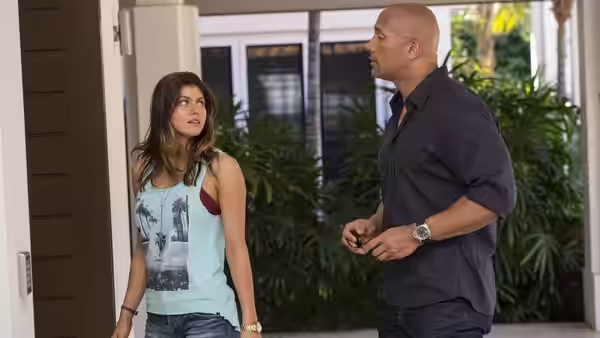
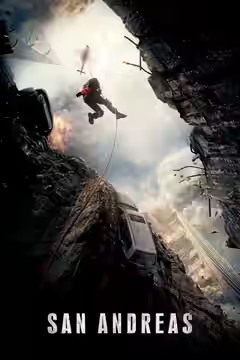
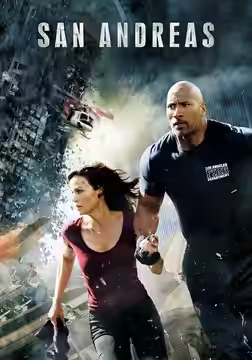
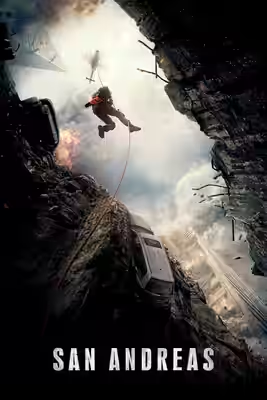
Ray Gaines (Dwayne Johnson) flies a rescue helicopter for the Los Angeles fire department, and the film opens with him winching a woman out of a car hanging over a canyon edge, which is what he will be doing for the next two hours. His wife Emma (Carla Gugino) has served him divorce papers and is moving in with a property developer, Daniel Riddick (Ioan Gruffudd). Their daughter Blake (Alexandra Daddario) is off to university in San Francisco. Johnson plays all of this quietly, as a big man who has decided to be hurt in private, and he is better at it than the script requires.
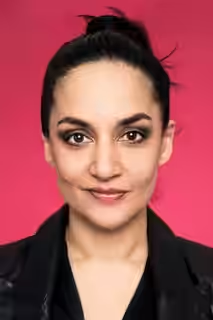
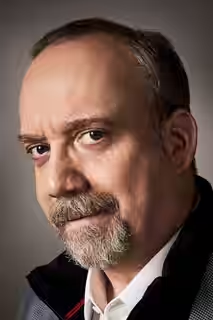
Lawrence Hayes (Paul Giamatti), a seismologist, has built a model that can predict earthquakes and tests it at the Hoover Dam at the wrong moment. Giamatti is the other reason to stay. He plays Hayes as a tired man who has been right for years and is sorry about it, and the film has the sense to stand him before a screen and let him say frightening things slowly. His scenes with Will Yun Lee as Dr Kim Park and Archie Panjabi as the reporter Serena Johnson are the only ones where anybody appears to be thinking.
The destruction is the film, and it is handled with care. Barry Chusid’s production design gives Los Angeles glass towers to fold and San Francisco a waterfront to lose, and Steve Yedlin keeps the camera at street level or inside the helicopter, so the scale comes from looking up or down. When Ray flies to a rooftop to pull Emma off a collapsing tower, and the pool froths and tips its water over the edge, we sat forward and stopped hearing the dialogue. It is the best image in the film, and Bob Ducsay holds it long enough. Andrew Lockington’s score pounds under all of it, mostly at the right moments.
What does not work is the dialogue, and the shape the film gives the catastrophe. Cuse’s lines mean precisely what they say and the actors deliver them as if they know it. Worse, the film has decided that of the millions in two cities, four matter, and arranges the disaster around their reunion. Buildings fall on strangers so that Ray and Emma can discuss their marriage in a helicopter. By the second hour we were bored, then irritated at being bored while a city sank, because the film kept cutting away to check whether the Gaineses had made up yet.
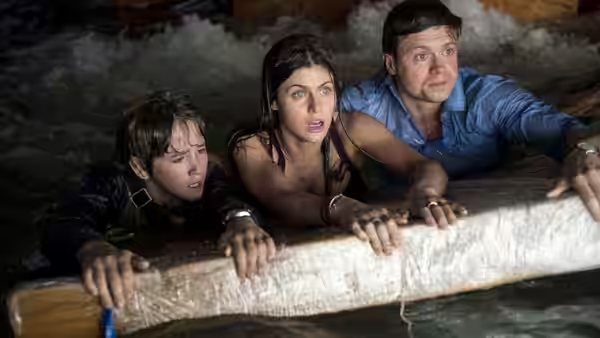
Daddario carries the San Francisco half with Hugo Johnstone-Burt as Ben Taylor and Art Parkinson as his younger brother Ollie. Theirs is the lightest strand and the most watchable, because Blake is allowed to be competent rather than carried and Parkinson gets the few jokes Cuse wrote. Gruffudd is handed a coward and plays him. Kylie Minogue appears as his sister Susan for one scene and is then forgotten. Wendy Chuck’s costumes stay sensibly torn and dusty throughout.
Against the disaster films it copies, the 1974 Earthquake above all, it is better built and less interested in people. Those films were crowded, and the crowd was the point: you watched a dozen strangers and waited to see which of them the building would take. This one has a family and a seismologist, and once you notice how carefully it looks after them the suspense drains out, with an hour still to run.
See it for the pool, for Giamatti, and for what the sea does to the Golden Gate Bridge, which we will leave you to discover. See it at home, where you can talk over the dialogue without missing anything. The 12A is right: a great deal falls down and almost none of it bleeds.