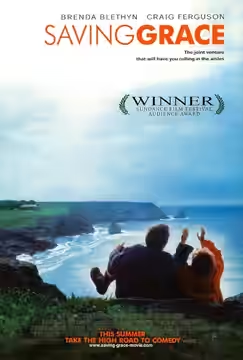
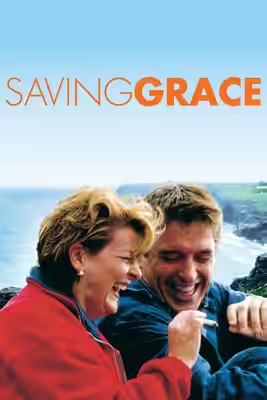
Brenda Blethyn gives Saving Grace enough feeling to justify its familiar jokes, but only just. The friendship works; the cannabis comedy grows thin, and Nigel Cole’s farce becomes less convincing as it gets busier.
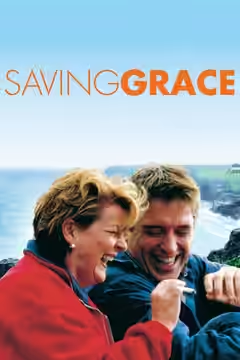
Nigel Cole’s Saving Grace is an amiable crime comedy with a better central performance than its cannabis jokes deserve. It asks us to enjoy respectable people behaving improperly, a serviceable invitation which the script keeps extending after we have accepted it. For admirers of Brenda Blethyn, there is enough warmth here to justify an undemanding evening, though the thin plotting makes that recommendation a qualified one. At 93 minutes, it still finds time to repeat itself.
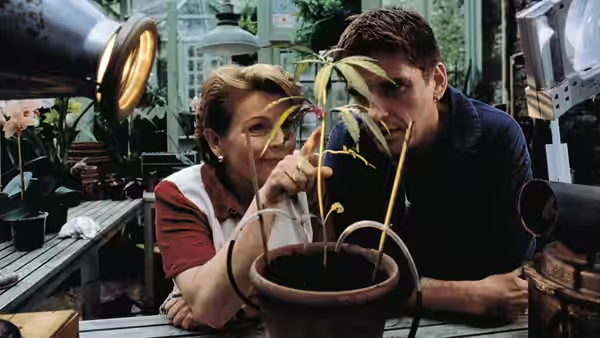
Brenda Blethyn plays Grace Trevethyn with a useful reluctance to advertise the joke. The capable-housewife manner is funny because she gives it effort and purpose, while allowing pain and irritation to interfere with the smooth running of it. We were moved by the strain she lets show beneath that composure; getting through the day briefly matters more than being amusing. Her restraint encourages us to care about this woman even when the writing seems content to find her quaint.
Craig Ferguson, as Matthew Steward, gives her a friendship that feels easy without being empty. Their scenes have an ordinary sweetness, and the film is at its most agreeable when it lets the two of them enjoy each other’s company. Martin Clunes, playing Dr. Martin Bamford, also helps the ensemble remain companionable when the comedy begins to labour. We would happily spend longer with these people if the script were less anxious to keep proving how eccentric they are.
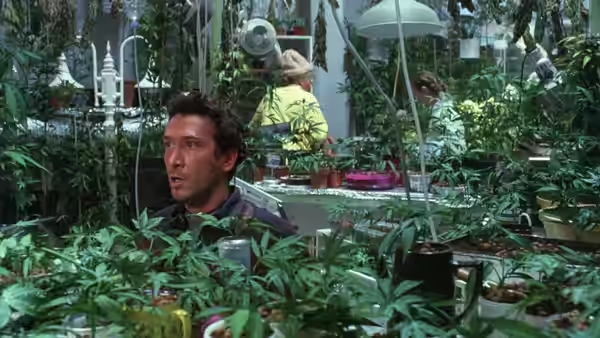
Craig Ferguson and Mark Crowdy’s screenplay is less assured about what to do once its comic premise has been established. The repeated business of English people getting stoned offers diminishing returns, particularly when the supposed surprise is simply that such people are doing it at all. Editor Alan Strachan keeps the film moving briskly, but the repetition makes the writing feel padded despite the short running time. Moving promptly to another familiar set-up does not solve the problem.
John de Borman’s cinematography and Eve Stewart’s production design suit the comedy’s gentleness, though the resulting cosiness can feel insistent. There is little in the presentation to unsettle the comfortable view of these people, which makes the eccentricity feel rather carefully managed. Mark Russell’s music contributes to that agreeable mood without making the repeated jokes any livelier. All this reassurance works against the pain and frustration that Brenda Blethyn brings to Grace Trevethyn.
As an Ealing-style farce, the film knows the value of a likeable ensemble but falls short on the workings of the plot. The later escalation makes the comedy feel more effortful, without developing the joke much further. We do not need to describe where it goes to say that the quieter exchanges are more rewarding. There is a decent evening here for those drawn to the cast rather than the crime. Choose it for Brenda Blethyn, and keep expectations of the farce modest.