Matthew Lillard and Linda Cardellini make Scooby-Doo briefly worth the trouble. The computer-generated dog and the muddled comedy make it hard to recommend, even at 87 minutes.
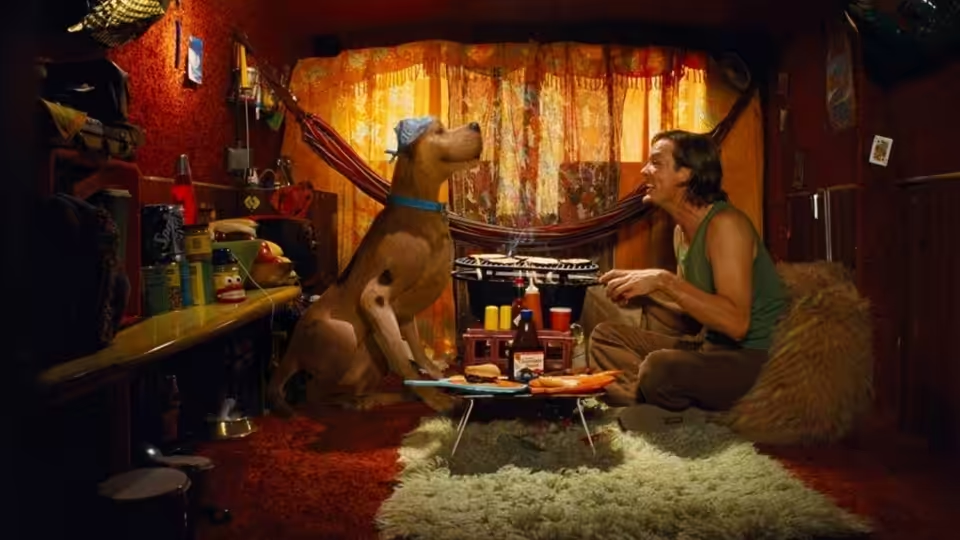
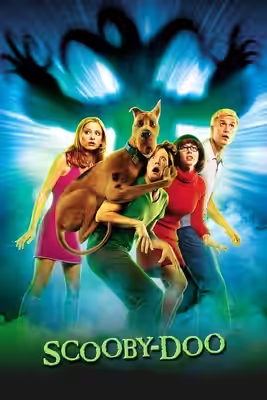
Raja Gosnell’s Scooby-Doo is a patchy comedy with good casting and too few good jokes. Bringing these characters into live action leaves an awkward choice about how seriously to take them, and James Gunn’s screenplay keeps changing its mind. The broad physical comedy is pitched at children; the knowing references ask adults to enjoy being above it. Both approaches can work, but here they interrupt each other, and neither gets much time to develop.
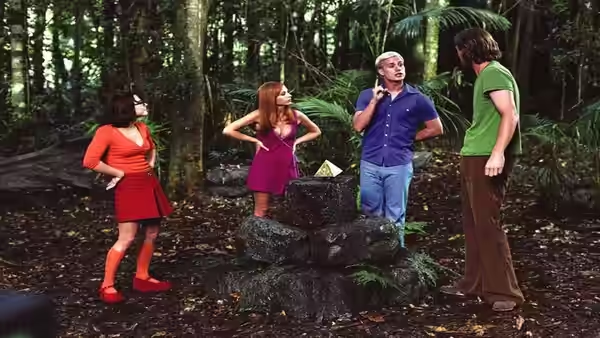
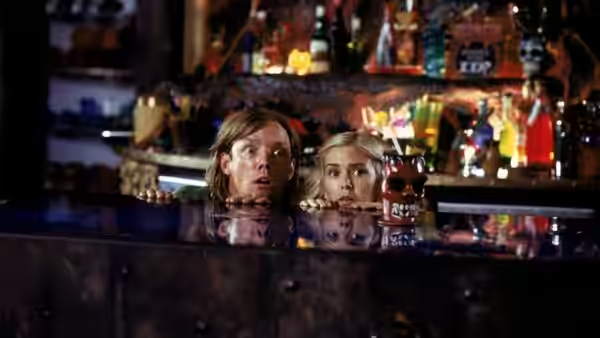
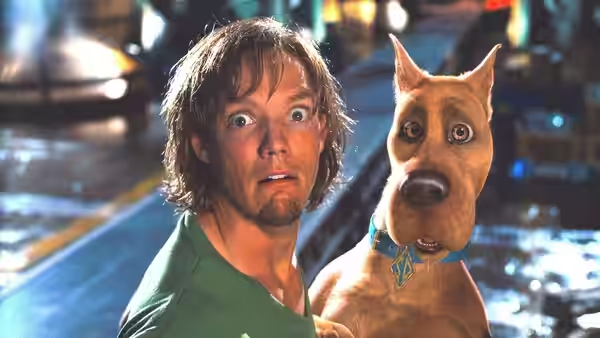
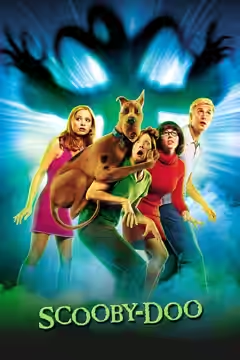
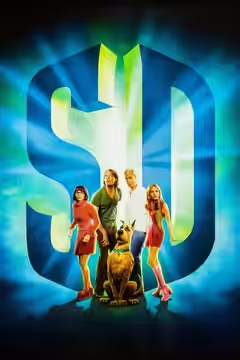
Matthew Lillard makes Shaggy worth watching even when the surrounding business is not. There is pleasure in seeing an actor commit this fully to a cartoon character without making the performance feel like an apology. Linda Cardellini does similarly useful work as Velma, giving us another reason to stay interested in the human ensemble. Freddie Prinze Jr. as Fred and Sarah Michelle Gellar as Daphne help make the casting more appealing than the script. We would happily follow these actors into a better organised mystery.
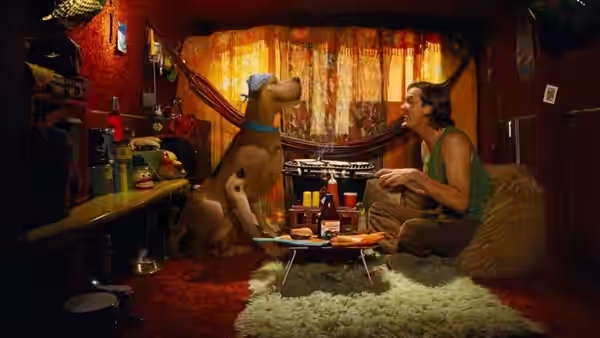
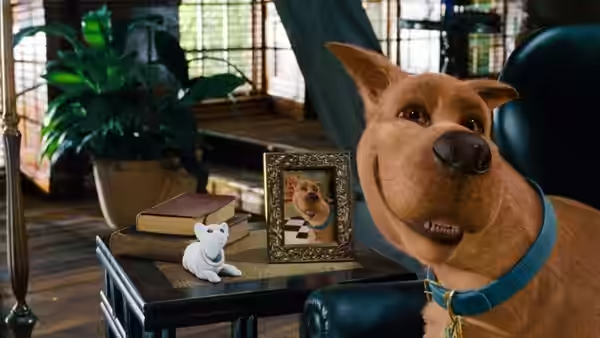
The computer-generated Scooby is the harder sell. His artificiality would matter less if the comedy around him were sharper, but he is asked to carry too much of it. We were irritated by the dog’s farting-and-belching contest. There is little to the exchange beyond the bodily noises themselves, and giving the dog more personality would have been a better use of the effort. The affection that the performance of Shaggy encourages does not reliably extend to his companion.
David Eggby’s cinematography and Bill Boes’s production design give the film a colourful setting suited to its cartoon origins. That is a sensible starting point for a comedy with no obligation to look like everyday life. The bright surroundings are welcome, though they cannot do much for scenes whose jokes have already run out. Scooby’s uncertain fit alongside the actors remains distracting, even within this deliberately artificial setting.
Kent Beyda’s editing maintains a brisk pace, but the action can become difficult to follow. Moving quickly helps disguise a thin joke for a moment; it does less for an investigation whose plotting is already muddled. David Newman’s music contributes to the busy atmosphere without giving the comedy much breathing space. At 87 minutes, the film is short enough, yet it still feels hurried in places where a little clarity would help. We should not have to work this hard to follow something so slight.
A comic mystery needs enough order for the audience to enjoy the interruptions. Here the cartoon antics gradually make the investigation seem incidental, which weakens the reason for keeping this particular group together. The self-conscious humour is another distraction: too often, the film seems concerned that adults might catch it taking the characters seriously. The more committed performances suggest that taking them seriously would have been perfectly safe.
There are modest pleasures here, particularly whenever Shaggy and Velma hold our attention without assistance from an effects sequence. They make the disappointing passages harder to excuse, because the film has already shown that its human cast can do the job. Younger viewers may be more forgiving of the noisy comedy, but that is not much of a recommendation for the adults beside them. For a shared evening, we would choose something with more reliable jokes.