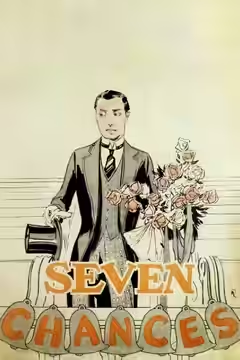
Buster Keaton’s Seven Chances is nimble, funny and rather thin on romance. The repeated proposals can feel mechanical, but his precise physical comedy makes 56 minutes of marital difficulty worth the trouble.
We recommend Seven Chances for Buster Keaton’s physical comedy, though its repeated proposals occasionally feel like a routine being worked through. Marriage supplies an efficient reason for embarrassment, and embarrassment gives him plenty to do. The pleasure is in watching a man try to conduct himself properly while receiving unhelpful answers. At 56 minutes, the film has little room for courtship, and it does not make much room for it.
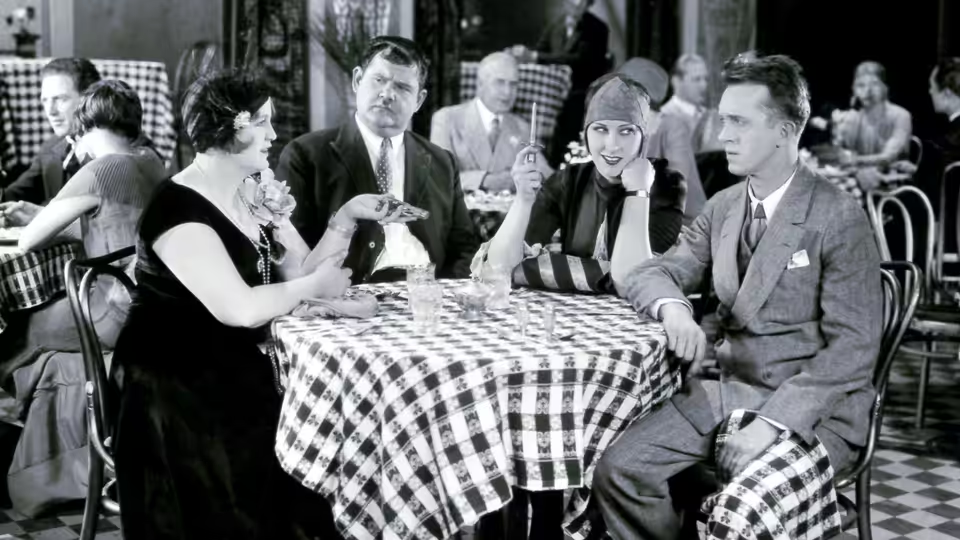
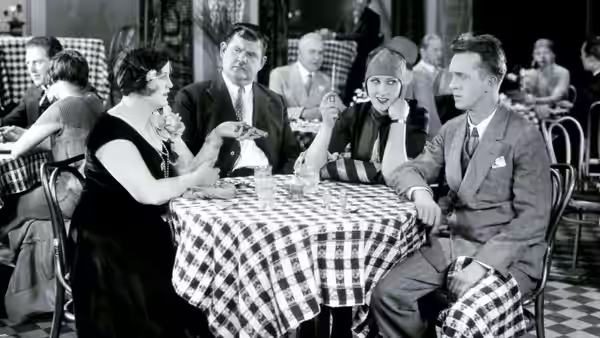
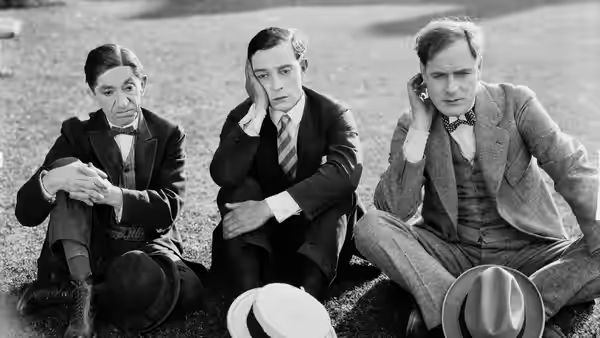
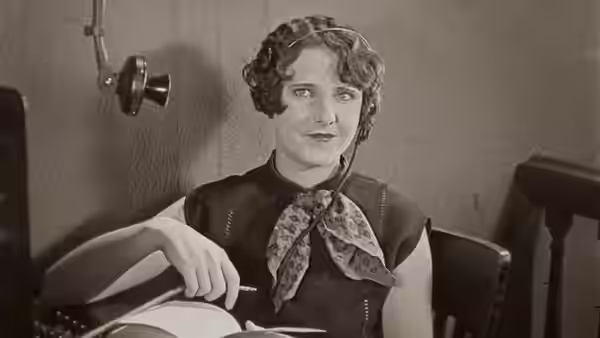
As James ‘Jimmie’ Shannon, Buster Keaton makes the business of asking the question funnier than the prospect of getting an answer. Ruth Dwyer’s Mary Jones is his girl, T. Roy Barnes plays his partner Billy Meekin, and Snitz Edwards is his lawyer. That small circle gives Jimmie a life beyond the proposals, although the romantic attachment remains lightly drawn. We understand that marriage matters here without finding the relationship especially involving. The comic performance is doing most of the work.
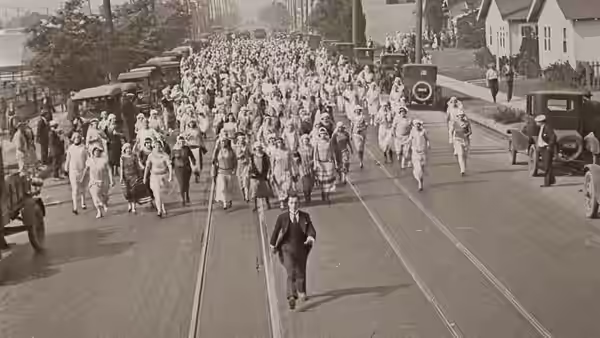
The screenplay by Jean C. Havez, Clyde Bruckman and Joseph A. Mitchell is happiest when a refusal becomes something visible. A woman laughing at Jimmie gives him an answer; a woman shredding his proposal note makes the answer harder to overlook. We laughed at the torn note, because the woman disposes of his question so efficiently. There is a pleasing lack of ceremony about it, which suits the comedy better than romantic delicacy would.
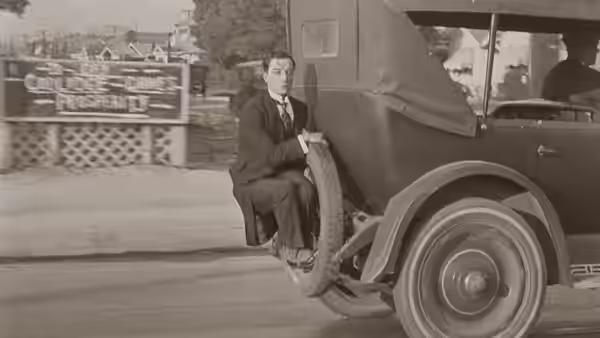
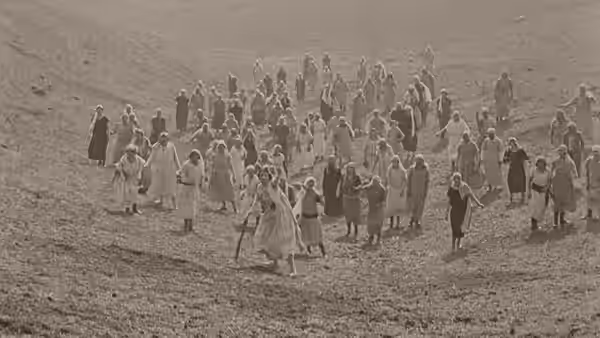
Byron Houck and Elgin Lessley’s cinematography makes the physical jokes easy to follow. The club and golf-course encounters need us to register Jimmie’s approach and the women’s responses, and the images do that without making the joke feel laboured. We can attend to the awkwardness of the exchange. The photography lets the performer claim our attention, giving the small differences between one unsuccessful approach and another a fair chance to register.
Buster Keaton also edits, and the handling of time is sharper than the thin romantic material might lead us to expect. A proposal has a simple rhythm: the approach, the question, the response, then the uncomfortable business of carrying on. The film gets considerable mileage from making us anticipate that response. The difficulty comes when anticipation becomes certainty, and another refusal offers too little that is different. These stretches are not disastrous, but they do make a short film feel less brisk than it ought to.
Physical comedy can become tiring when the performer seems to be congratulating himself between jokes. Buster Keaton avoids that difficulty: his seriousness lets the embarrassment stand, without asking us to applaud his cleverness. We warm to the effort even when the courtship itself does little for us. This is where the film earns its place in the genre, through the care given to actions that could have been merely frantic or cruel.
Anyone looking for an involving romance may find the repeated rebuffs more interesting than the couple. For an evening of physical comedy, there is enough invention to outweigh that limitation. The occasional repetition is worth accepting for the precision of the individual jokes. Choose it for Buster Keaton; expect rather less from the marriage advice.