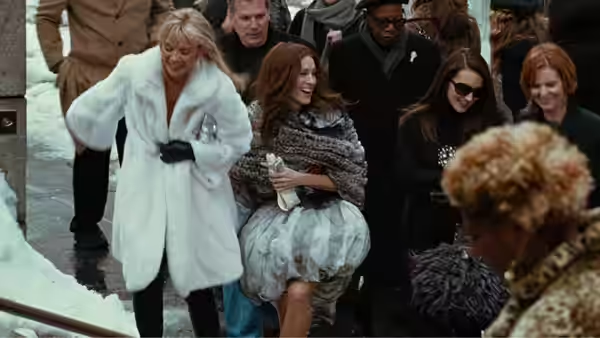
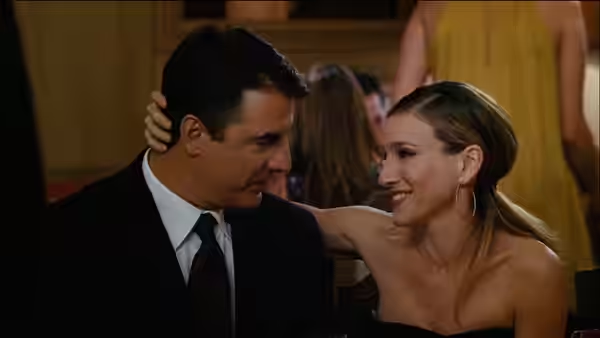
The women remain good company, especially when Cynthia Nixon gets room to be unhappy. But Sex and the City stretches their reunion beyond its story, with clothes and sentiment occupying too much of the running time.
Sex and the City has agreeable company and a serious problem knowing when to stop. At 146 minutes, this uneven comedy lets its fondness for the characters excuse long stretches without much story. Director Michael Patrick King gives particular attention to Carrie Bradshaw, leaving the other women competing for space. We would rather spend more of that time with the friends together, where the performances make their long acquaintance believable.
Sarah Jessica Parker keeps Carrie engaging even when the film’s concentration on her becomes tiresome. She makes the character’s whimsy inviting, then allows unhappiness to disturb that familiar charm. Cynthia Nixon is stronger still as Miranda Hobbes, bringing weight to emotional scenes that the surrounding fuss rarely earns. We were moved by Miranda’s unhappiness because Nixon makes it recognisably difficult to bear, rather than merely a cue for sympathy. That matters in a film so ready to distract us with clothes: for a while, the person wearing them holds our attention.
Kim Cattrall supplies the most dependable comic pleasure as Samantha Jones, whose bluntness usefully interrupts the sentiment. Kristin Davis gives Charlotte York’s loyalty some bite, and makes her concern for her friends convincing. Cattrall and Davis also give the scenes a welcome difference in pace, so the four friends do not simply become a chorus agreeing with Carrie. Neither performance needs the screenplay to keep insisting how important the friendship is. When these women share a scene, there is already enough warmth and friction to make that clear, and their ease together is the film’s strongest reason for existing.
The costumes credited to Patricia Field, Danny Santiago and Molly Rogers are a substantial part of the entertainment, and enjoying them is hardly a moral failing. The trouble is how readily the film seems to accept expensive possessions as evidence of a satisfying life. John Thomas’s photography encourages us to enjoy looking at the clothes, while Jeremy Conway’s production design sustains the attention to possessions. The combined effect becomes repetitive, particularly when the women themselves receive less scrutiny than what surrounds them.
Michael Berenbaum’s editing does not give the separate strands enough urgency to sustain the length. Scenes can be pleasant individually while making the wait for the next development feel longer, and the emphasis on Carrie becomes wearing. Aaron Zigman’s music does little to restrain the sentiment, although the performances are often expressive enough without encouragement. A shorter film would have made the jokes more welcome; here they are too often required to revive our interest after another slow passage.
Romantic comedy can survive a thin story if the people involved remain interesting to one another. The romantic partners need enough personality for us to understand the attraction, particularly when so much of the drama depends on disappointment in them. Here Michael Patrick King’s screenplay is much more attentive to the women as friends than to the men as people worth understanding. That weakens the love story it spends so much time asking us to care about. The smaller exchanges between the women repeatedly suggest a better film, one willing to give each of them something substantial to do without returning quite so promptly to Carrie.
Viewers already attached to these characters have a reason to forgive the indulgence. The cast can still make familiar company feel welcome, and the emotional passages are not all spoiled by the fuss around them. We cannot recommend spending nearly two and a half hours here simply for those intermittent pleasures. Come for the reunion if it matters to you; do not expect it to make a convert.