Josef von Sternberg’s train film is the best-looking of his pictures with Marlene Dietrich and the most fun, a hothouse melodrama lit like a cathedral and paced like a timetable. Clive Brook is wooden and the plotting is pulp; neither matters as much as it should.
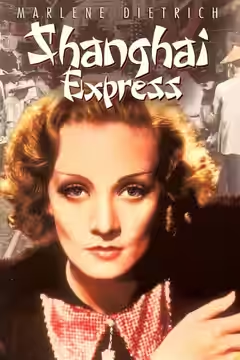
Josef von Sternberg’s fourth film with Marlene Dietrich, after The Blue Angel, Morocco and Dishonored, puts her on a train from Peking to Shanghai in the middle of a civil war and lets 82 minutes go by. Jules Furthman’s screenplay, from a story by Harry Hervey, is a compartment melodrama of the oldest kind: strangers with secrets, a stop in the night, a man who is not what he says. It is pulp and it knows it. It is also the most enjoyable thing the pair made together, because for once the story moves at the same speed as the pictures.
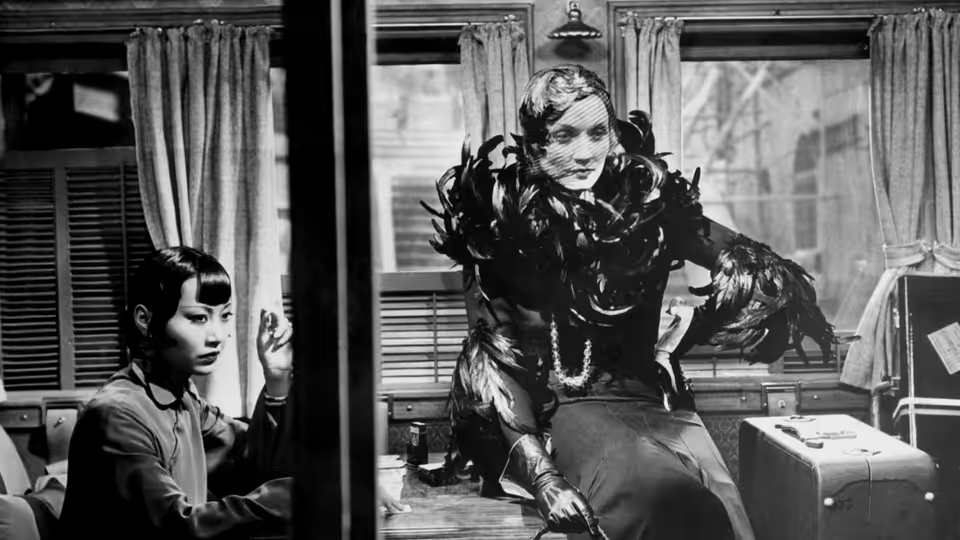
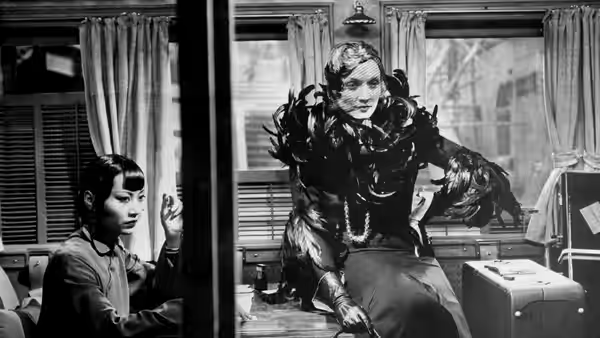
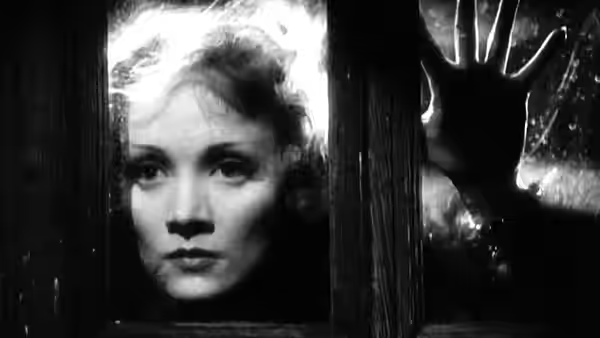
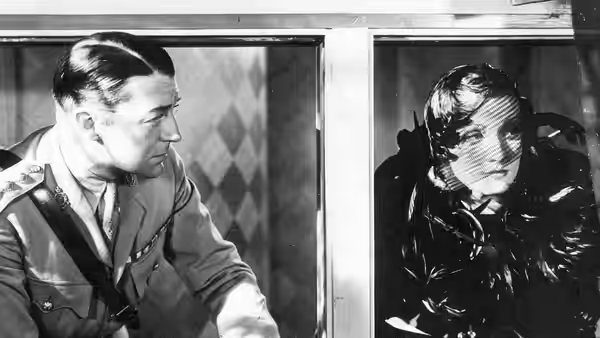
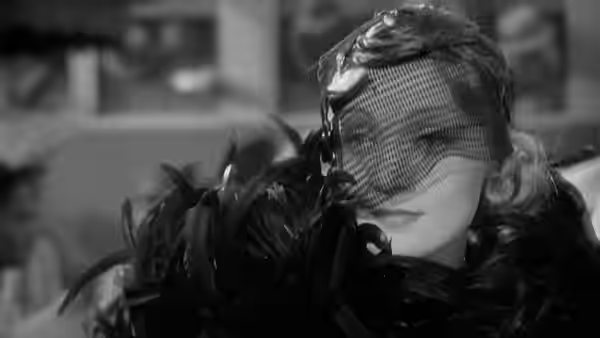
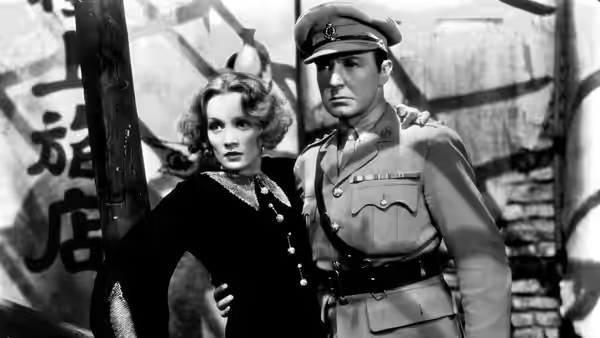
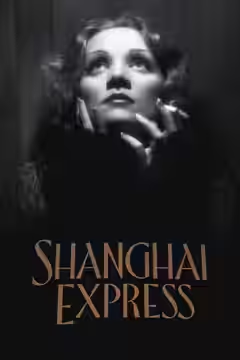
The pictures are the reason to be here. Lee Garmes lights Dietrich from above and a little in front, so the cheekbones take the light and the eyes go dark under the brim of her hat, and he keeps putting things between her and us: a veil, cigarette smoke, the slats of a blind, the glass of a corridor window with the station lamps sliding across it. Travis Banton dresses her in black feathers that seem to breathe when she does. The departure from Peking is the film’s best sequence, the engine inching through a market street, hens and carts and a cow on the line, the crowd parting a yard at a time. Frank Sullivan cuts the whole thing to the beat of the wheels, and for long stretches the train is the score; the four credited composers are heard mainly under the titles and at the end.
Dietrich plays Lily as a woman who has had every argument about her own character and is bored by all of them. She gets the film’s best line early, about how many men it took to change her name, and she delivers it as if telling him the time. There is no plea in her, no explanation. Furthman writes her the rudest dialogue in the film and she enjoys every word of it.
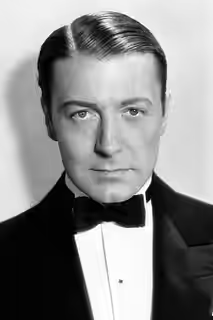
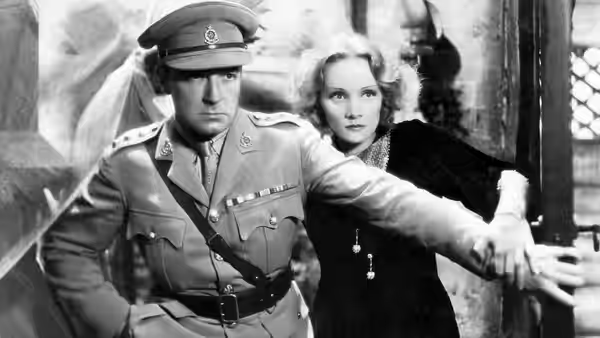
Clive Brook is the problem. His Harvey is stiff, clipped and pained, and he says his lines about honour as though reading them off a prescription. The love story needs us to believe that this woman spent five years waiting for this man, and we did not believe it for a minute. That should sink the film. Instead it routes around him. Von Sternberg keeps the camera on her face while Brook talks, and the scenes become about what she is doing while she listens.
The compartment is where we had our surprise: the film is funny. Eugene Pallette’s Sam Salt will bet on the weather, the war and the outcome of other people’s marriages, and Pallette plays him with the wounded dignity of a man nobody will take up. Louise Closser Hale’s Mrs. Haggerty runs a boarding house and would like everyone to know it is respectable. Lawrence Grant’s Reverend Carmichael disapproves of Lily on sight and changes his mind at the wrong moment. We laughed more than we expected to in a film this heavily perfumed, and it is the laughter that keeps the melodrama from curdling.
Warner Oland’s Chang is harder to watch now. A white actor made up to play a man of mixed Chinese and European blood was the industry’s habit in 1932, and it looks today exactly like what it is. What makes it stranger is that Anna May Wong is in the same frame. Hui Fei is given a handful of lines and spends most of the journey listening, and Wong does more with a look across a compartment than Brook manages with a speech. There is a stretch in the second half where the film is briefly hers, and it moved us more than the romance ever did, partly because of how little she was handed and how much she made of it.
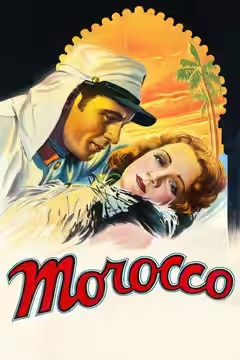
Morocco had the style and none of the pace. The Scarlet Empress, two years later, had so much style that the story suffocated. Shanghai Express is the one where von Sternberg’s love of feathers and shadow is attached to a train that has to arrive, and the timetable disciplines him. Watch it at home with the lights off. It is short, it is handsome, and it has a woman in it who could stop a war by adjusting her veil.