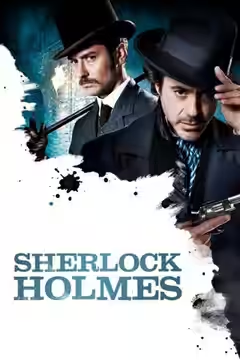
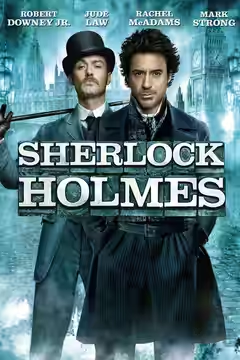
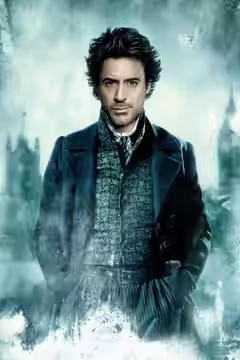
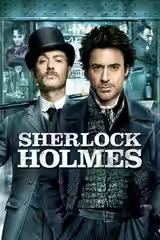
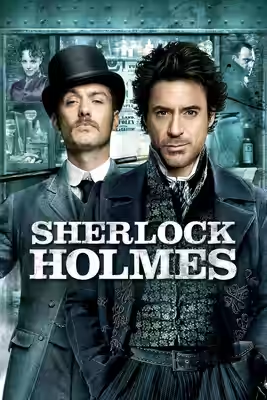
Guy Ritchie turns Conan Doyle’s detective into a bare-knuckle boxer with a chemistry set, and for long stretches it is good fun, mostly because Robert Downey Jr. and Jude Law bicker so well. The mystery underneath them is thin, and the film knows it.
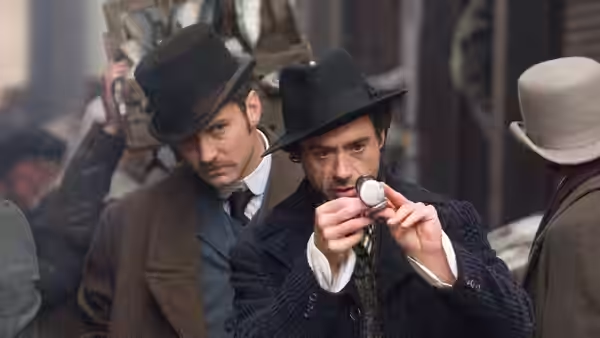
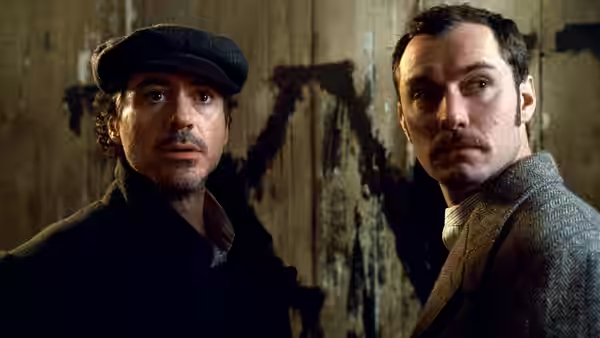
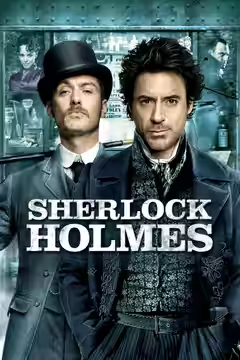
Guy Ritchie’s Sherlock Holmes takes the detective out of the armchair and puts him in a boxing cellar, a slaughterhouse and a shipyard, and the surprise is how much of that works. Robert Downey Jr. plays Holmes as a man who cannot stop noticing things and would rather hit somebody than explain them, and Jude Law’s Watson is the only person in London who can stand to share a room with him. It is a good double act in want of a case worth their time. The case the script gives them is not that, and it keeps a likeable film from being more than likeable.
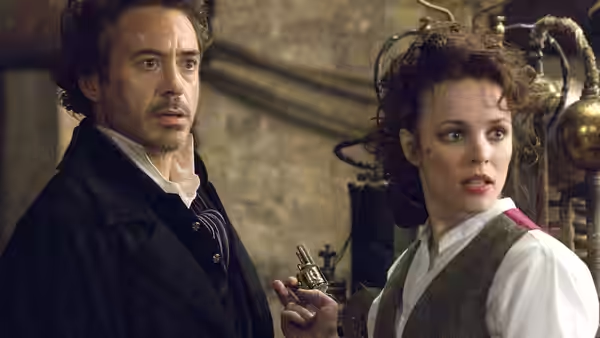
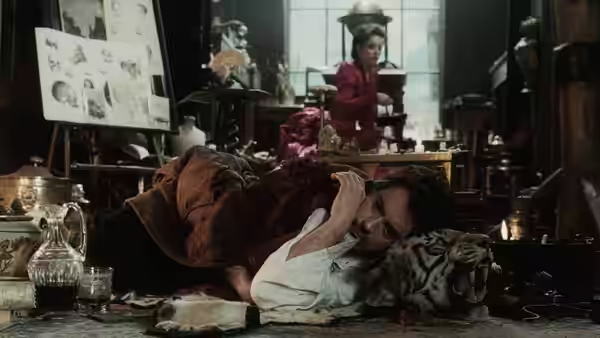
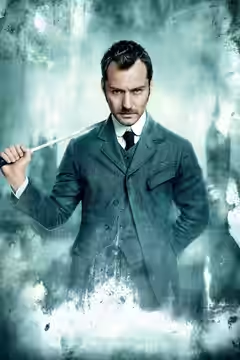
Downey plays Holmes between cases as a wreck: unshaven, firing a revolver at the wallpaper, experimenting on Watson’s dog, unable to bear an afternoon without a problem. Law makes Watson competent, armed and tired, a doctor who has decided to marry Mary Morstan (Kelly Reilly) and move out of Baker Street and who keeps not quite managing it. Their scenes are written as one long quarrel and played as a marriage. We laughed a good deal, and most of it was Law, who can show a man’s whole weariness with a friend he loves in one look across a restaurant table while Holmes insults his fiancée.
Ritchie’s signature is the fight that is solved before it starts. Holmes narrates in voice-over the blows he intends to land, each one shown slow and close while Downey murmurs about cracked ribs and ringing ears; then James Herbert cuts the same fight at full speed in about three seconds. The first time, in the boxing cellar, we grinned; it is a neat way to show thinking as something a body does. By the third time it has become a trick, and the film reaches for it when it has run out of other ideas. The larger set pieces, including a brawl with a giant called Dredger (Robert Maillet) that ends with a ship coming off its blocks, have plenty of noise and not much geography, so we were never sure who was standing where.
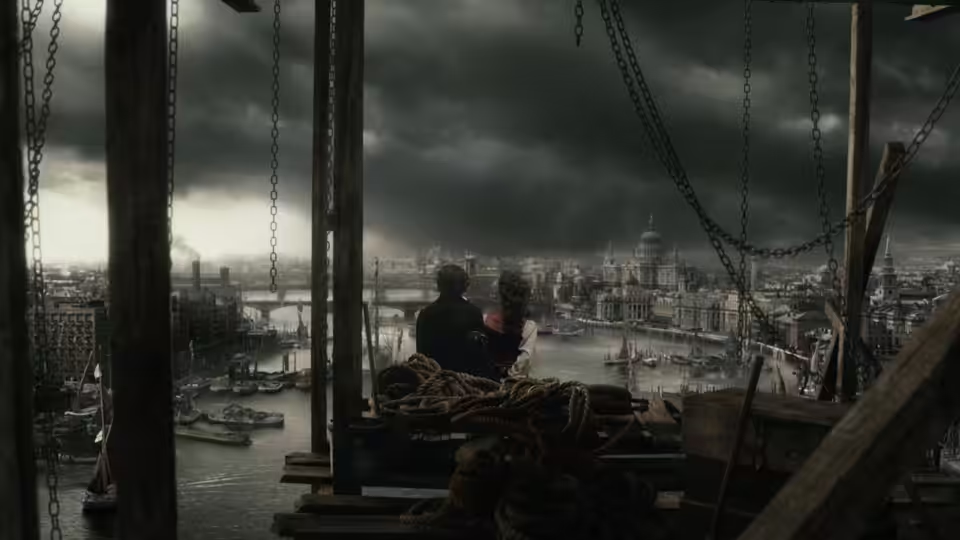
Philippe Rousselot shoots the city in browns and greys under a fog that never lifts, with daylight arriving through dirty glass. Sarah Greenwood’s production design is the film’s steadiest pleasure: Baker Street rooms heaped with bottles and papers, a slaughterhouse with a working bandsaw, and a Tower Bridge still half built, all girders and chains, which the film has the sense to save for last. Hans Zimmer’s score runs on a piano that sounds as if it had been left out in the rain, with a sawing fiddle over the top. It is cheeky and quick, and it suits Ritchie’s film rather better than it suits Holmes.
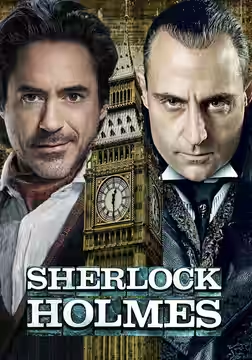
The case is this. Lord Blackwood (Mark Strong), hanged for a string of ritual killings, is seen walking out of his own tomb, and London panics. Strong plays him with a stillness that is more frightening than anything he is asked to do, and he is asked to do a secret society, a plan to take the country, and a great deal of standing in dark rooms. The three credited writers, Michael Robert Johnson, Anthony Peckham and Simon Kinberg, build a mystery that nobody but Holmes could solve and then have him explain it, at length, in the closing minutes. A good Holmes story makes us feel slow; this one has simply not shown us the pieces. By the ninety-minute mark we were no longer curious, only waiting for the explanation we knew was coming.
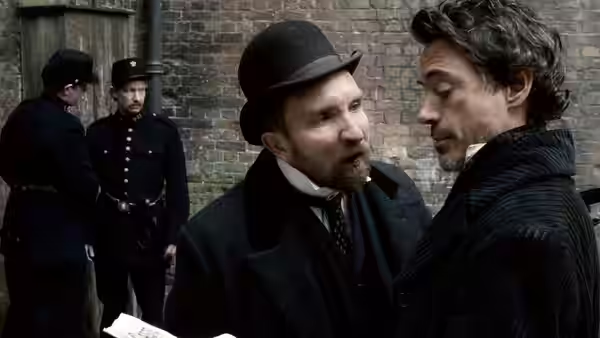
Rachel McAdams’s Irene Adler is introduced as the one woman who ever beat Holmes and is then given a run of frocks and a man in the shadows to report to. McAdams is game and never once dangerous. Eddie Marsan’s Lestrade is good value, a policeman who gave up understanding Holmes years ago and settled for using him. Geraldine James gets three lines as Mrs. Hudson and builds a landlady out of them.
Conan Doyle’s Holmes boxed and took cocaine, so Ritchie is not inventing much. What has gone missing is the pleasure of being shown a thing and then shown what it meant; Ritchie is better at the moments before and after a deduction than at the deduction itself. See it for the pair, at home on a wet evening, where its 129 minutes feel about right and the fog looks less expensive. Do not try to solve it. The film has not given you the pieces, and it does not appear to mind.