Silver Lode is a lean, politically pointed Western with more visual care than its straightforward revenge story needs. Its bluntness can be limiting, but Allan Dwan keeps it worth watching.
Silver Lode is a good, brisk Western concerned with how readily a wrongful accusation can serve someone’s revenge. Allan Dwan takes that premise seriously without making the film feel too large for its story. Its political force comes through clearly, sometimes too clearly. We recommend it for the controlled filmmaking, with a reservation about how little uncertainty the writing allows. The running time is 81 minutes.
Karen DeWolf has both story and screenplay credits, and the link between accusation and revenge gives a familiar Western grievance an unpleasant extra turn. An accusation invites a judgement before the accused has had a chance to answer. We were angered by that unfairness. Someone else’s desire for revenge is being offered as a reason to doubt an innocent person, and the film makes the wrongness plain. Its politics work most directly at that personal level.
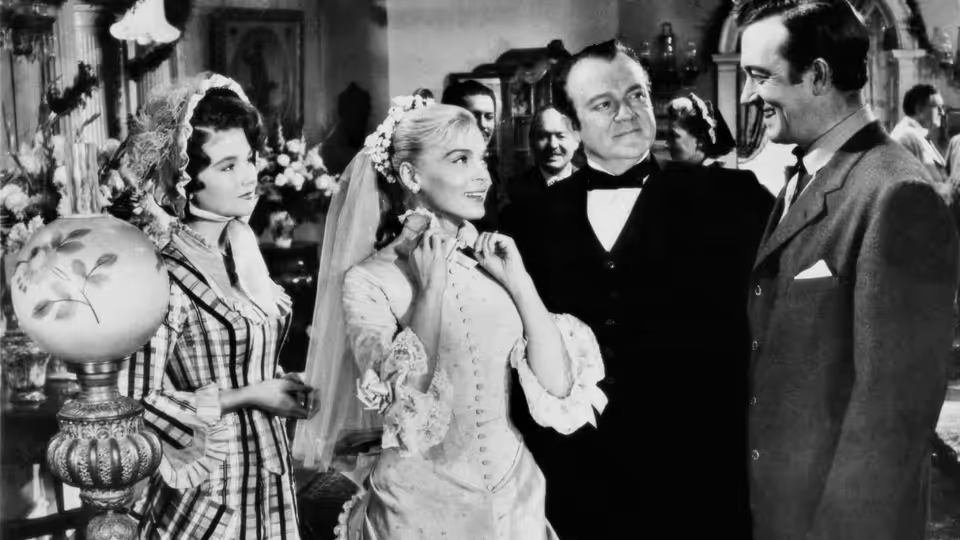
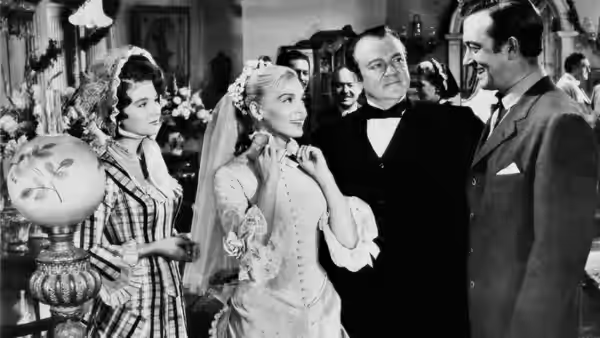
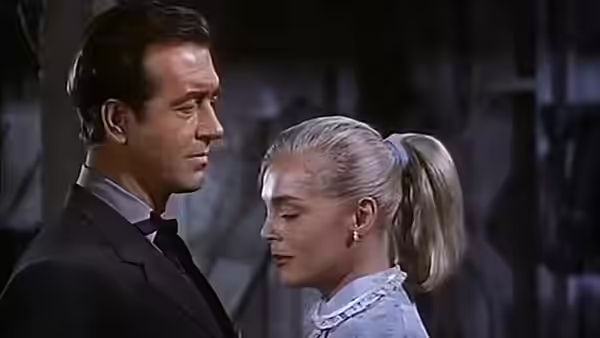
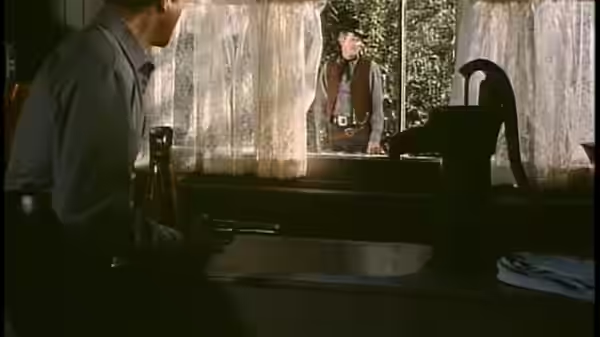
John Alton’s lighting is the chief pleasure, giving the images a weight that the spare story cannot always supply. The extended tracking shots are equally important: they let us keep looking around the frame rather than have our attention redirected by a cut. That freedom to look is particularly effective in a film about an accusation that ought to be questioned. The camera takes its time even when the plot has a straightforward job to do.
James Leicester’s editing makes room for those sustained movements, so the short running time does not mean every moment is hurried. We can register the photography as well as follow the story. Louis Forbes and Howard Jackson are credited with the music, which makes less of an impression than the images. The musical contribution is serviceable, but it is not what we would return to the film for.
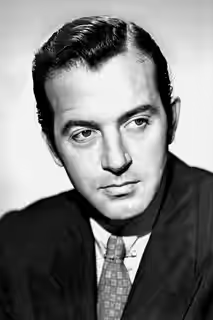
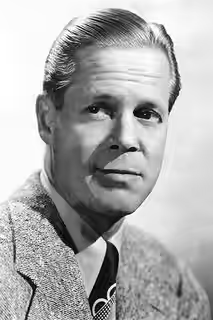
John Payne’s Dan Ballard gives us a human focus, and Lizabeth Scott’s Rose Evans and Dan Duryea’s Fred McCarty help keep the story legible. The broadness is useful up to a point. We do not have to spend the film sorting out who matters, but there is also limited pleasure in discovering anything unexpected about them. The performances serve the direct storytelling more successfully than they complicate it.
That is the limitation of Karen DeWolf’s approach, too. A wrongful accusation already tells us where justice lies, and the screenplay’s directness gives the political reading few obstacles. We have little difficulty deciding what to think about the injustice. The film becomes less interesting whenever it seems to assume that recognising a wrong is enough to explain it.
Within the Western, that combination of speed, seriousness and visual care is enough to make it worth an evening. It does not need a more elaborate revenge plot, though a little more room for doubt would have helped. Choose it when a concise Western appeals and you want the camera to do more than record the dispute.