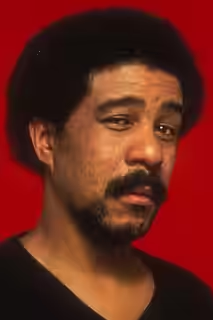
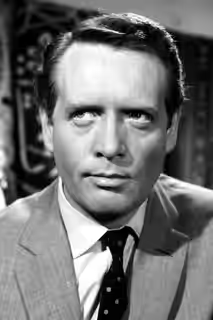
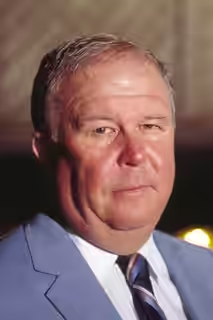
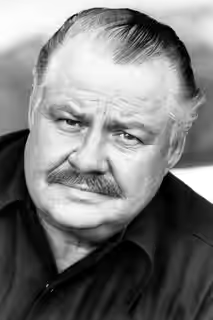
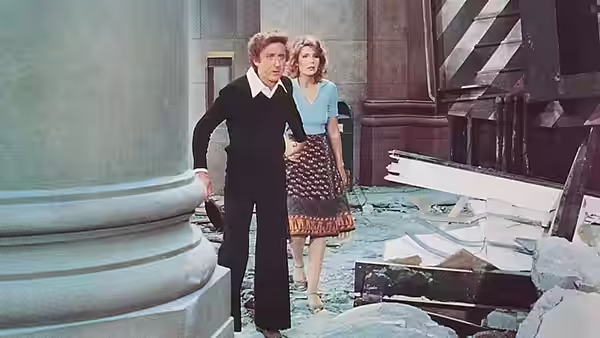
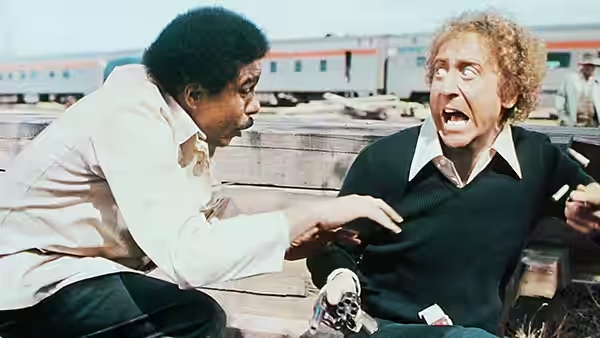
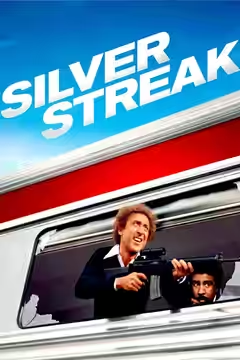
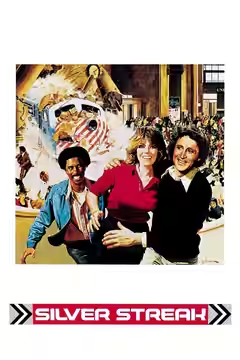
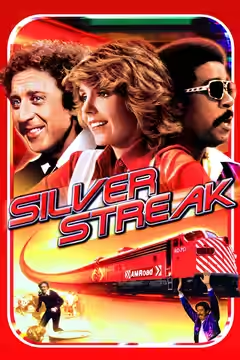
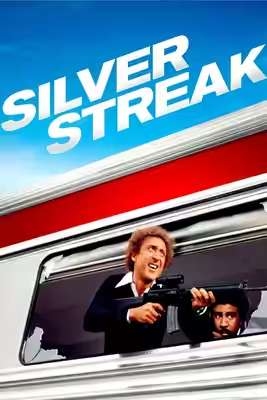
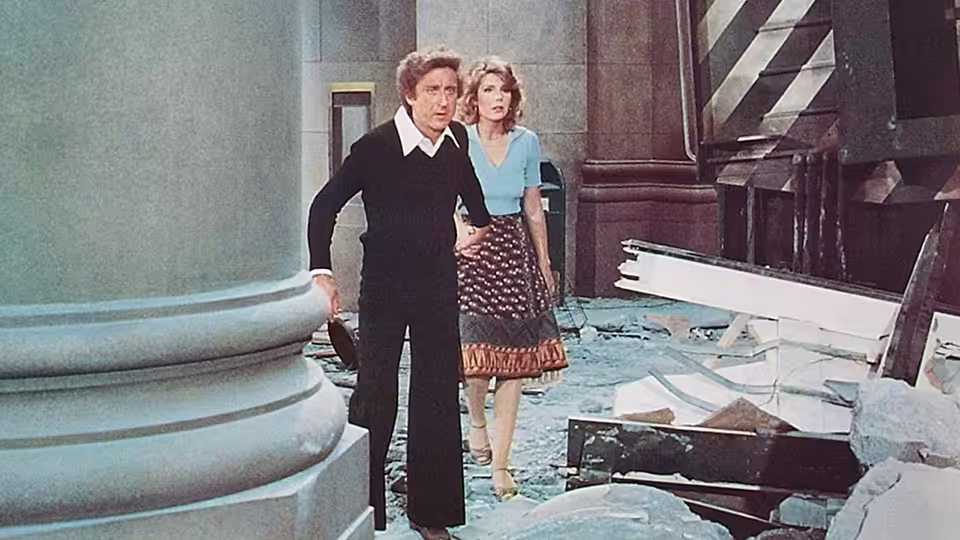
George Caldwell and Hilly Burns stand amid rubble inside a damaged building
Film review

Silver Streak

1976 · Directed by Arthur Hiller · 1h 54m

In a sentenceGene Wilder keeps falling off a train and the film only gets going once Richard Pryor climbs on

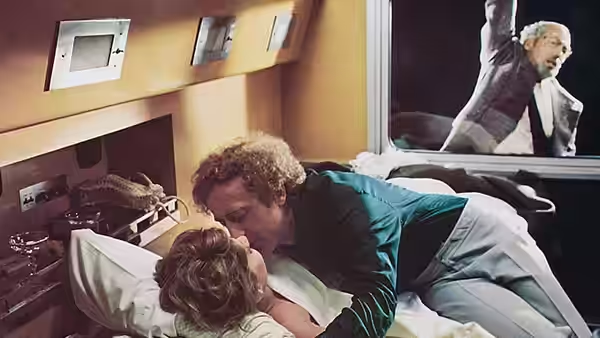
George Caldwell (Gene Wilder), a Los Angeles book editor, boards the Silver Streak for a quiet two-day run to Chicago. In the bar he meets Bob Sweet (Ned Beatty), who does not stop talking, and Hilly Burns (Jill Clayburgh). Professor Schreiner (Stefan Gierasch) is also on the train. That night, from Hilly’s compartment, George sees a dead man slide past the window. By morning nobody believes him and the professor appears to be alive and well. A smooth art dealer, Roger Devereau (Patrick McGoohan), is on board, and George is soon put off the train in open country. Richard Pryor’s Grover Muldoon, a thief, joins him some way down the line.

Fi1m review

Arthur Hiller and Colin Higgins borrow a train from Hitchcock and spend the first hour doing very little with it. Then Richard Pryor climbs aboard, the film wakes up, and the last reel is staged with real nerve. Slow, patchy, likeable.

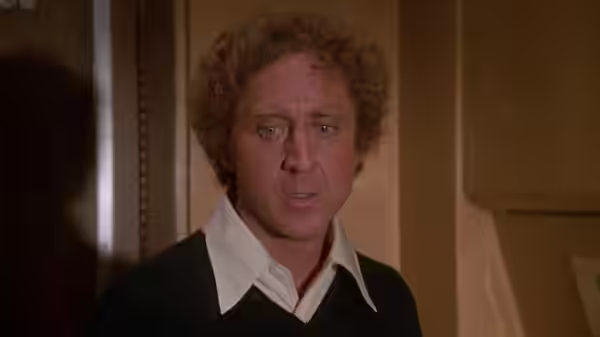
George Caldwell (Gene Wilder) is a book editor who takes the train from Los Angeles to Chicago for two days of rest, and Silver Streak is 114 minutes of him not getting it. Colin Higgins’s script follows the Hitchcock pattern: a mild man, a woman in the next compartment, a body glimpsed and then denied, villains in good suits. Arthur Hiller directs it as a roomy entertainment in no hurry to arrive. It is a decent evening, warmer than most of the reviews allow, and it takes an hour to earn that.

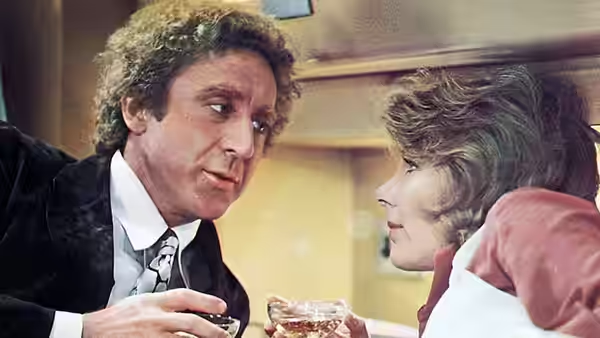
Wilder is playing it quiet, a courteous man who cannot quite believe his luck. He flirts with Hilly Burns (Jill Clayburgh) over a drink, listens to Bob Sweet (Ned Beatty) talk, and goes to bed; in the night a dead man slides past the window, and in the morning everyone tells him he imagined it. Clayburgh is relaxed and dry, and the scenes in her compartment have a grown-up ease the film never quite gets back to. Beatty talks as if silence frightened him.

The trouble with the first half is that nothing in it is urgent. Higgins’s plot is a loop: George is put off the train, finds a way back on and is put off again, and David Bretherton cuts each excursion at the same easy pace. Henry Mancini’s main theme is bright brass and strings that sound like a holiday advertisement, and it plays under scenes about a man who thinks he is going to be killed. We were restless by the fortieth minute and we checked the time, which no thriller should allow.

Then Richard Pryor gets in the car. Grover Muldoon is a thief who steals the vehicle George happens to be sitting in, and from the moment he looks across at this twitching white man in a ruined suit the film has a pulse. Pryor is fast and Wilder is slow, and Higgins is sensible enough to let that be the joke rather than write jokes on top of it. This was the first time the two were paired on screen, and you can see why it stuck. We laughed at them properly, the kind of laugh that is partly relief, and we stopped checking the time.

One scene has to be mentioned. To get George past the police at a station, Grover puts him in shoe polish and a cap and sends him across the concourse carrying a radio. We winced, and then we laughed, and the laugh belonged entirely to Pryor, who watches the attempt with professional disappointment. The scene is about how bad George is at it, and that is the only reading that lets it survive. Many viewers will find it hard to sit through, and we would not argue with them.

Patrick McGoohan plays the villain, Roger Devereau, an art dealer whose interest in Professor Schreiner is not scholarly, and his stillness makes everyone else look nervous. Clifton James turns up as a sheriff who takes his time over every syllable. David M. Walsh shoots the train from the air, a silver line across brown plains, and a night sequence on the roof, with the wind nearly taking George off it, is the one stretch of the first hour where the pictures do the work. Alfred Sweeney’s carriages are wide and panelled, and the bar looks like somewhere you could spend two days.

The last reel we will not describe, except that it is bigger than anything before it, that Hiller stages it straight, and that it works. Hiller had made Love Story and Higgins had written Harold and Maude, neither of them a chase, and the first hour here shows it. What they have built is the shape of a Hitchcock thriller with the dread left out, and once he arrives Pryor carries it.

Most critics disagree with us. Three of the five reviews we have read find it sluggish or worse; one is warm. They are right about the first hour and wrong about the whole: the film they describe stops existing when Pryor gets on, and the second half is paced and played like a different and better picture. Watch it at home, where a slow start costs less, and do not give up at the forty-minute mark.
Critical consensus AI synthesised

45
Positive
1
Mixed
1
Negative
3
Radio Times
★★★★ · Tom Hutchinson
80

Hutchinson gives the film a strongly positive verdict, praising its endearing central trio. He also singles out its blend of classic British-thriller elements and screwball comedy.

Read the full review →
Variety
31 December 1975 · Variety Staff
55*

The critic finds the adventure comedy only okay, saying it falls short of its comedic promise. Richard Pryor’s performance and his chemistry with Gene Wilder provide the film’s welcome snap and zest.

Read the full review →
Empire
1 January 2000 · William Thomas
30*

The critic calls the film extremely unexceptional. He complains that its formulaic screenplay squanders the comic talents of Gene Wilder and Richard Pryor.

Read the full review →
The New York Times
9 December 1976 · Vincent Canby
30*

The headline indicates a negative verdict, describing the film trip as tiring. It singles out the experience as exhausting, though the inaccessible page prevents confirming further details.

Read the full review →
Time Out
· GB
30*

The review finds the film sluggish and meandering. It particularly faults the rambling plot and characters.

Read the full review →

Straight answers AI written, from our review

Is Silver Streak worth watching?
Silver Streak is worth watching if you can sit through a slow first hour for the sake of Gene Wilder and Richard Pryor together, and we scored it 63. The Hitchcock-style train plot loops without much urgency until Pryor arrives, after which the comedy sharpens and the last reel is staged with real nerve.
How long is Silver Streak, and what is it rated?
Silver Streak runs 1h 54m. It is a comedy and crime film.
Where can I watch Silver Streak in Czechia?
Silver Streak is not on any streaming or rental service in Czechia at the moment. It is available in 21 other countries; change your country at the top of the page to see where. Availability is checked daily.
How violent or frightening is Silver Streak, and is it suitable for children?
Silver Streak carries a UK PG certificate and is a comedy thriller rather than a frightening one, with a glimpsed body, some roof-of-the-train peril and a bigger finish, none of it graphic. The scene many will find hardest is one in which Wilder is put in blackface to pass the police; the film treats it as his failure, but it is awkward, and parents of younger children should know it is there.
How does Silver Streak compare to The Lady Vanishes?
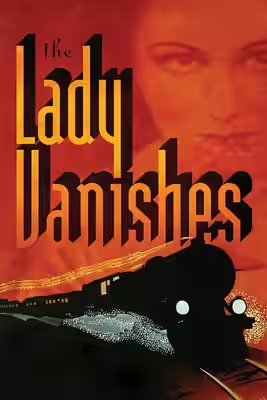
Silver Streak borrows its missing-person-on-a-train plot from Hitchcock, and The Lady Vanishes does that plot better, with tension and disbelief handled properly from the start. Hitchcock's film is the tighter and more urgent of the two; the later one is roomier and wins on its own terms only once Pryor boards. Choose Hitchcock for the mystery, Hiller for the double act.
What should I watch after Silver Streak?
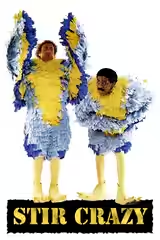
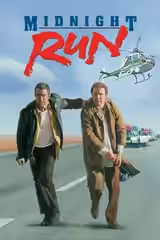
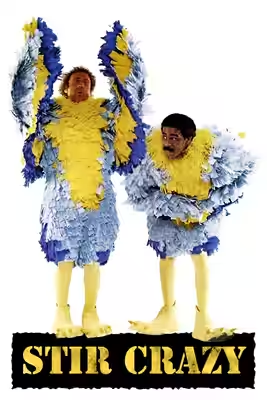
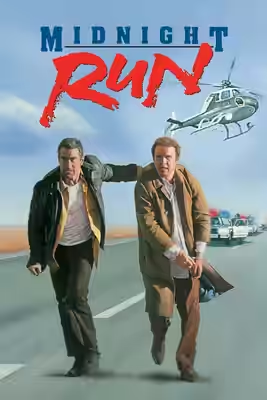
After Silver Streak, try The Lady Vanishes (1938, Fi1m 88): Hitchcock’s own train, with the missing person and the disbelieving passengers done properly. Then Stir Crazy (1980, Fi1m 60): Wilder and Pryor again, in prison this time, with the roles and the timing sharpened; and Midnight Run (1988, Fi1m 88): The cross-country double act done with real menace and a bounty hunter who means it.

Cast

Awards

Academy Awards, 1977

Nominated
Best Sound

If you liked this, try…

  1. The Lady Vanishes (1938, Fi1m 88)Hitchcock’s own train, with the missing person and the disbelieving passengers done properly.

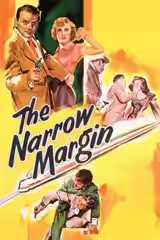
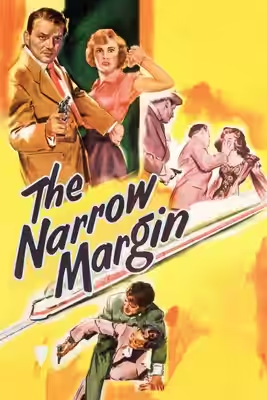
  2. The Narrow Margin (1952) · not reviewed yetA lean noir on a train, barely over an hour and never once sluggish.

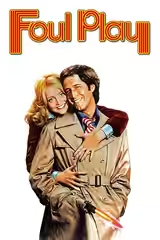
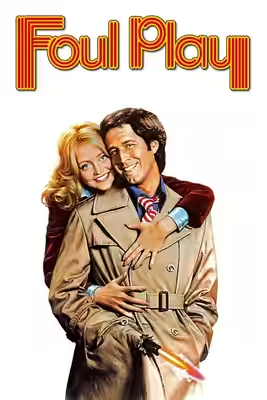
  3. Foul Play (1978) · not reviewed yetColin Higgins directs his next Hitchcock pastiche himself, with Goldie Hawn and more pace.

  4. Stir Crazy (1980, Fi1m 60)Wilder and Pryor again, in prison this time, with the roles and the timing sharpened.

  5. Midnight Run (1988, Fi1m 88)The cross-country double act done with real menace and a bounty hunter who means it.

Free account

Know what to watch tonight

Two lists that know where things are streaming, collections you can share, your own score beside ours, and Discover that remembers what you have seen.

  • Want to see, sorted by what is streaming now
  • Seen, with your score out of ten
  • No adverts, ever