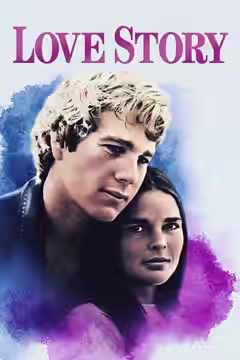
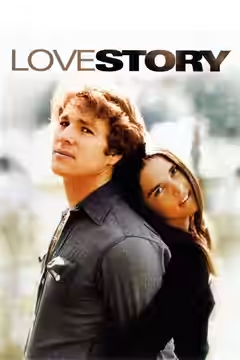
Arthur Hiller’s tearjerker still knows which strings it is pulling, and Ali MacGraw’s sharp tongue, John Marley’s decency and Francis Lai’s piano get it a long way. But Erich Segal’s lovers are outlines, and a film this calculated ought to have more inside it.
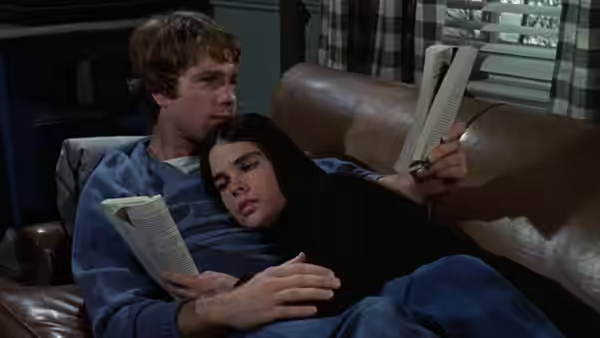
Oliver Barrett IV (Ryan O’Neal) tells us in the film’s first line that a girl he loved is dead. Then Arthur Hiller goes back to the library where they met, and the next 100 minutes are spent bringing us to a place we have already been told about. Erich Segal adapts his own bestseller, and the design is the honest kind of tearjerker: announce the ending, so that every happy scene in the middle arrives with a shadow already on it. That is a trick, and not a dishonourable one. The question is whether there is enough between the first line and the last to earn the tears it is plainly counting on.
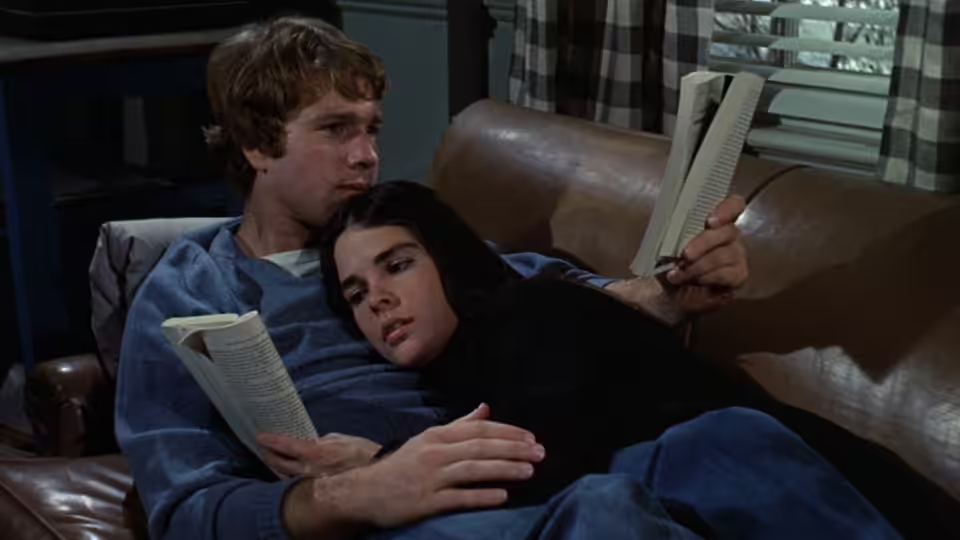
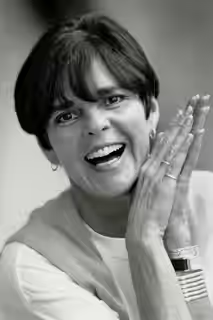
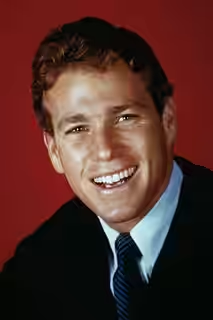
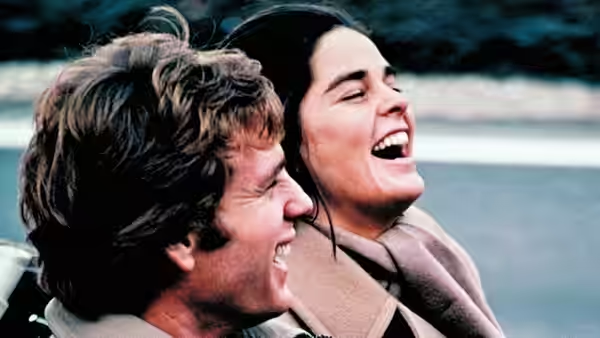
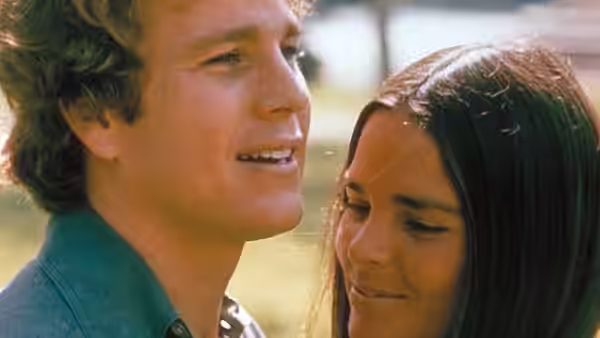
The best of what is there is Ali MacGraw. Her Jennifer Cavilleri is rude, quick and unimpressed, a music student from Rhode Island who calls the rich boy Preppie and tells him he is stupid. MacGraw has been called a poor actress for decades and we would put it differently: she has one note, and it happens to be the right one for this part. Jenny is the only person in the film who seems to have come from somewhere. O’Neal plays Oliver as a pleasant, slightly stunned athlete who cannot believe his luck, which is fine for the courtship and thin for everything after.
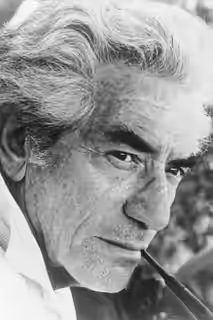
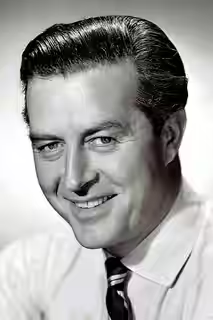
The fathers are better than the lovers. Ray Milland’s Oliver Barrett III sits through a dinner with his son and says almost nothing that could be quoted against him, and the disapproval comes off him like cold from a window. John Marley’s Phil Cavilleri, a widowed baker, says the name Oliver as if he is not yet sure he is allowed to, and his fumbling warmth is the one thing here we would call moving without qualification. Hiller made The Out-of-Towners the same year, and his comic instincts show: the scenes that live are the ones with a joke in them.
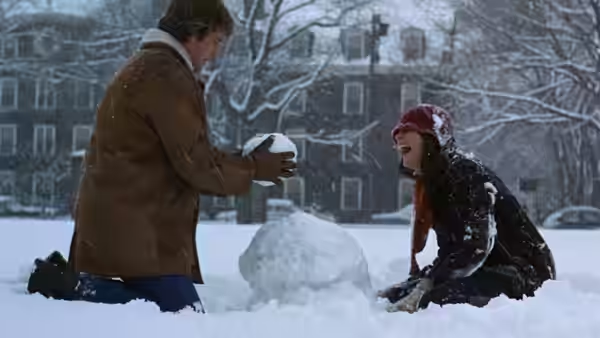
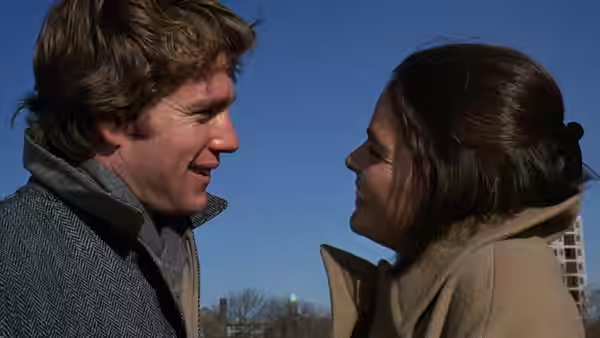
Richard C. Kratina shoots Cambridge in autumn browns and winter whites, and there is a stretch in the snow, the two of them falling into drifts and throwing handfuls at each other, that Robert C. Jones cuts without a word of dialogue to Francis Lai’s theme. We were got at. We knew what was being done to us and our throats tightened anyway, and the reason is Lai: the theme is a plain, sad piano line that he brings back every time the film wants something, and it works the way a hymn works, by being sung again. Ten minutes later we felt slightly foolish, which is the usual price of this kind of film and the reason we do not rate it higher.
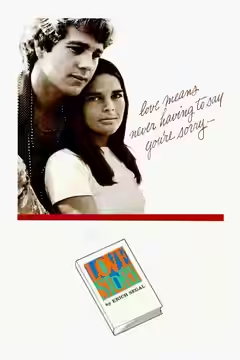
The script will not do the rest of the work. Segal gives his lovers things to say and almost nothing to want beyond each other. The wedding they write for themselves, all poetry read aloud and earnest eye contact in a room rather than a church, had us looking at the floor. Kratina lights the interiors so flatly that every face has the glow of a knitting catalogue. And the tagline, “Love means never having to say you’re sorry”, is delivered as wisdom when a moment’s thought shows it to be nonsense. The film knows this, we suspect, and says it with a straight face regardless.
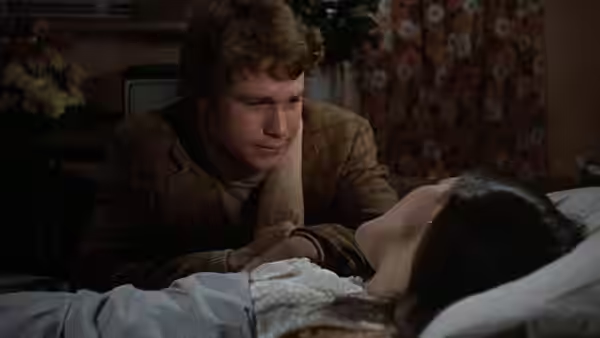
When the second half arrives it goes where the first line promised, with a tact that shades into vagueness. Sydney Walker’s Dr. Shapeley and Robert Modica’s Dr. Addison murmur in corridors and are never quite understood. It is decorous and it is a little cowardly. Reviewers at the time predicted the film would spawn many worse imitations, and it did, which says more about the market than about the film.
It is a clean, brief, well-scored cry for a Saturday night, competently made and a little cold. See it for MacGraw’s mouth, Marley’s hesitations and Lai’s piano, and go in knowing that the film has told you the ending on purpose and will hold you to it. The PG certificate is right; there is nothing here to trouble a child except the thing you have been warned about.