A sincere, handsome weepie from a play that was already old-fashioned when the cameras rolled. Leslie Howard’s grieving baronet is the reason to watch; the young lovers are thinner, and the film knows exactly where your tear ducts are and goes for them.
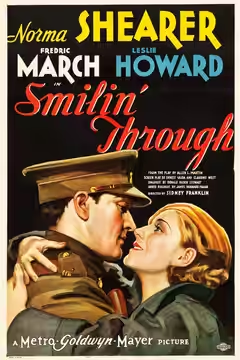
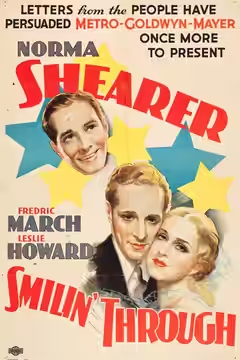
Sidney Franklin’s Smilin’ Through is the talking version of a stage play, made with Norma Shearer in front of the camera and Irving Thalberg and Albert Lewin producing behind it. The play is a weepie about a dead bride, a jealous rival and a niece who grows up to fall for the wrong man. Claudine West and Ernest Vajda keep it intact and add little. What Franklin adds is a look, and a cast good enough to say these lines with a straight face. The film is old-fashioned and it is affecting, and it does not pretend to be anything else.
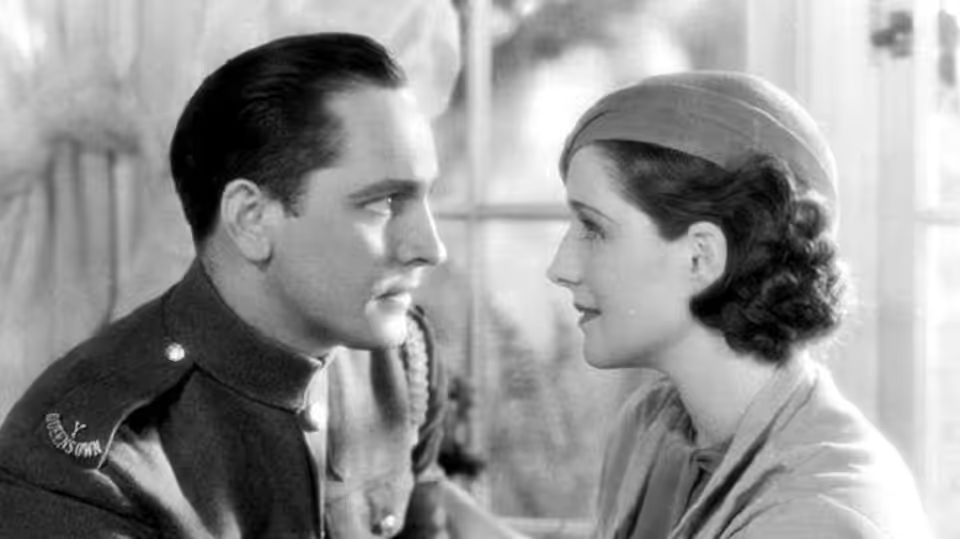
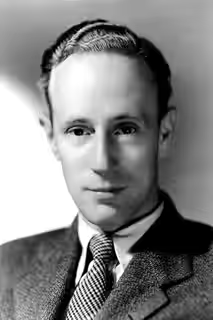
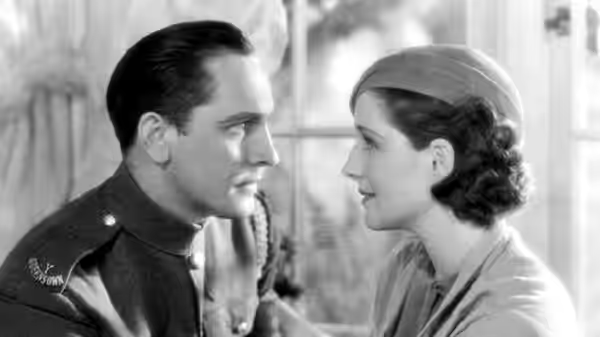
Howard is the film. Sir John goes out to the grave every evening and talks to it, and Howard plays him with a mild amusement, a man who has decided that grief is a habit like any other and sees no reason to give it up. When Moonyeen appears to him, Lee Garmes puts a haze of light around Shearer so that she seems to stand slightly in front of the picture rather than in it. It is a simple trick and it works because Howard never turns towards her with anything more than pleasure. We came to this braced to be patient with it. By the second garden scene we were not patient, we were moved, and it was Howard’s voice that did it, dropping to the level of someone speaking to a person in the next room.
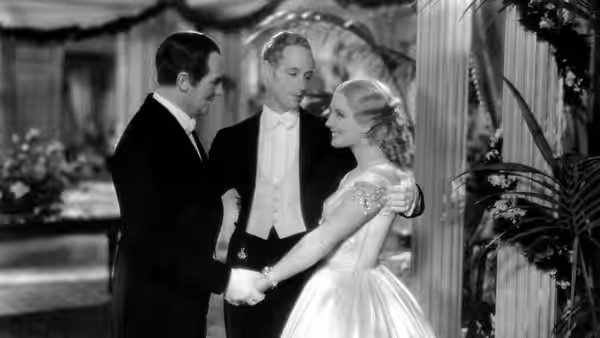
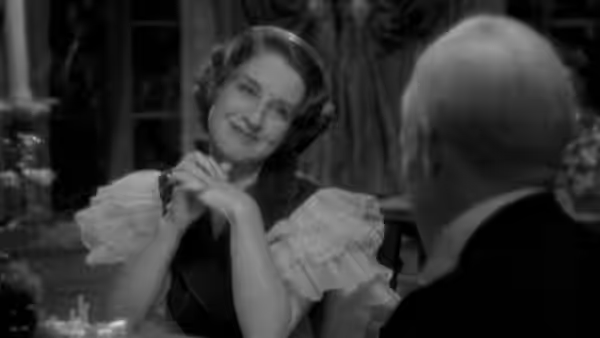
Shearer has two parts and is better in the one with less screen time. As Kathleen she is brisk, modern and a little hard, waving Willie Ainley away like a wasp. As Moonyeen she is slower and softer, and Adrian dresses her in white with yards of veil while the Victorian party guests move around her in crinolines; the older half of the story has the best clothes in the film by some distance. The long flashback to how Moonyeen died is the strongest stretch and we will not describe it. We will say that Franklin stages it as one sustained sequence, that Margaret Booth holds the shots longer than she does anywhere in the modern scenes, and that March, as Jeremy, does something with drink and wounded pride that is more interesting than anything he is given as Kenneth.
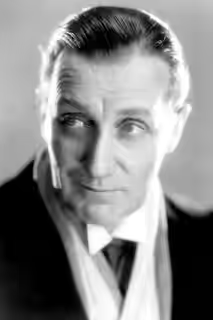
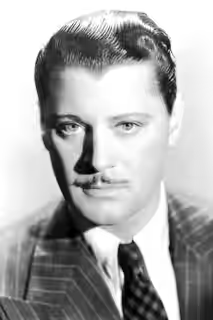
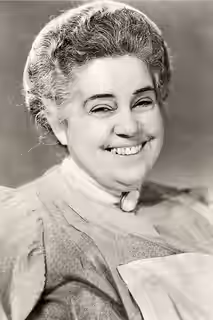
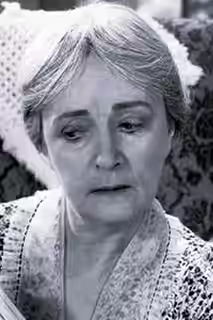
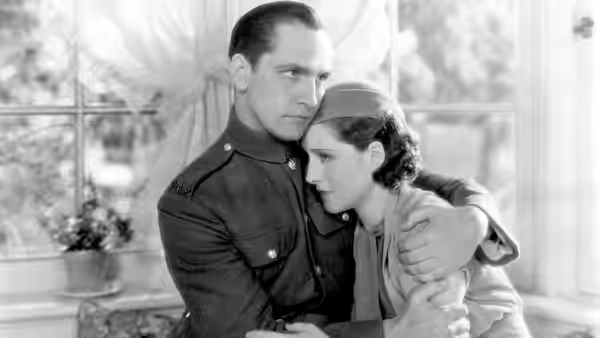
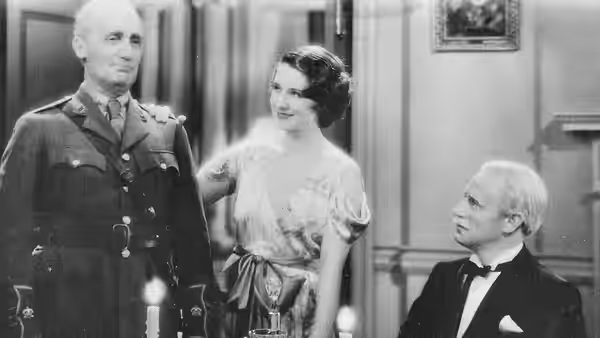
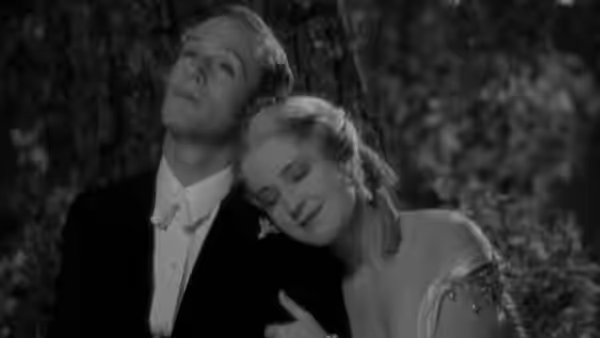
Because Kenneth is the trouble. March is a fine actor with a poor part: Kenneth is decent, handsome and going to the war, and that is all the script tells us about him. The meeting in the storm is nicely done, rain on the windows, a dark room, a struck match, two people startled by each other. After it the romance is asserted rather than shown. They declare a great deal in a few scenes and we took their word for it without feeling much. Forbes’s Willie is the comic third party, and the film is a little unkind to him for being kind. Beryl Mercer’s Mrs. Crouch and Margaret Seddon’s Ellen supply some warmth from below stairs, and O. P. Heggie’s Dr. Owen is the sensible friend who says what the audience is thinking, and says it more often than it needs saying.
Garmes shoots the garden as a place where it is always dusk, the light coming from behind the roses, and the house by lamplight with the corners left dark. The war happens somewhere else; it reaches the garden as uniforms and news. Booth cuts the modern half quickly and the flashback slowly, which is the right way round, though the last third has a habit of ending every scene on a swell of music in case we had missed the point. We had not missed it. There is a stretch near the end where the film stops trusting Howard’s face to do the work and lets the strings do it instead, and it is the only time it feels like a lesser picture than it is.
Watch it at home, on a wet evening, with someone who will not laugh at you. It runs 98 minutes and it will take about eighty of them to get you.