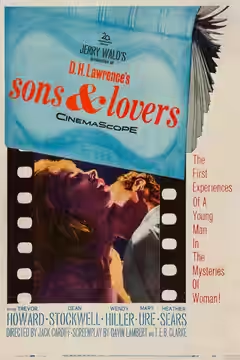
Jack Cardiff’s version of D. H. Lawrence is beautifully photographed by Freddie Francis and superbly acted by Trevor Howard and Wendy Hiller as the parents. It is also tidy where the novel is raw, and its Paul is a passenger in his own story.
Jack Cardiff, the cinematographer of Black Narcissus and The Red Shoes, took the director’s chair for D. H. Lawrence’s 1913 novel about a miner’s son who wants to paint and a mother who wants it for him more than he does. The screenplay is by T. E. B. Clarke and Gavin Lambert and the whole thing runs 103 minutes, which is quick work for a book that takes its time. What they have made is a handsome, seriously acted, rather careful film. It is worth an evening for the parents and the photography, and it never quite lets Lawrence’s people be as unreasonable as they are on the page.
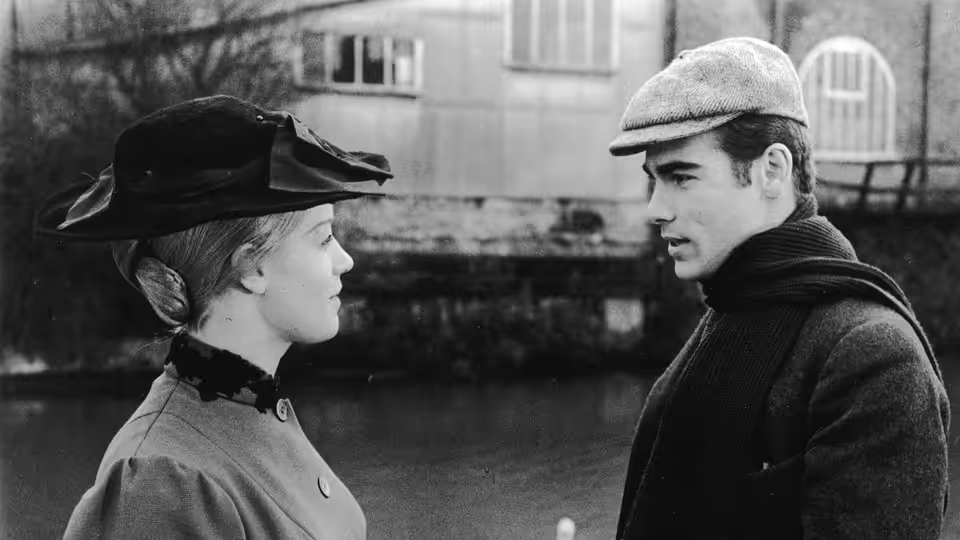
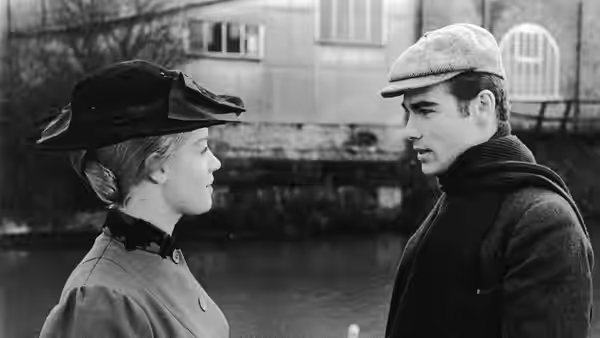
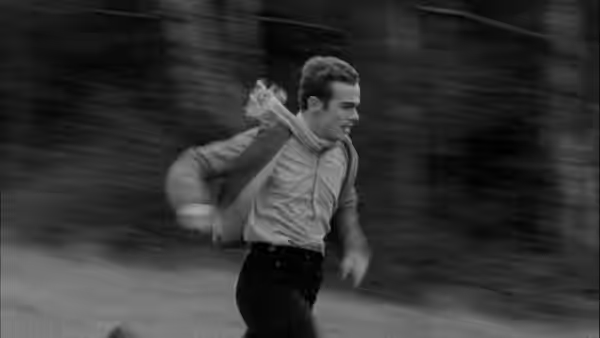
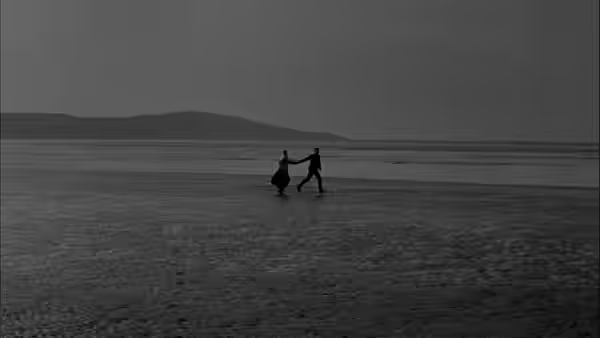
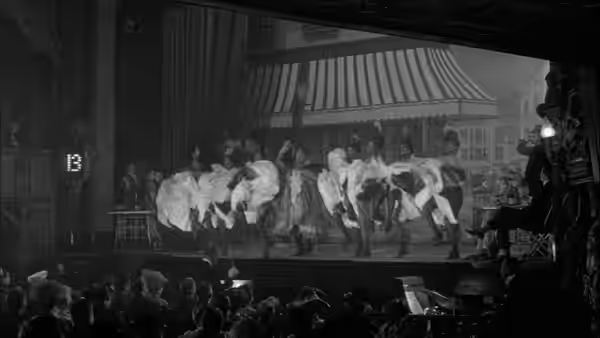
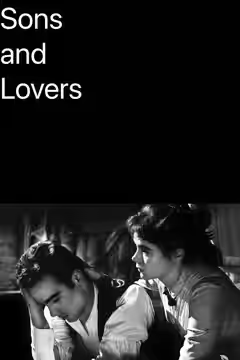
Freddie Francis shot it in black and white and it is the best-looking thing in the film. The pit village is rows of terraces under a low sky, men coming off shift with their faces black to the collar, a kitchen where the one window puts a hard bar of light across a scrubbed table. Nottingham is trams and stone and shop glass. The Leivers farm is shot soft and grey, so that Miriam seems to live in a different weather from everyone else. Francis does not prettify the coal; he finds the one clean line in every dirty room and lets the people stand in it.
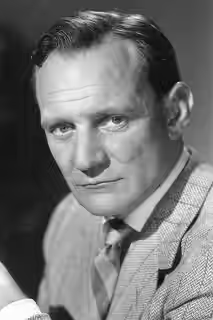
Trevor Howard plays Walter Morel as a man who lost the argument in his own house years ago and still turns up for it every night. He comes home from the pit, sits stripped to the waist while Wendy Hiller washes his back, and neither of them says a word, and we were moved more than we expected to be, because for a minute you can see the marriage that was there before the drinking and the disappointment. Then he goes out, and comes back loud, and the children go quiet. Howard never asks us to forgive Walter. He only shows us that the man knows.
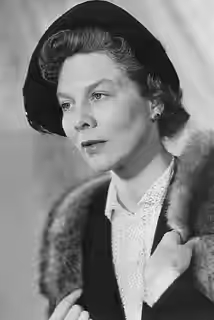
Hiller is his match. Her Gertrude is not a monster and the film is right not to make her one; she is a clever woman with nowhere to put her cleverness except her sons, and she puts it there with a force that would frighten a grown man. Watch her face when Paul talks about London. She wants him gone and cannot bear it, and Hiller does both at once without moving very much.
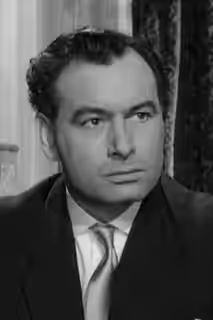
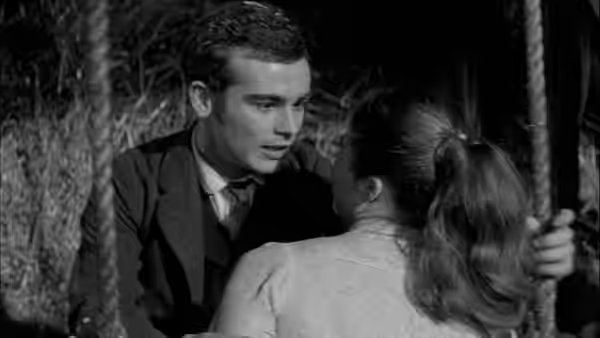
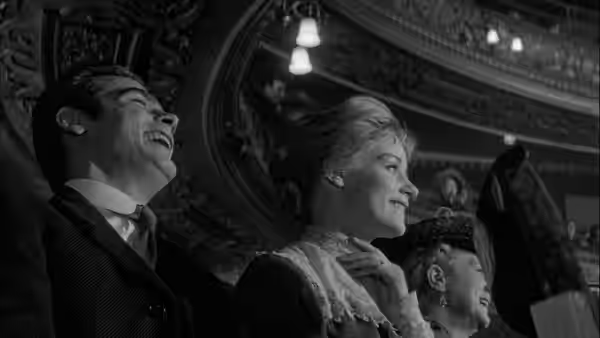
The trouble is Paul. Dean Stockwell is an American in a Nottinghamshire kitchen, and the accent is the least of it; the reviews have picked at the voices and they are right to, but a wrong vowel is forgivable. What is harder to forgive is that the script gives Paul nothing to want except the escape his mother wants for him. Stockwell is handsome and attentive and he listens well, and for long stretches that is all he is asked to do. Heather Sears is good at the stillness of Miriam, a girl who has made a religion of holding back. Mary Ure’s Clara comes in with more life than the film knows how to use, and Conrad Phillips, as her husband, is around for exactly as long as the plot needs him. Donald Pleasence gets a couple of dry scenes as the factory overseer and makes a meal of each.
Clarke and Lambert have cut the novel’s first half, the marriage and the elder brother, down to a prologue so as to reach the two women faster. That is a defensible choice and it costs them the ground the rest stands on; when Gertrude clings, we have to take the reason on trust. The dialogue tends to announce a feeling rather than let it happen, and Mario Nascimbene’s strings arrive a moment later to confirm it. Gordon Pilkington cuts each scene off the instant its point is made, which keeps the film moving and keeps the rooms from ever getting stuffy in the way Lawrence’s rooms should.
Room at the Top (1959), a year earlier and with Sears in it, is rougher and knows more about wanting. Cardiff’s film looks better and feels less. It is still a decent evening, and better than that whenever Howard or Hiller is on screen. Watch it for them, and for Francis, and do not expect it to hurt. It carries a PG.