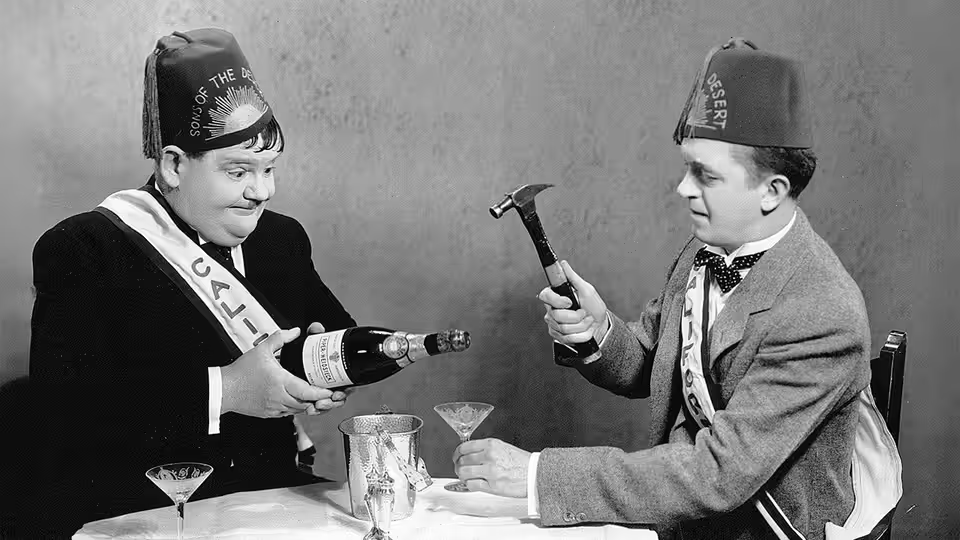
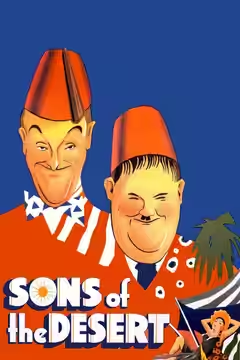
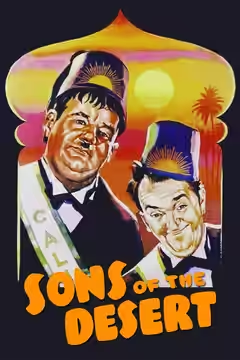
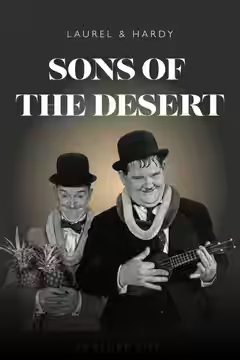
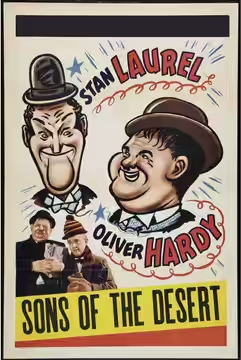
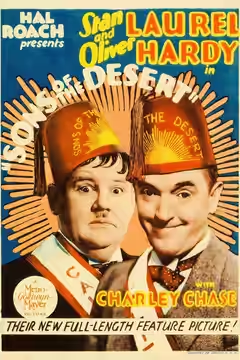
Stan Laurel and Oliver Hardy turn wounded dignity into a tightly timed farce, with Mae Busch giving them formidable opposition. The view of marriage is narrow, but the affection for its foolish husbands is hard to resist.
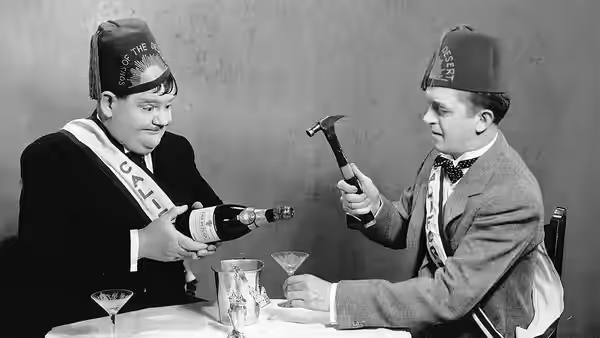
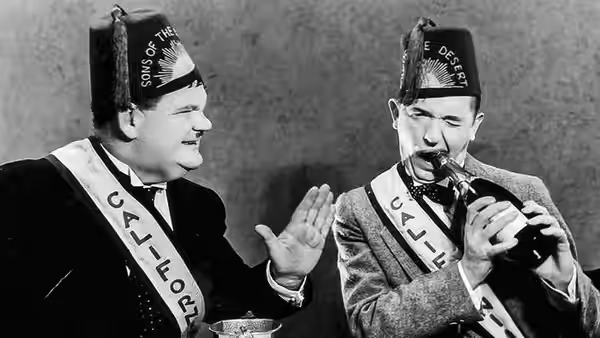
William A. Seiter’s Sons of the Desert is a fine, tightly controlled farce whose husbands make a formidable case against leaving them to their own devices. Stan Laurel and Oliver Hardy find the childishness beneath the men’s claims to dignity without making the pair unbearable. At 65 minutes, there is little opportunity for the joke to wear out its welcome. We do not need a complicated story when these two can make an ordinary embarrassment seem worth such a struggle.
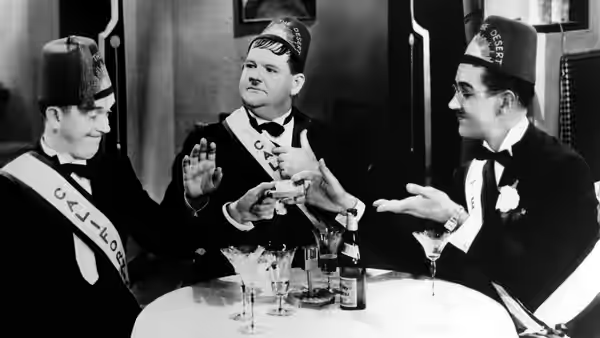
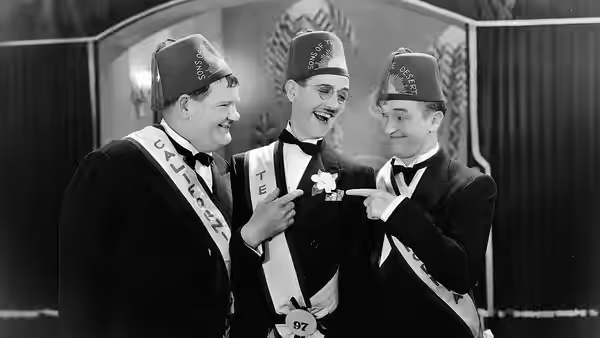
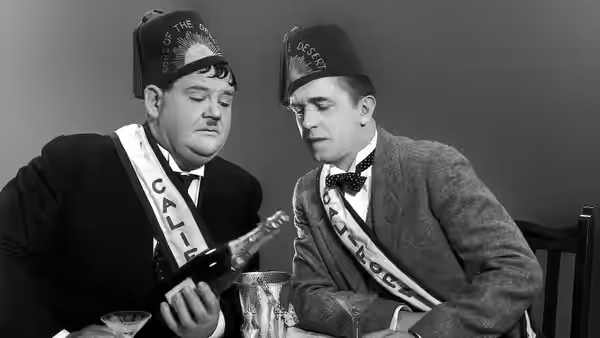
Laurel makes Stan’s uncertainty active: there is pleasure in watching him struggle to follow a man whose confidence is so clearly misplaced. Hardy gives Ollie’s pomposity a human cost, because being made ridiculous appears to hurt him almost as much as being thwarted. We laughed at the lodge’s self-important male antics, and Hardy’s efforts to retain his dignity were what caught us. The joke depends on how seriously he takes himself, and Hardy is wonderfully careful about that seriousness.
Mae Busch is an excellent Mrs. Lottie Hardy, forceful enough to make Ollie’s authority look provisional from the outset. She gives the exasperated-wife part more comic weight than its description suggests, because we can enjoy her impatience as well as his discomfort. Dorothy Christy’s Mrs. Betty Laurel is also restricted by having to represent the domestic objections to the men’s pleasures. The writing could have given both wives more to enjoy for themselves, rather than making their opposition so much of the joke.
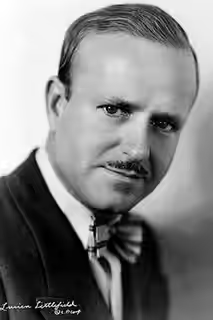
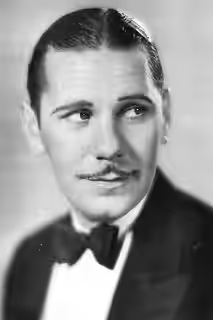
Charley Chase, as Charley, is welcome company amid the lodge’s foolishness, giving it a comic life beyond the leading pair. The story is slight, and we would not pretend its domestic troubles open out into anything much larger. What Seiter gets right is the accumulation of embarrassment: the comedy keeps developing instead of merely restarting after each laugh. That makes the narrowness of the premise less troublesome than it might have been, although anyone hoping for a broader view of married life will be disappointed.
Kenneth Peach’s cinematography lets us read the performers clearly; Hardy’s injured self-respect and Laurel’s uncertainty are the things worth looking at. Bert Jordan’s editing gives their reactions enough time to register while keeping the larger comedy moving. The pauses do not feel like delays, because the actors make the waiting funny. Marvin Hatley and Leroy Shield are among those credited for music, and the accompaniment is agreeable without becoming the main attraction. The timing is what holds our attention, particularly the unequal speed at which the two men understand their predicament.
Farce can become tiresome when the only invitation is to despise the people caught in it. Here we can see that the men deserve their difficulties and still hope they will escape some of the humiliation. There is affection in the attention paid to their wounded pride, even when their behaviour gives them little claim on our sympathy. Choose it for an evening when watching two grown men make fools of themselves sounds like a sensible use of an hour.