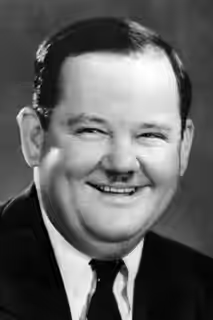
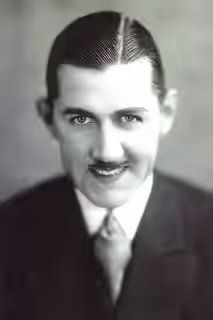
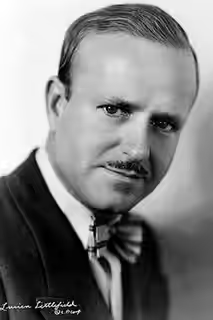
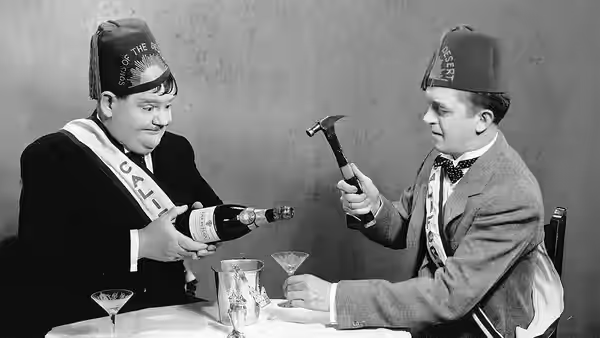
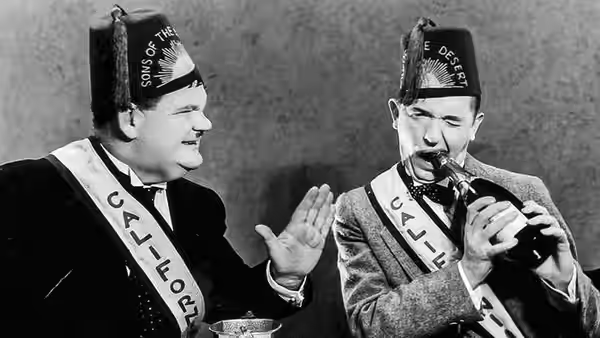
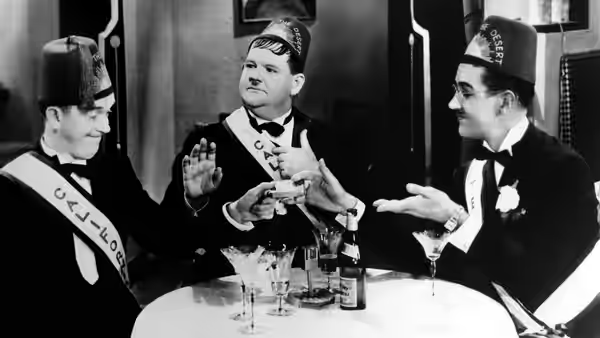
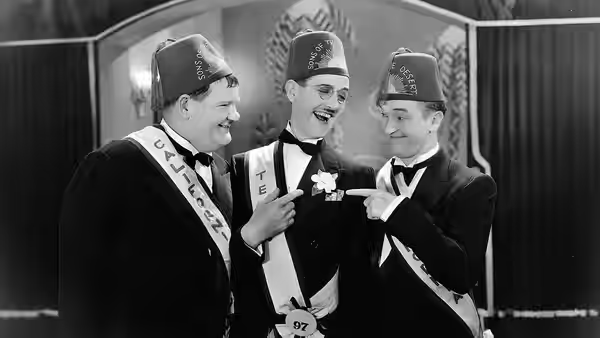
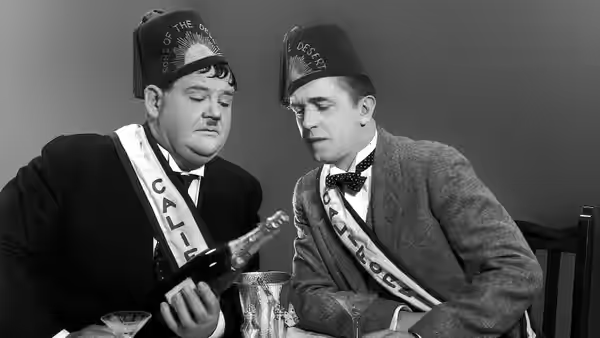
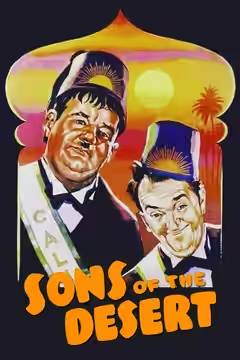
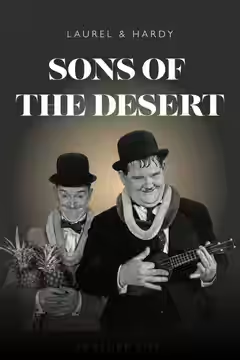
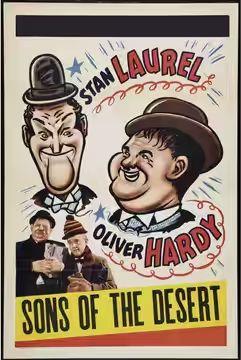
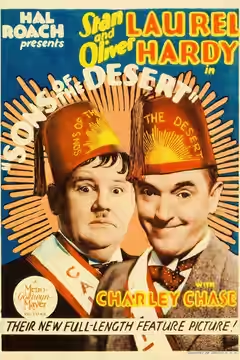
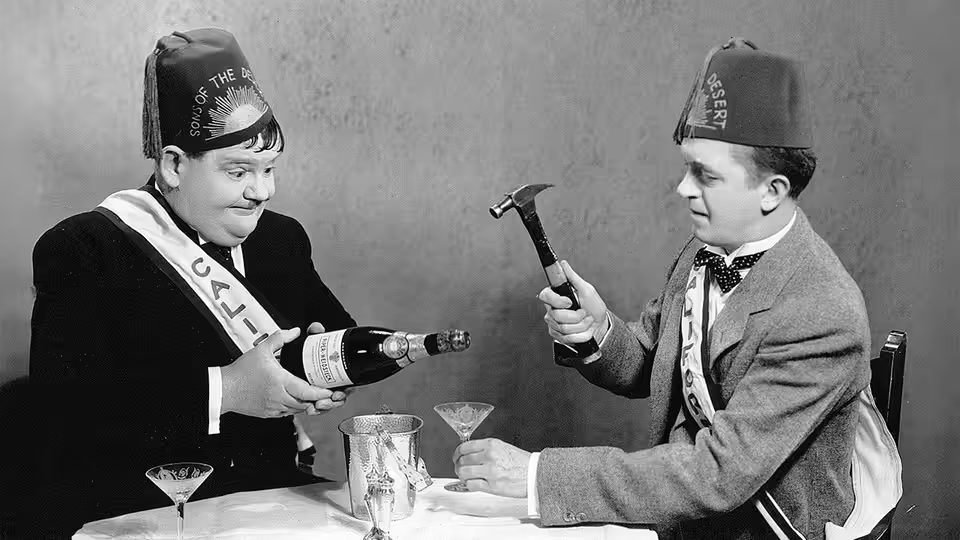
Stan (Stan Laurel) and Ollie (Oliver Hardy) sit at a table in Sons of the Desert caps and sashes
Film review

Sons of the Desert

1933 · Directed by William A. Seiter · 1h 05m

In a sentenceA men’s lodge provides everything except adult supervision

Stanley ‘Stan’ Laurel (Stan Laurel) and Oliver ‘Ollie’ Hardy (Oliver Hardy) belong to a men-only lodge and want to enjoy its fellowship without trouble at home. Ollie has Mrs. Lottie Hardy (Mae Busch) to reckon with; Stan is married to Mrs. Betty Laurel (Dorothy Christy). The friends take their standing among the other men seriously, but their wives have little patience with their behaviour. Between the lodge and their marriages, Stan and Ollie struggle to get their own way while preserving their dignity.

Fi1m review

Stan Laurel and Oliver Hardy turn wounded dignity into a tightly timed farce, with Mae Busch giving them formidable opposition. The view of marriage is narrow, but the affection for its foolish husbands is hard to resist.

William A. Seiter’s Sons of the Desert is a fine, tightly controlled farce whose husbands make a formidable case against leaving them to their own devices. Stan Laurel and Oliver Hardy find the childishness beneath the men’s claims to dignity without making the pair unbearable. At 65 minutes, there is little opportunity for the joke to wear out its welcome. We do not need a complicated story when these two can make an ordinary embarrassment seem worth such a struggle.

Laurel makes Stan’s uncertainty active: there is pleasure in watching him struggle to follow a man whose confidence is so clearly misplaced. Hardy gives Ollie’s pomposity a human cost, because being made ridiculous appears to hurt him almost as much as being thwarted. We laughed at the lodge’s self-important male antics, and Hardy’s efforts to retain his dignity were what caught us. The joke depends on how seriously he takes himself, and Hardy is wonderfully careful about that seriousness.

Mae Busch is an excellent Mrs. Lottie Hardy, forceful enough to make Ollie’s authority look provisional from the outset. She gives the exasperated-wife part more comic weight than its description suggests, because we can enjoy her impatience as well as his discomfort. Dorothy Christy’s Mrs. Betty Laurel is also restricted by having to represent the domestic objections to the men’s pleasures. The writing could have given both wives more to enjoy for themselves, rather than making their opposition so much of the joke.

Charley Chase, as Charley, is welcome company amid the lodge’s foolishness, giving it a comic life beyond the leading pair. The story is slight, and we would not pretend its domestic troubles open out into anything much larger. What Seiter gets right is the accumulation of embarrassment: the comedy keeps developing instead of merely restarting after each laugh. That makes the narrowness of the premise less troublesome than it might have been, although anyone hoping for a broader view of married life will be disappointed.

Kenneth Peach’s cinematography lets us read the performers clearly; Hardy’s injured self-respect and Laurel’s uncertainty are the things worth looking at. Bert Jordan’s editing gives their reactions enough time to register while keeping the larger comedy moving. The pauses do not feel like delays, because the actors make the waiting funny. Marvin Hatley and Leroy Shield are among those credited for music, and the accompaniment is agreeable without becoming the main attraction. The timing is what holds our attention, particularly the unequal speed at which the two men understand their predicament.

Farce can become tiresome when the only invitation is to despise the people caught in it. Here we can see that the men deserve their difficulties and still hope they will escape some of the humiliation. There is affection in the attention paid to their wounded pride, even when their behaviour gives them little claim on our sympathy. Choose it for an evening when watching two grown men make fools of themselves sounds like a sensible use of an hour.

Critical consensus AI synthesised

80
Positive
4
Mixed
0
Negative
1
Radio Times
★★★★★ · Tom Hutchinson
100

Hutchinson calls it probably the finest and fastest Laurel and Hardy feature. He particularly praises the lodge’s ridiculous men-only antics and Charley Chase’s performance.

Read the full review →
Empire
1 January 2000 · David Parkinson
90*

Parkinson praises the film as one of Laurel and Hardy’s tightest pictures, with meticulous plotting and assured pacing. He singles out Mae Busch’s scene-stealing performance as Ollie’s firebrand wife.

Read the full review →
Time Out
· GA
90*

The critic regards it as one of Laurel and Hardy’s finest features. They single out its typical plot and characterisation, with the pair as henpecked husbands.

Read the full review →
The Guardian
26 August 1999 · Derek Malcolm
80*

Malcolm gives the film an enthusiastic verdict, calling it the best of Laurel and Hardy’s features. He particularly praises its tightly controlled comedy and the lovable characters’ struggle to maintain their dignity.

Read the full review →
Variety
31 December 1933 · Variety Staff
40*

The review finds the feature-length story thin, though it says the premise provides a peg for comic buildup. It singles out the belly laughs and Laurel’s truth-telling breakdown as highlights.

Read the full review →

Straight answers AI written, from our review

Is Sons of the Desert worth watching?
Sons of the Desert is worth watching for its tightly timed farce and Laurel and Hardy’s wounded dignity; we score it 85 out of 100. Its 65 minutes suit an evening of affectionate foolishness, though the slight story and narrow view of marriage leave the wives with less to do than the husbands.
How long is Sons of the Desert, and what is it rated?
Sons of the Desert runs 1h 05m. It is a comedy film.
Where can I watch Sons of the Desert in Saudi Arabia?
Sons of the Desert is not on any streaming or rental service in Saudi Arabia at the moment. It is available in 4 other countries; change your country at the top of the page to see where. Availability is checked daily.

Cast

If you liked this, try…

  1. The Music Box (1932) · not on Fi1m yetThe same partnership, with a piano offering unusually determined resistance.

  2. The Ladykillers (1955) · not on Fi1m yetMore men convinced of their cleverness, and another woman who has reason to doubt them.

  3. Good Morning (1959) · not on Fi1m yetDomestic stubbornness and small social embarrassments, observed with patience and affection.

  4. The Firemen's Ball (1967) · not on Fi1m yetAnother gathering of self-important men discovers how quickly ceremony becomes embarrassment.

  5. The Dinner Game (1998) · not on Fi1m yetA smug host discovers that humiliating other people requires rather better planning.