Chevy Chase and Dan Aykroyd find a few laughs in hurried spy training, but John Landis lets the adventure outgrow the jokes. There is some pleasure in their company, though the thin writing makes 102 minutes feel generous.
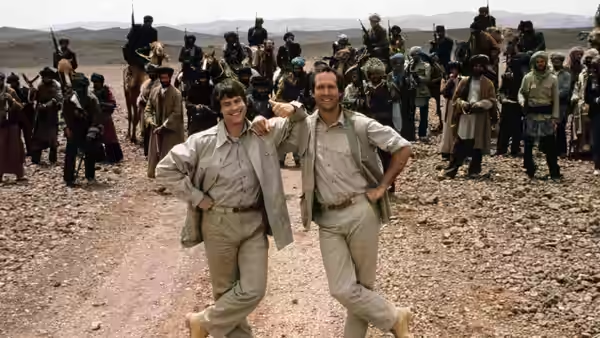
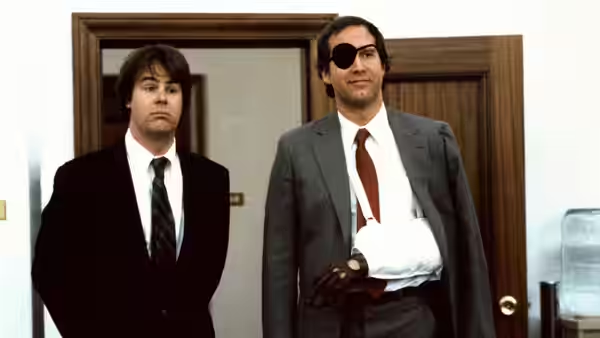
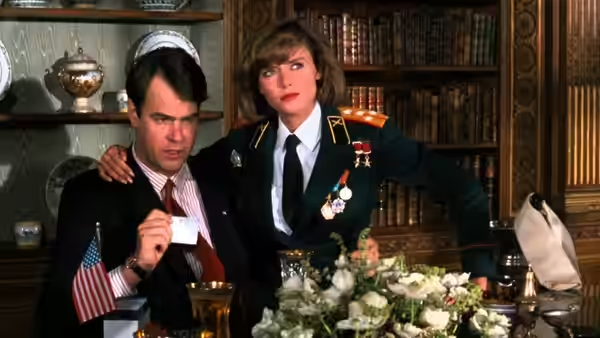
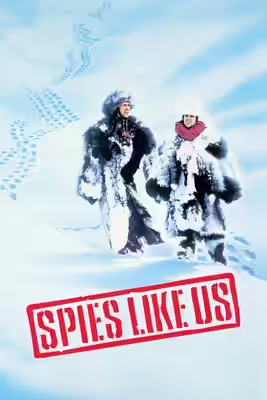
Spies Like Us has enough amusement for a few sketches and too little for a 102-minute adventure. John Landis puts Chevy Chase and Dan Aykroyd through an espionage spoof whose hurried training promises a comedy about ill-equipped recruits. For a while, that is a useful starting point: give these two a task and let their efforts to complete it provide the joke. The film becomes less funny as it acquires more business to attend to.
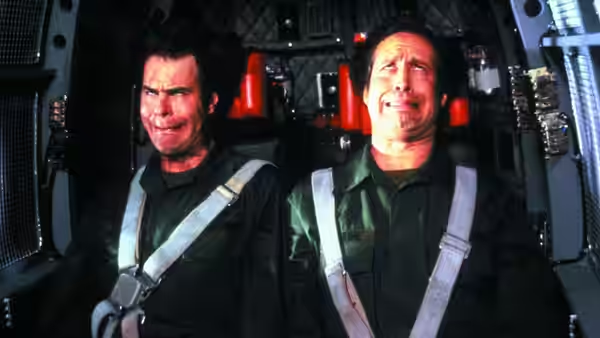
The pairing does supply some pleasure. Chevy Chase is funniest when his confidence seems wholly unrelated to his abilities, while Dan Aykroyd gives the muddle a more industrious quality. Frank Oz’s Test Monitor suits a comedy in which being assessed is already a threat. We laughed during the rushed training because the distance between what the job requires and what these candidates can manage is immediately clear. These passages give the actors a specific comic task, and the film benefits from keeping things simple.
The screenplay by Dan Aykroyd, Lowell Ganz and Babaloo Mandel has much less to offer once that initial situation has been established. Espionage gives a comedy plenty to work with: secrecy, officiousness, people treating bad decisions as matters of national importance. Here, the nuclear danger increases the scale without giving the humour much more bite. We do not need a policy paper from a spy spoof, but we do need the next joke to do more than remind us that the heroes are unsuitable.
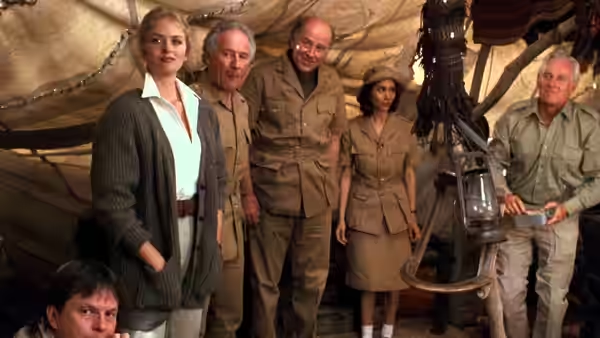
Robert Paynter’s cinematography serves the adventure capably, although the comedy rarely gains much from the framing. Production designers Terry Ackland-Snow and Peter Murton give the espionage setting enough credibility for the pair to look out of place. Yet the film seldom finds much comic use for those surroundings beyond putting its leads into them. Too often the actors have to carry a scene through their manner alone, with little extra help from the staging or the writing.
Malcolm Campbell’s editing does not solve the shortage of material, and the gaps between worthwhile jokes make those 102 minutes feel longer than they should. Elmer Bernstein’s music is more helpful, giving the spy business a seriousness that makes the foolishness easier to enjoy. That helps without repairing the uneven pace. A brisk adventure comedy needs to carry us through its lesser jokes; here there is too much time to notice which ones have failed.
Bob Hope’s brief appearance is a pleasant distraction, but it cannot supply the comic invention missing elsewhere. The celebrity cameos offer recognition when the film needs surprise, and the pleasure wears off quickly. This exposes a weakness in the direction: too much faith that putting familiar performers into a spy story will be entertaining in itself. The training-school material works because it gives the performers something to play against, and the broader adventure offers fewer such opportunities.
We can see the appeal of spending time with these leads, and the training-school comedy gives that affection something to rest on. It is a small return for a film that asks us to follow a whole adventure. Choose it only if the pairing matters more than a steady supply of laughs.