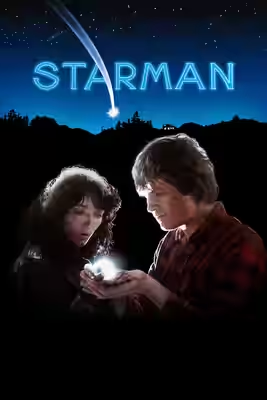
Jeff Bridges makes John Carpenter’s gentle alien romance worth forgiving for its predictable plot. Karen Allen gives the sentiment weight, and the film’s patience with its visitor keeps the familiar storytelling from becoming a serious obstacle.
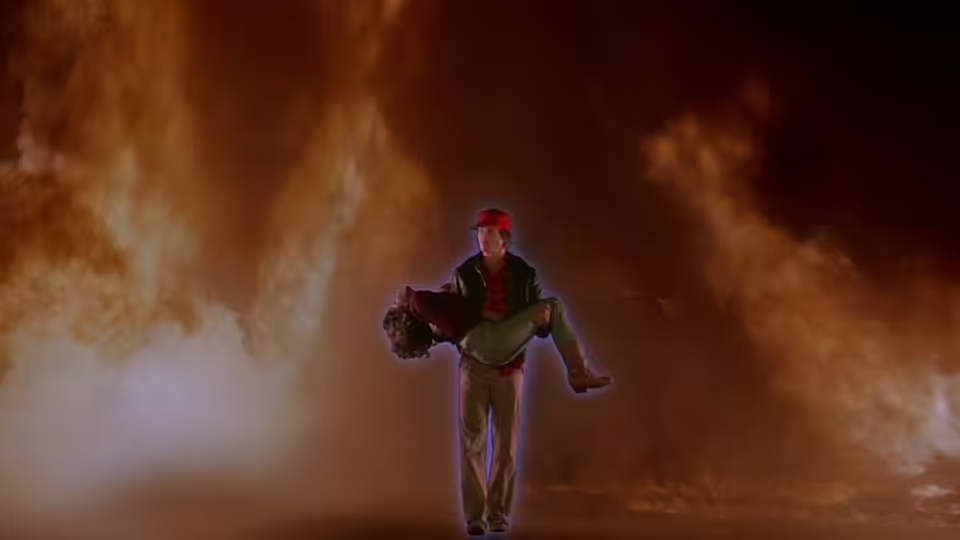
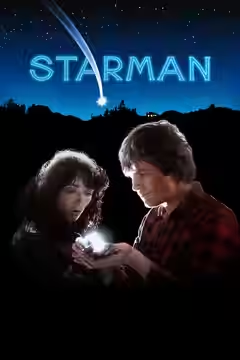
Starman is a gentle, funny science-fiction romance whose predictable story is worth forgiving for Jeff Bridges. John Carpenter gives the alien visitor’s attempts to understand human life the attention they deserve. The premise offers few surprises, and he does not waste much effort pretending otherwise. The film asks us to care about someone who does not know how to be one of us, then gives its leading actor enough freedom to make that interesting.
Bridges makes the alien’s curiosity the reason to keep watching. His childlike performance could have become a collection of endearing habits, but there is enough seriousness in the learning to keep the comedy from taking over. We were moved by his efforts to understand human behaviour, because Bridges makes the visitor’s trust feel easily hurt. The performance allows affection to develop without insisting that everything an innocent creature does must be charming.
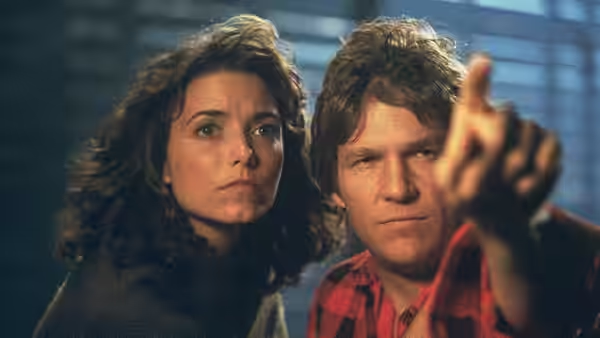
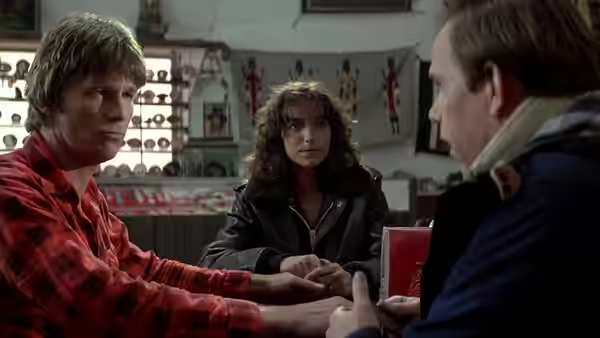
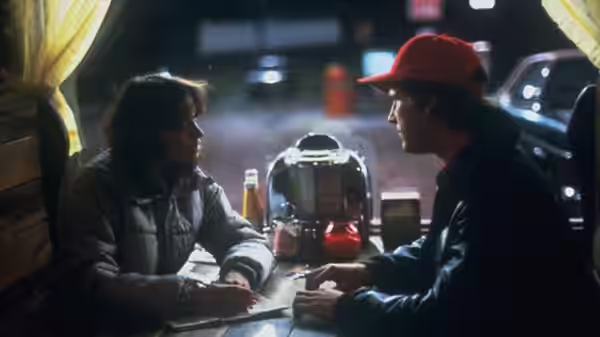
Karen Allen, as Jenny Hayden, is essential to making the romance work. She gives the feeling enough weight that we can believe in it even when the story asks for considerable indulgence. A less convincing partner would leave Bridges performing an engaging solo act, with everyone else waiting for his next discovery. Allen gives us a reason to care about the relationship, and Carpenter is wise to let the actors carry so much of it.
Donald M. Morgan’s cinematography helps us stay attentive to the performers, which is the right priority for this kind of science fiction. Daniel A. Lomino’s production design also supports the fantasy without competing too fiercely for our attention. Neither contribution is the main attraction, and that suits a romance this dependent on its cast. The film is most persuasive when we are watching the visitor learn, with nothing else demanding to be admired.
Marion Rothman’s editing allows the gentler comedy to register, though the pace cannot always conceal how familiar the plotting is. Jack Nitzsche’s music is effective at encouraging tenderness, less necessary when the performances have already persuaded us. There are stretches where the film gives its feeling more assistance than it needs. Still, Carpenter’s handling of the romance is sufficiently restrained that the sentiment rarely becomes an instruction to be moved.
Raynold Gideon and Bruce A. Evans give the actors a romance worth playing, but too little else to surprise us. Too much is easy to anticipate, and some of the characterisation feels like the minimum required to get the story moving. A science-fiction romance need not keep producing surprises, but it does need difficulties that feel particular to these people. Here, Bridges often supplies the individuality that the writing has left out.
Carpenter understands how much interest there is in watching the visitor learn about people. The film’s kindness matters, especially when Bridges makes understanding another person look like something requiring effort. At 115 minutes, it takes a little longer than its simple story needs. Choose it for the company of its two leads; anyone hoping to be surprised should make other arrangements.