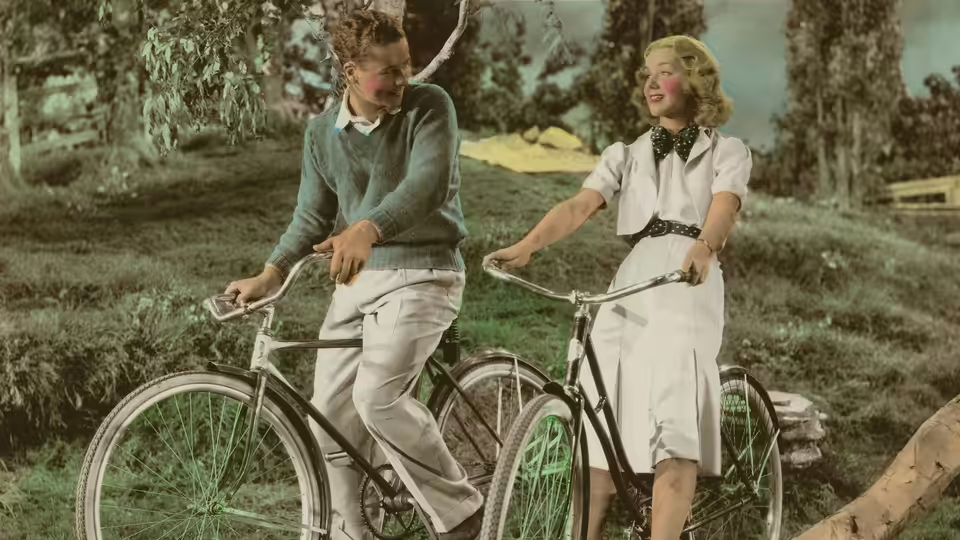
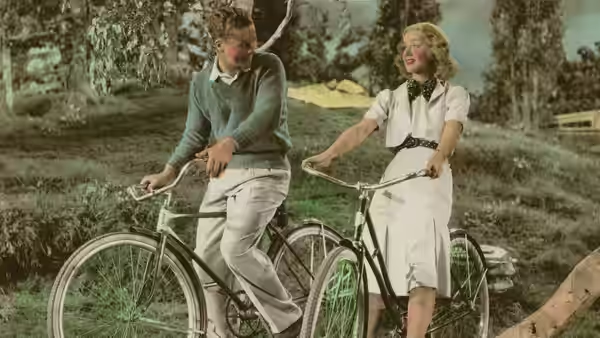
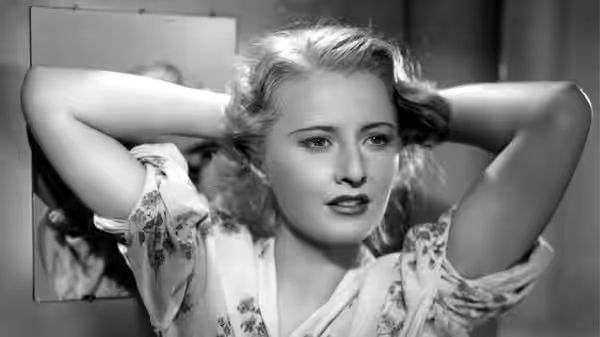
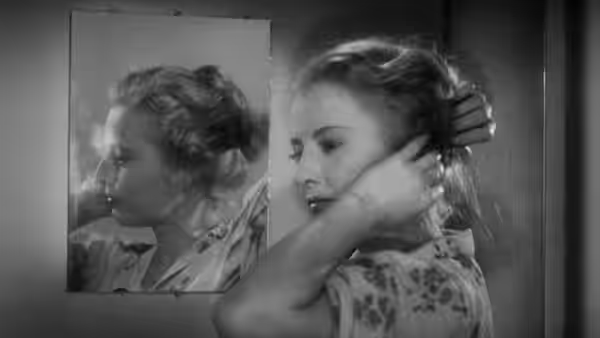
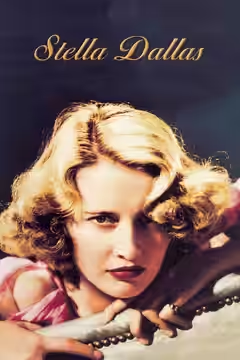
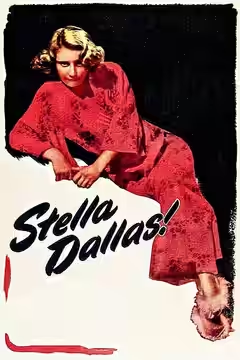
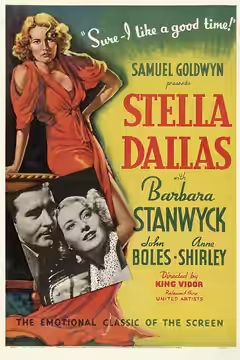
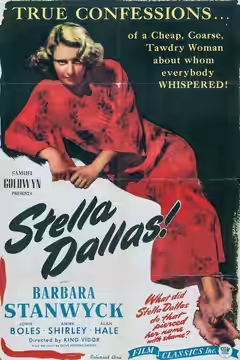
Barbara Stanwyck and Anne Shirley make Stella Dallas worth surrendering to. King Vidor’s sentimental drama sometimes presses too hard, particularly through its costumes, but the performances give its emotional demands weight.
Stella Dallas is a persuasive argument for giving a sentimental film a fair hearing. King Vidor wants to move us, and there is nothing coy about the invitation. We recommend it for Barbara Stanwyck and Anne Shirley, whose performances make that invitation difficult to refuse. The reservation is equally plain: the film sometimes insists on an emotion that its actors have already made clear, and the insistence can interrupt our involvement.
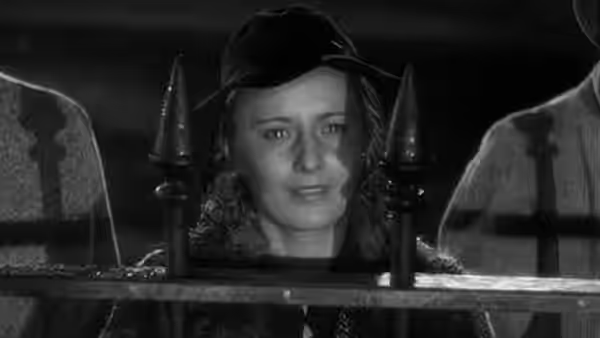
Stanwyck plays Stella Dallas with enough conviction to make the prospect of a tear-jerker considerably less alarming. The pleasure is in taking the character seriously rather than waiting for the next opportunity to feel sorry for her. We were moved by Stanwyck and Shirley together; their performances give the sentiment a human credibility that the more emphatic presentation occasionally threatens. That distinction matters, because a film asking for this much sympathy needs people worth attending to between its emotional appeals.
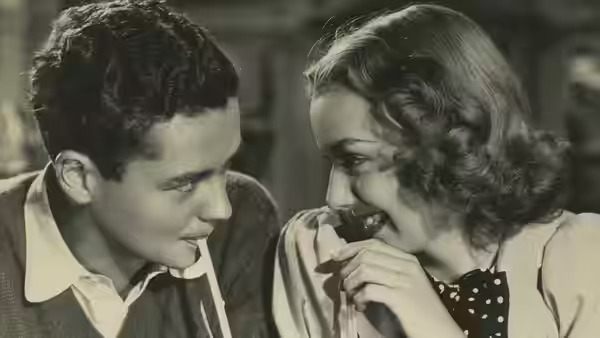
Shirley, as Laurel “Lollie” Dallas, deserves more than a supporting mention in the praise for Stanwyck. Her contribution is essential to the film’s ability to sustain feeling without making every moment seem like preparation for tears. There is a temptation with a performance as celebrated as Stanwyck’s to describe everyone else as useful assistance. Here that would badly undervalue Shirley, whose work gives us another person to care about, with an importance of her own.
The screenplay by Victor Heerman and Sarah Y. Mason, adapted from Olive Higgins Prouty’s novel, accepts sentimentality without embarrassment. That is largely to its credit: the film would be tiresome if it kept apologising for wanting an emotional response. Yet accepting the approach does not mean accepting every application of pressure. The strongest reason to stay with it is the acting, and there are stretches when we wish the presentation would place a little more confidence in that.
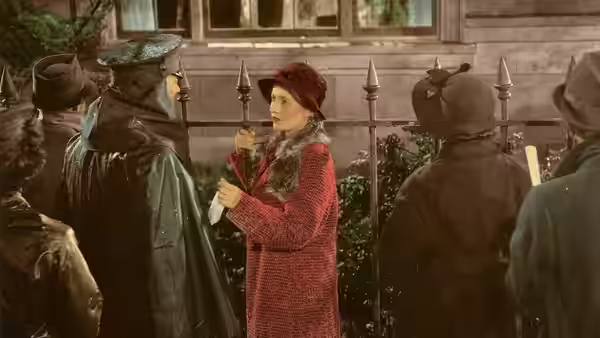
Omar Kiam’s costume design supplies the clearest reservation. The excess can make Stella seem too heavily labelled, as though the clothes must settle our judgement before Stanwyck has had her say. We found that distracting because the performance needs no such assistance. Costumes have a legitimate dramatic job, but there is a point at which making a character immediately readable becomes a restriction on the actor wearing them.
Rudolph Maté is the cinematographer, Sherman Todd the editor and Alfred Newman the composer. In judging their contributions here, the useful question is how much room the film gives the performances, rather than how much attention the photography, cutting or music can attract individually. Our reservation about the film’s emphasis should not obscure how consistently it holds attention. Nor should that effectiveness excuse the moments when the emotional prompting feels unnecessary: Stanwyck and Shirley have already earned our interest.
Within the tear-jerker’s familiar demands, Vidor achieves something substantial by allowing these performances such importance. The sentiment will remain a barrier for some, and affection for Stanwyck will not make the costumes less insistent. But the film earns more of its tears than it demands on credit. Give it an evening when being moved sounds like a reasonable use of the time, and do not mistake a willingness to cry for a failure of judgement.