Makoto Shinkai sends a schoolgirl and an enchanted chair across Japan to shut the doors that let earthquakes in. The chair is funny, the skies are as good as ever, and the film is sincere about a real disaster; the romance underneath is thin.
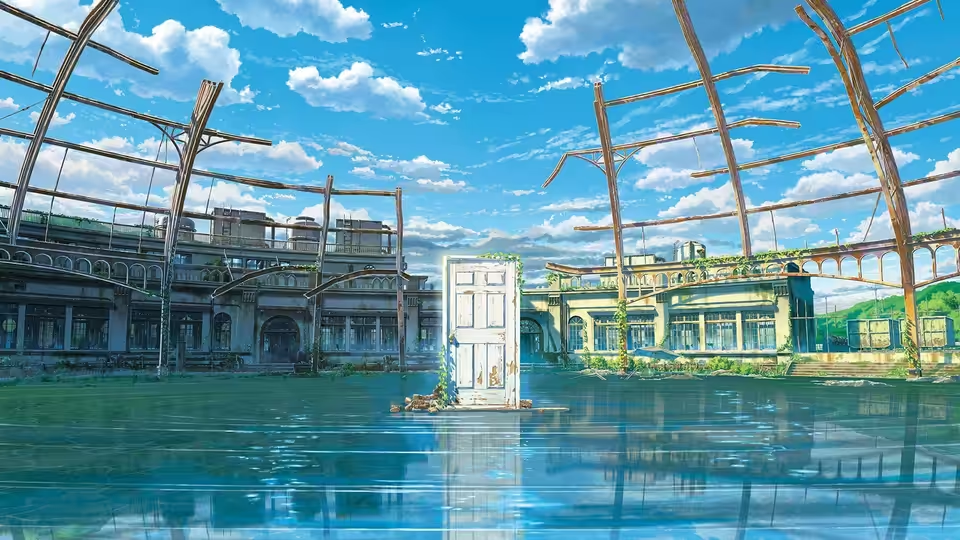
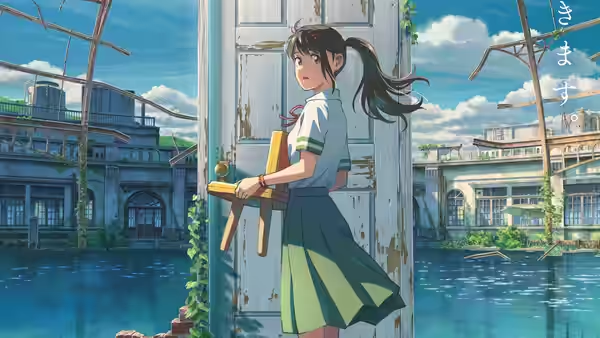
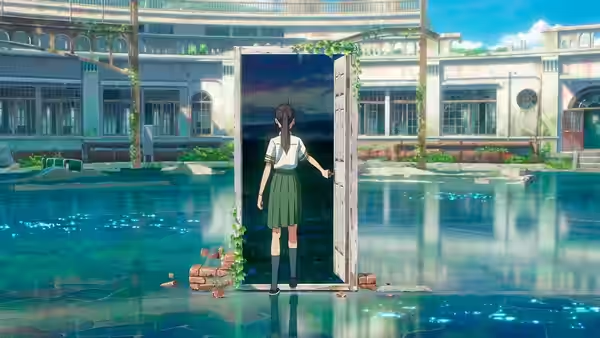
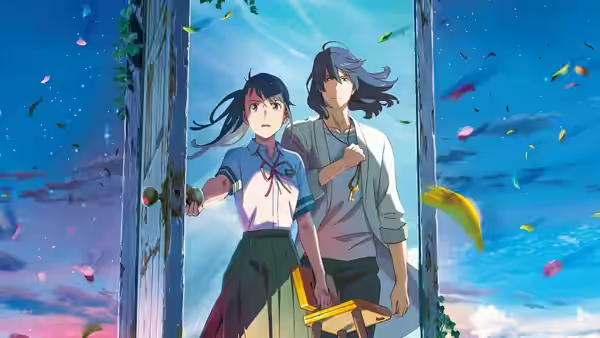
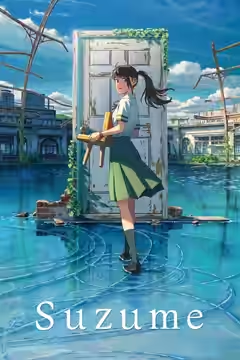
Suzume Iwato (Nanoka Hara) is a schoolgirl who lives with her aunt Tamaki (Eri Fukatsu) in a port town in southern Japan. On her way to school she passes a young man, Souta Munakata (Hokuto Matsumura), who asks the way to some ruins. She follows him to a spa resort that closed years ago and finds, standing in a courtyard of rainwater, a door with nothing behind it. She opens it. Makoto Shinkai, who wrote, directed and edited the film, spends the next two hours on what comes through, and on the small stone cat Suzume pulls from the mud, which comes to life and turns Souta into a three-legged child’s chair. It is a handsome, sincere and crowded film, and we recommend it, with one reservation about what it asks its heroine to feel.
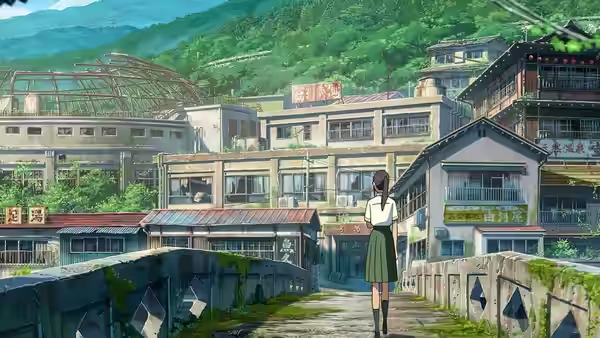
The doors stand in places people have abandoned: the spa, a school, a hillside fairground. Through them comes what the film calls a worm, a red mass that rises above a town, and if it falls there is an earthquake. Only Suzume and Souta can see it. Everyone else’s phone goes off. Shinkai uses the shrill alarm that Japanese phones sound before a quake, and we flinched every time, as no monster has made us flinch in years, because it is a real noise attached to real memories. The film does not hide which. The earthquake and tsunami of 11 March 2011 sit under the whole picture, and when the worm hangs over a city at dusk the sky turns the colour of a bruise.
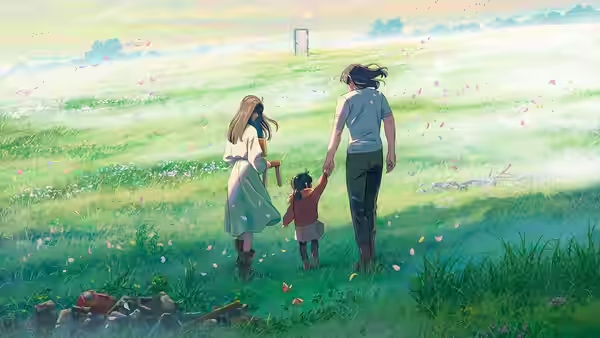
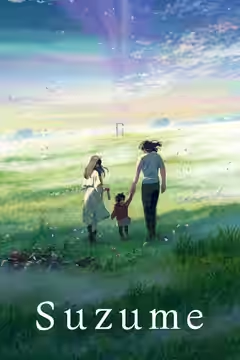
Ryosuke Tsuda’s photography is the chief pleasure. Sunlight comes through leaves in hard white flares, rain shines on tarmac, a night ferry crosses black water under a sky with too many stars. The meadow beyond the door, lit by every sunrise at once, is among the best images Shinkai has made. He cuts his own films, and he cuts fast; the journey covers half of Japan in what feels like a long weekend, and a scene has barely settled before he is on to the next. Yojiro Noda, who scored Your Name, and Kazuma Jinnouchi supply piano, strings and a choir that swells whenever a door is about to close, which is often.
The chair is a triumph we did not expect. Souta, now a wooden seat missing a leg, clatters down staircases, sprints along a quayside, throws himself from a moving car and is picked up by a toddler, while Matsumura’s grave voice comes from somewhere inside the varnish. We laughed a great deal and were not ashamed of it. The cat, Daijin (Ann Yamane), is nearly as good: a smiling white creature with a small child’s voice that tells Suzume it likes her and then does something terrible. Shinkai never tells us what it wants, and the film is better for that.
The middle is a chase after the cat, and the warmest scenes are the stops. Chika (Kotone Hanase), a schoolgirl whose family grows oranges, takes Suzume home for the night. Rumi (Sairi Ito), who runs a bar and has twins, puts her to work behind the counter. Tomoya Serizawa (Ryunosuke Kamiki), a friend of Souta’s with an open-top car, drives the last leg. These people are kind to a stranger without making a speech about it, and the emptying towns they live near, weeds in the playgrounds and rust on the Ferris wheels, are the film’s most honest subject. Fukatsu’s Tamaki gets a scene late on, in a lay-by, that we will not describe; it is the truest acting in the film.
The reservation is the romance. Suzume decides she loves Souta after a few days in his company, most of them with him as furniture, and the last movement asks us to take that love as a matter of life and death. We did not believe it. Shinkai did this better in Your Name, where the lovers had a whole film to earn it. The mechanics do not help either: keystones, closers, a place called the Ever-After, all explained at least twice, and a climax that ties them off more tidily than the film’s own grief would allow. At 122 minutes it could lose ten from the middle.
Against Shinkai’s own work it is bigger and funnier than Weathering With You and less intimate than Your Name. Most critics have been a little warmer than us, chiefly for the pictures, which deserve it. See it on the largest screen you can, where the skies do their work. The alarm will follow you home regardless.