Jonathan Liebesman’s reboot gets the turtles themselves right and gives them one long, inventive slide down a mountain. Everything around them is exposition, noise and a plot nobody bothered to finish. Children of nine will manage; the rest of us checked our watches.
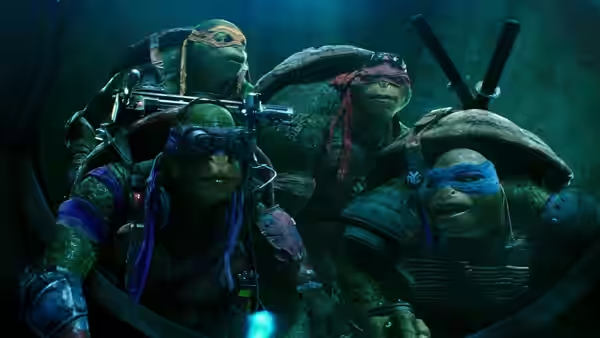
Jonathan Liebesman’s Teenage Mutant Ninja Turtles has one job, which is to make four computer-animated turtles into company worth keeping for 101 minutes, and for stretches it manages it. The turtles are the best thing in it. Almost everything they are asked to do, apart from one long slide down a mountain, is not. Josh Appelbaum, André Nemec and Evan Daugherty have written a story that is explained rather than told, and most of the explaining happens while the turtles wait in the next room.
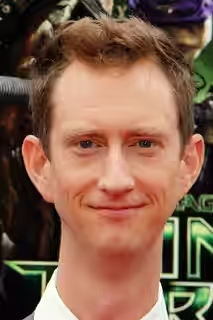
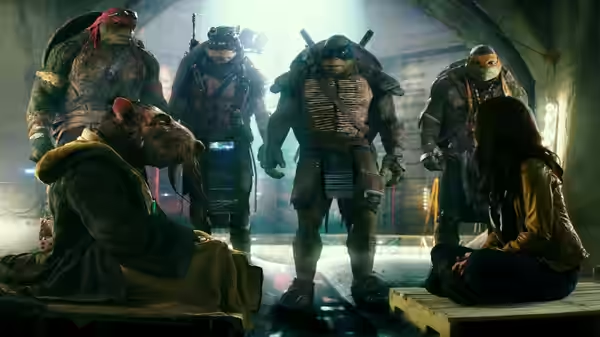
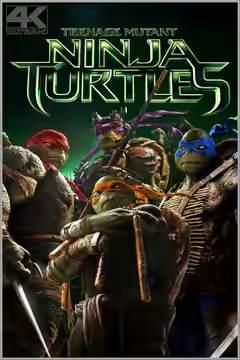
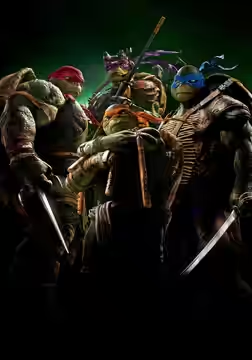
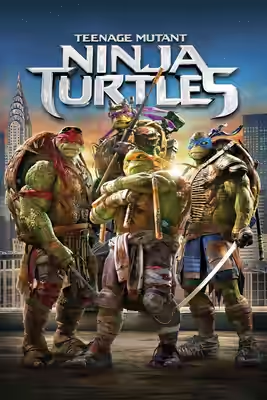
The motion-capture gives each brother a body of his own. Alan Ritchson’s Raphael walks like a nightclub doorman who has been asked to leave. Jeremy Howard’s Donatello hunches under taped glasses and a backpack of scavenged electronics. Noel Fisher plays Michelangelo as a boy who learned to talk from television and is pleased with the results. Pete Ploszek carries Leonardo’s body and Johnny Knoxville supplies the voice, and the join shows; the voice is older and flatter and seems to come from somewhere outside the sewer. The faces have noses and lips now, which the rubber suits of the 1990 film did not, and we stopped minding after twenty minutes.
The lift is where the film is happiest. Four turtles, one slow ride, nobody speaking, and Michelangelo starts tapping a beat on the wall until the others pick it up. It lasts about a minute. We laughed out loud, which we had not expected to, and the reason is simple: Glen Scantlebury and Joel Negron hold the shot and let the joke build instead of cutting away from it. Nothing else in the film trusts the turtles for that long.
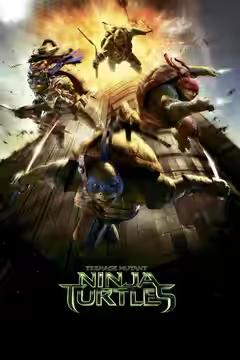
The mountain is the other reason to stay. The brothers, April and Vern go down a snow-covered road on shells, tyres and truck roofs, with the Foot Clan firing from alongside, and Lula Carvalho keeps the camera low and moving with them so we can tell who is sliding where and what will hit them next. It is the one sequence in which the shells are used for anything, and the one in which the action can be read. Brian Tyler’s score for it is drums and brass turned up loud, which here, and only here, matches what is happening.
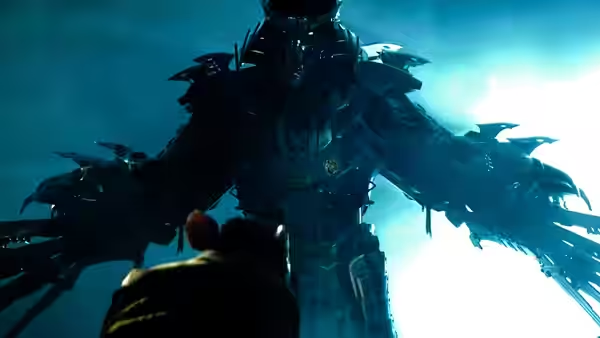
The rest is a briefing. The script has a laboratory, a fire and the contents of April’s father’s notebooks to account for, and it accounts for them by having people stand in rooms and say it, usually to April, who nods. William Fichtner is a dependable screen menace and is handed nothing but speeches. Tohoru Masamune’s Shredder is bolted into a mechanical suit bristling with so many blades that he is less a swordsman than a piece of farm machinery. Neil Spisak’s sewer lair, built from salvage, is the one set with any character; the rest could belong to any film of this kind. We were bored through the middle forty minutes and then cross about being bored, because the turtles were right there and nobody would let them do anything.
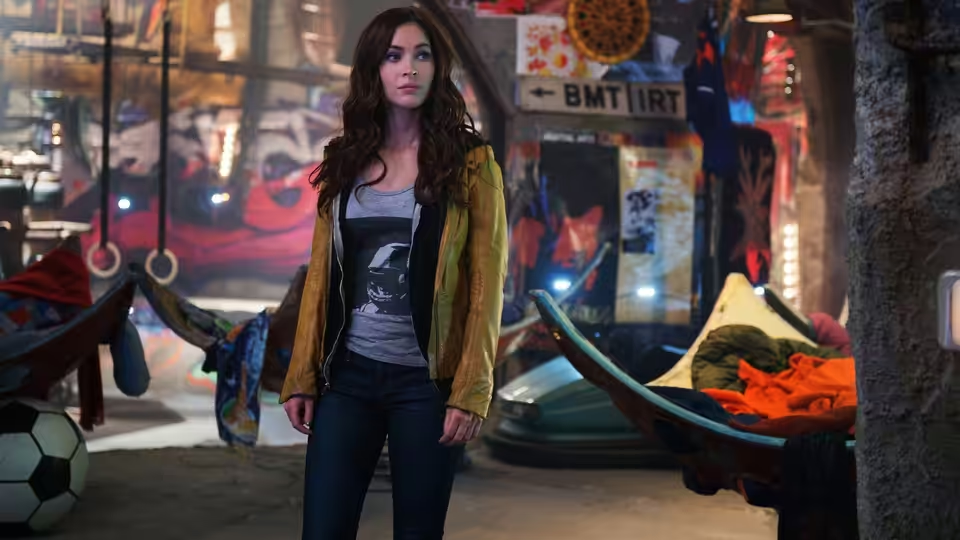
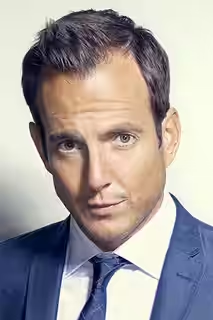
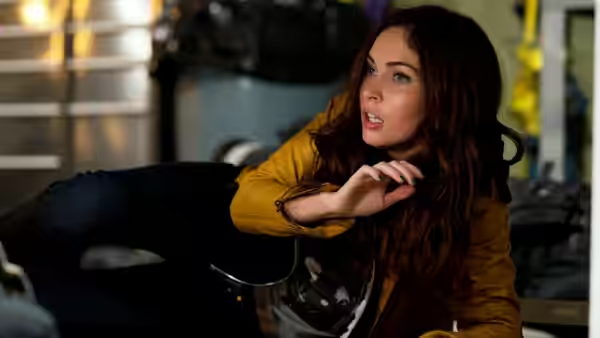
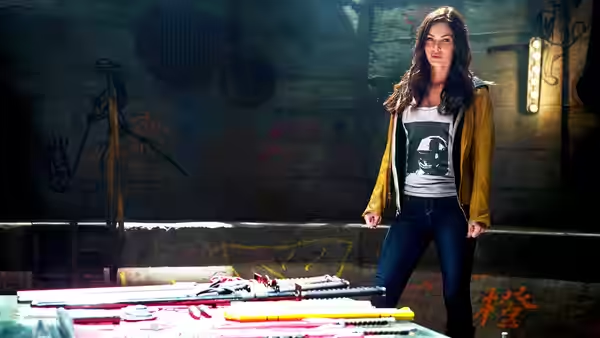
The humans are a problem the film made for itself. Megan Fox is asked to be our way in and given a character who runs towards things, writes them down and gets told off by her editor. She is not bad; she is unhelped. Will Arnett has three dry lines as Vern and makes each one count. Whoopi Goldberg gets one scene behind a desk. The best voice in the film is Tony Shalhoub’s, which gives Splinter a patience and a faint amusement the animated face cannot manage on its own, and the fight between Splinter and the Shredder is the only one in which we cared who was winning.
Set against the 1990 film and its rubber suits, this is slicker and emptier. That one was cheap and knew it and was about four brothers in a sewer. This one is produced by Michael Bay and looks it: the colour is orange and slate, the camera rarely sits still, and the city is somewhere to be knocked down rather than lived in. Liebesman has kept the turtles’ origin intact and lost the reason anyone was fond of them.
Most critics landed close to where we have, and the few who enjoyed it enjoyed the same two scenes we did. Children of nine or so will have a fine time with the lift and the mountain and will not mind the briefings. Adults could do worse than watch the chase and then go and put the kettle on.