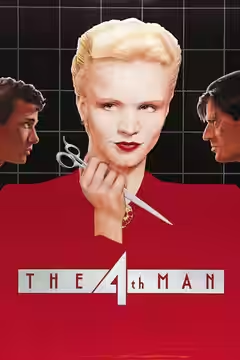
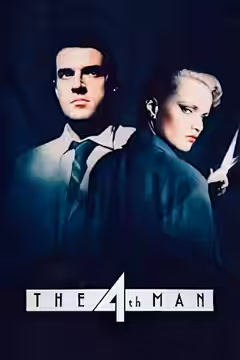
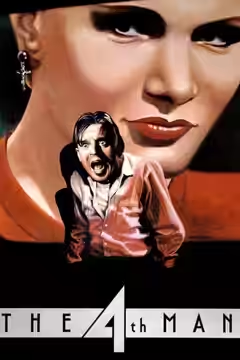
Paul Verhoeven’s Dutch thriller is lurid, funny and shot through with Catholic dread, with Renée Soutendijk calmly running rings around Jeroen Krabbé’s sweating novelist. It cares more about its imagery than its mystery, and the imagery is worth it.
Gerard Reve, the hero of The 4th Man, shares his name with the author of the novel it is taken from, and he is not a man you would lend money to. He drinks in the morning, he talks to a plaster Virgin, and he introduces himself to an audience of provincial book-lovers by explaining that he lies for a living. Jeroen Krabbé plays him as a sweating, self-pitying, rather funny wreck, and Paul Verhoeven builds around him a thriller in which every object is a portent and every portent may be the drink talking. It is lurid, it is knowing, and it is one of the most enjoyable films Verhoeven has made.
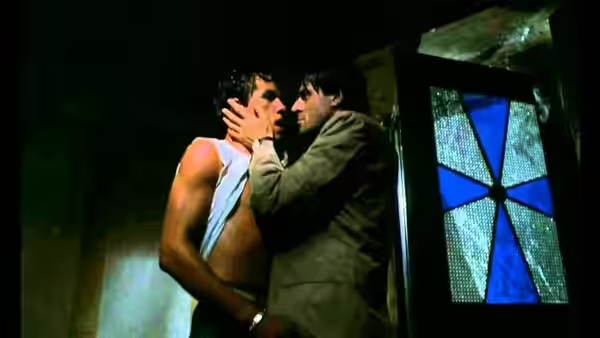
The plot, from Gerard Soeteman’s script, is a widow story. Christine Halslag (Renée Soutendijk) runs a beauty salon, has money, and has been married three times; each husband is dead. Gerard sleeps with her because she is there, and stays because her boyfriend Herman (Thom Hoffman) is the young man he saw on the station platform and cannot get out of his head. He then starts to see things. Verhoeven’s game is to keep us unsure whether Gerard is a drunk imagining a murderess or a prophet being warned, and he keeps it up for 98 minutes without tipping his hand.
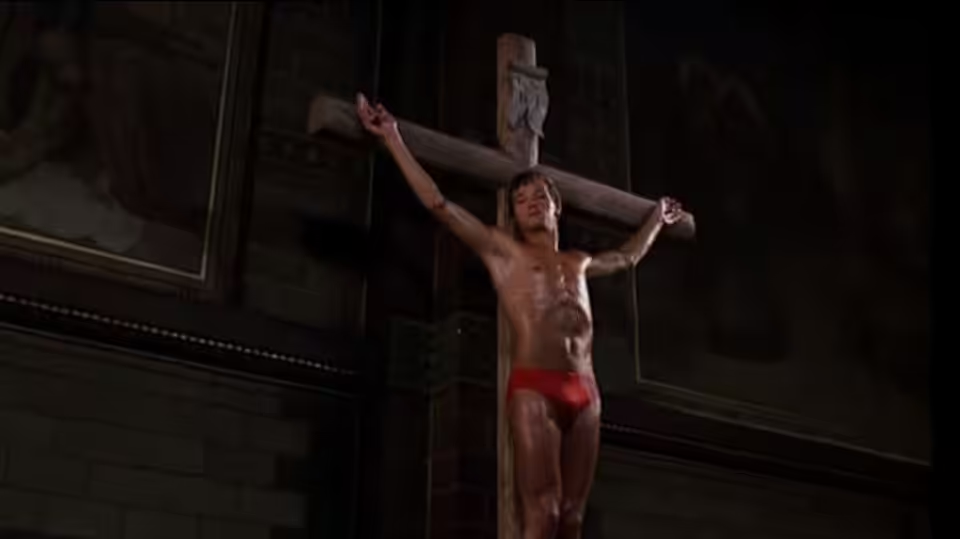
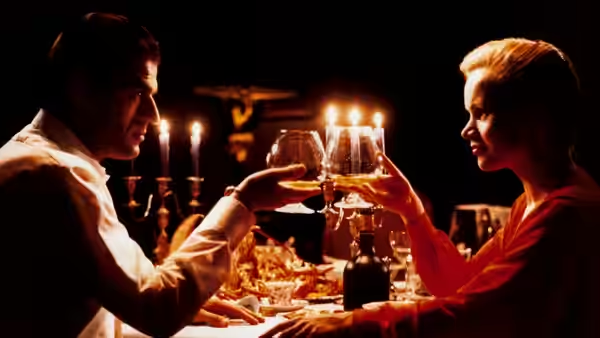
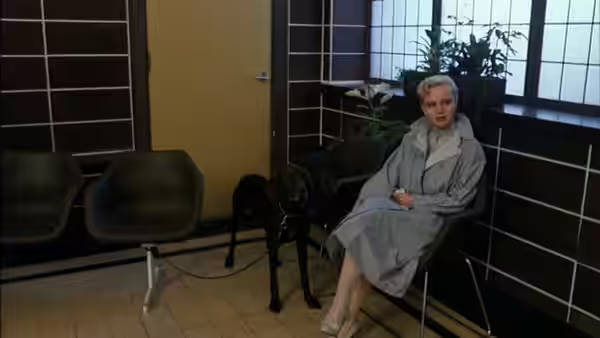
Soutendijk is the film’s still point. She plays Christine without a flicker of menace: pleasant, practical, faintly amused, a woman who films her husbands on holiday and keeps the reels in a cupboard. That is the joke and the threat at once. Krabbé does the opposite, all flop sweat and bad faith, and the pairing works because neither of them is trying to win the scene. Hoffman has less to do; Herman is a body the camera admires, and the script is honest enough to admit that this is exactly how Gerard sees him.
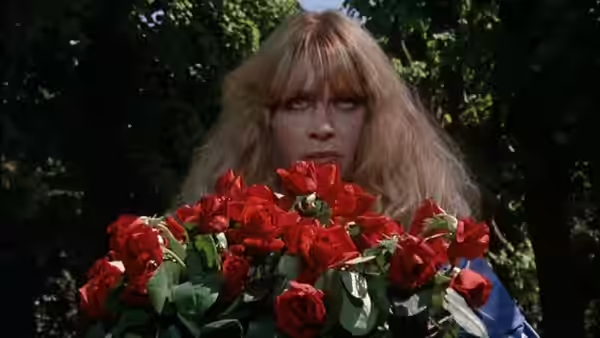
Jan de Bont shoots it in hard reds and cold blues and lets the colours do the warning: the salon sign glows red, the hotel corridor is red, and the church Gerard hides in is lit like a mortuary. The visions come without any change in the image, so a cemetery, a bunch of keys or a woman with scissors arrives with the same flat clarity as a cup of coffee, and Ine Schenkkan cuts back out of them a beat before you expect. Loek Dikker’s score is big, romantic, string-heavy stuff in the old Hollywood manner, and it plays everything straight; the images do the smirking. Elly Claus dresses Christine in whites and pale pinks, the colours of a first communion, and the film means that too.
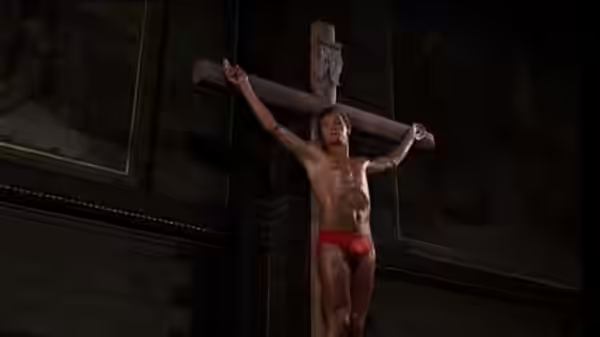
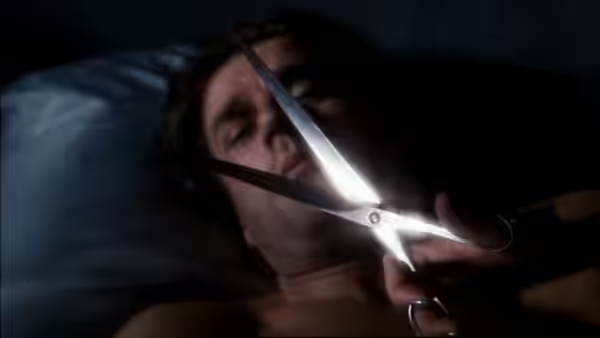
There is a dream, about halfway through, involving Christine, a pair of scissors and Gerard’s lower half, and we will confess it made us cross our legs. A second later it made us laugh, which is the effect Verhoeven is after from the first frame. A scene in a crypt, where Gerard reads three names off three urns, did something colder to us. We had been enjoying the symbols as symbols, and suddenly they had dates on them.
The mystery itself is thin. Once you have grasped that Christine’s husbands die, there is one question left, and Soeteman is not much interested in answering it; the second half is about Gerard’s fear rather than anything Christine does. Some of the symbolism is laid on with a trowel, and the Virgin Mary turns up so often she should have a credit. Verhoeven knows all this, and the knowingness is the point, but there are stretches where the film is winking so hard it cannot see. Most critics have forgiven the excess, and so, mostly, do we.
Against Verhoeven’s own work this is the bridge. The cool blonde who may or may not kill her men comes back, glossier and sillier, in Basic Instinct nine years later, and it is not hard to see why Hollywood called. The 4th Man is the better film, because it lets you laugh, and because its Catholicism is real rather than decorative.
Watch it late, with a drink you can put down when Gerard picks his up. The last twenty minutes take a turn we will not describe, except to say that the film declines to tell you what happened, and that for once we did not mind.