Paul Verhoeven’s erotic thriller is gripping, knowingly grubby and held together by Sharon Stone’s control. The plotting needs indulgence, and its treatment of bisexual women deserves more scrutiny than its appetite for provocation allows.
Basic Instinct is a good erotic thriller with enough confidence to get away with a fair amount of nonsense. Paul Verhoeven takes a murder investigation and makes the investigator’s attraction to danger the reason to keep watching. Joe Eszterhas’s screenplay supplies the provocation, but much of the pleasure comes from watching Michael Douglas and Sharon Stone make its implausibilities seem momentarily reasonable. The film remains gripping even when the investigation stops making much sense.
Stone gives Catherine Tramell the calm that everyone else seems to lack, and holds our attention when the screenplay starts losing its grip. Douglas plays Detective Nick Curran with enough force to make his poor judgement aggravating rather than merely foolish. Their attraction works because neither performance makes it comfortable. The difficulty is that Eszterhas needs Nick to be competent enough to follow, yet susceptible enough to keep this particular investigation going, and the writing does not always reconcile the two.
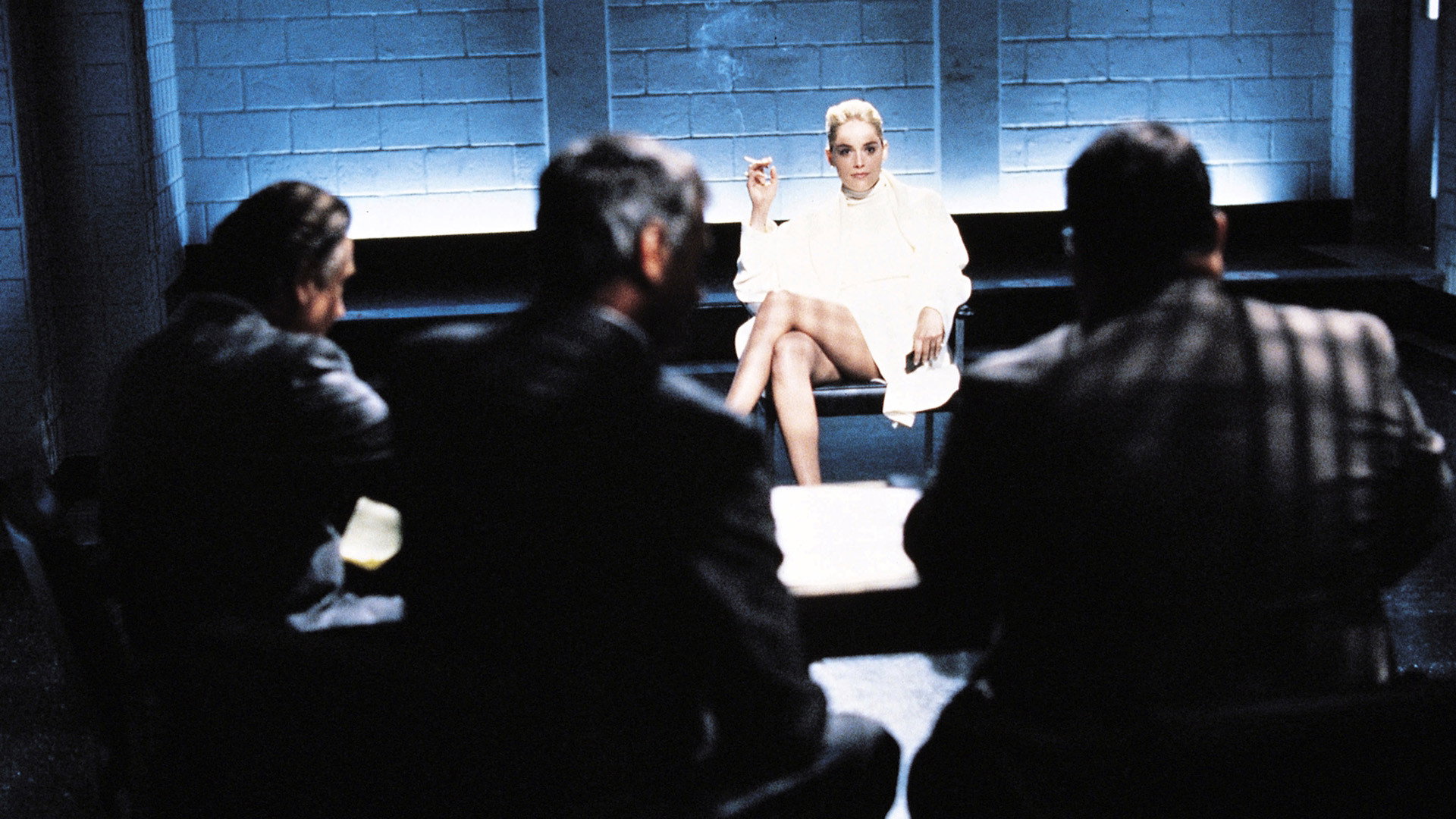
The interrogation is where Verhoeven’s handling of Stone pays off most clearly. We laughed at how little command the questioning gave anyone but her. Stone makes the encounter funny by refusing to seem overawed, while Verhoeven keeps the sexual tension pressing on the scene. The pleasure becomes less straightforward when the film asks us to read that composure, and that sexuality, as reasons for suspicion.
Jan de Bont’s cinematography makes the attraction credible: there is pleasure in looking, and Verhoeven makes full use of it. Terence Marsh’s production design contributes to the polished appearance that makes this dangerous business so inviting. The trouble is that the attractiveness of the presentation can make the voyeurism seem like something we are expected to accept without question. Some of that looking goes on past the point where it tells us anything about the people involved.
Frank J. Urioste’s editing is an effective defence against the screenplay’s inconsistencies, keeping the suspense active when a pause might expose a problem. That momentum matters because Eszterhas’s plotting does not reward every bit of attention it demands. Jerry Goldsmith’s score sustains apprehension, giving the danger a seriousness that the writing sometimes struggles to maintain. Between the cutting and the music, the film keeps persuading us to take the next stretch seriously, despite the doubts accumulated along the way.
The treatment of bisexual women is harder to excuse than the plot holes. Catherine’s control is satisfying to watch, but the film keeps inviting suspicion through her sexuality, as though desire were useful evidence in a murder case. Stone cannot quite overcome that, however thoroughly she unsettles male authority. Verhoeven enjoys provoking us; here we wanted him to think a little harder about what he was asking us to fear, rather than relying on the excitement to make the question go away.
Within the erotic thriller, Basic Instinct earns its place through the conviction of its actors and the care spent on making disreputable material gripping. It also exposes a familiar limitation of the genre: women can command attention without being given much life beyond their capacity to tempt or frighten men. Choose it for Stone; anyone chiefly interested in a watertight investigation should look elsewhere.